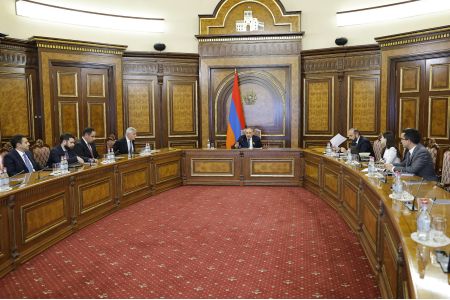
ArmInfo. The RA government has decided to temporarily ban the export of whitefish caviar for six months. This decision was made at a Cabinet meeting on May 21.
As noted in the rationale for the draft decision, this measure is aimed at ensuring food security, the sustainable use of Lake Sevan's bioresources, and the conservation of biodiversity. As a result of the process of regulating industrial whitefish fishing in Lake Sevan in recent years, a stable whitefish biomass has been observed (2668 tons in 2019, 2345 tons in 2020, 5348 tons in 2021, 4700 tons in 2022, 3974 tons in 2023, 1293 tons in 2024, 3591.8 tons in 2025), which makes it possible to implement industrial whitefish fishing in Lake Sevan (300 tons in 2020, 300 tons in 2021, 600 tons in 2022, 600 tons in 2023, 679 tons in 2024, 1123 tons in 2025). However, the increasing biomass of whitefish in recent years still doesn't ensure the natural growth of wild fish species in the lake (according to some scientific data, the total stock is up to 10,000 tons, with the commercial catch being approximately 2,000 tons or more). One of the key conditions for ensuring sustainable commercial whitefish fishing in Lake Sevan is ensuring natural reproduction. As experience in recent years shows, ensuring natural reproduction of whitefish maintains a stable commercial production volume.
To ensure natural reproduction and prevent illegal fishing of whitefish in Lake Sevan, a comprehensive program of strict measures will be implemented from late November through February of next year. In order to prevent possible negative consequences of the export of whitefish caviar, which has high value on the international market, as well as to prevent possible negative consequences of high anthropogenic impact and consumer attitudes towards biological resources, and to ensure the conservation and natural reproduction of a fish species with high commercial value, the legal act provides for the establishment of a ban on the export of whitefish caviar from the territory of the Republic of Armenia for a period of six months, starting from July 6, 2026.