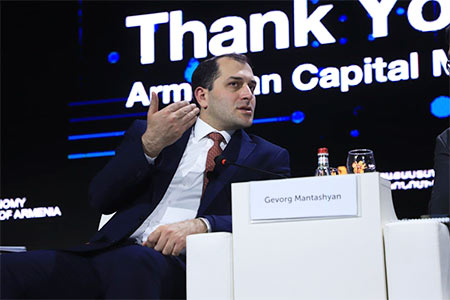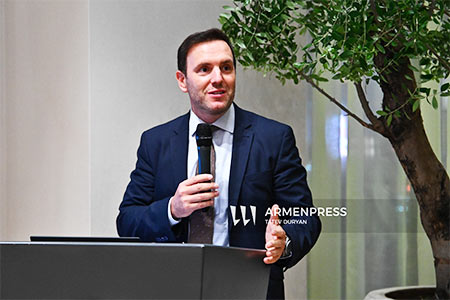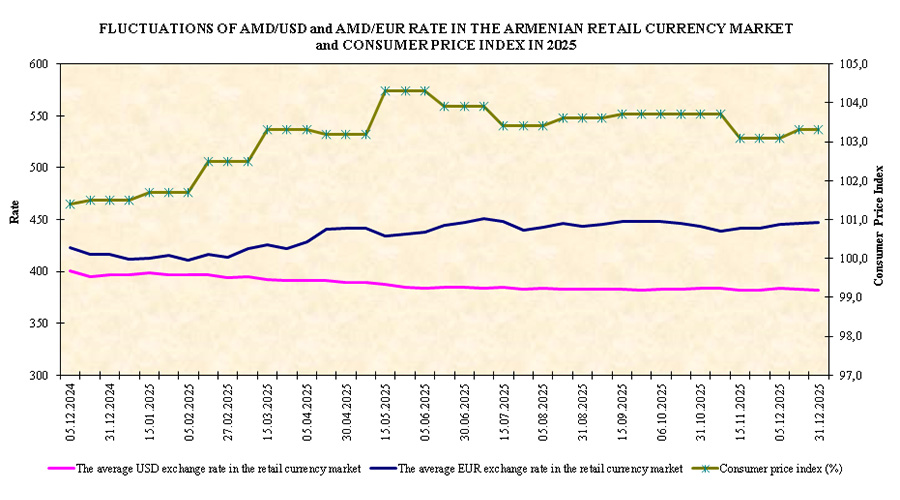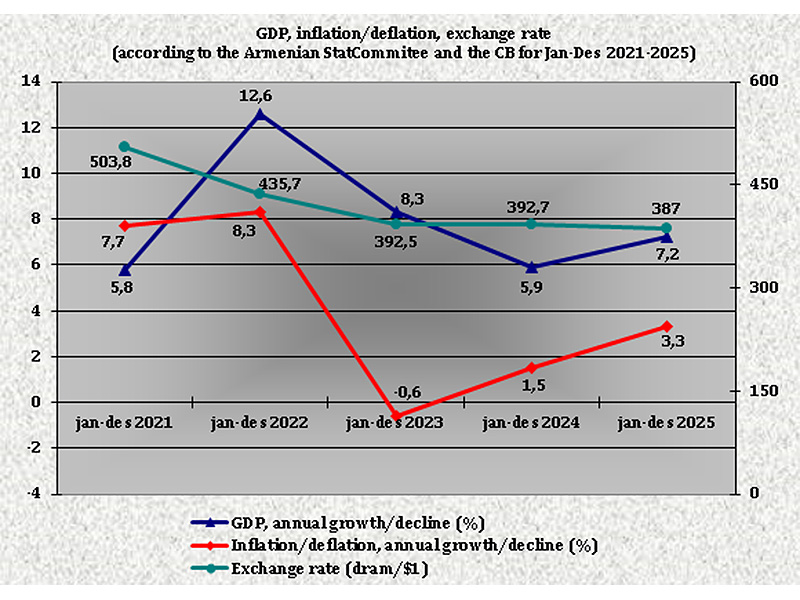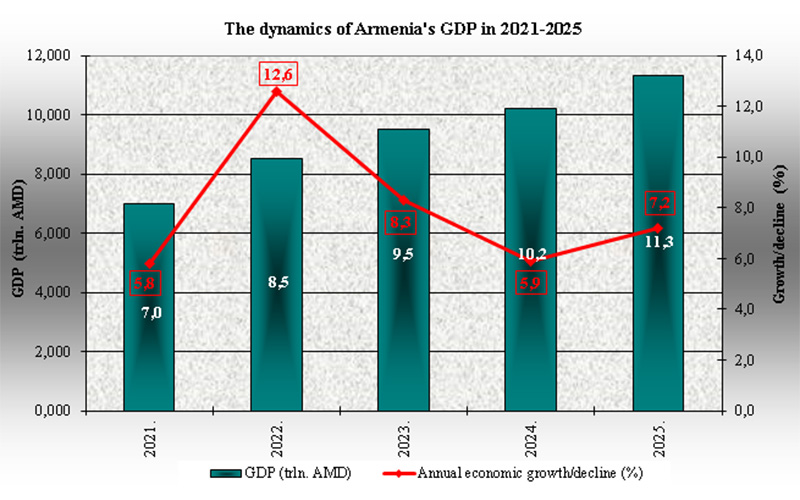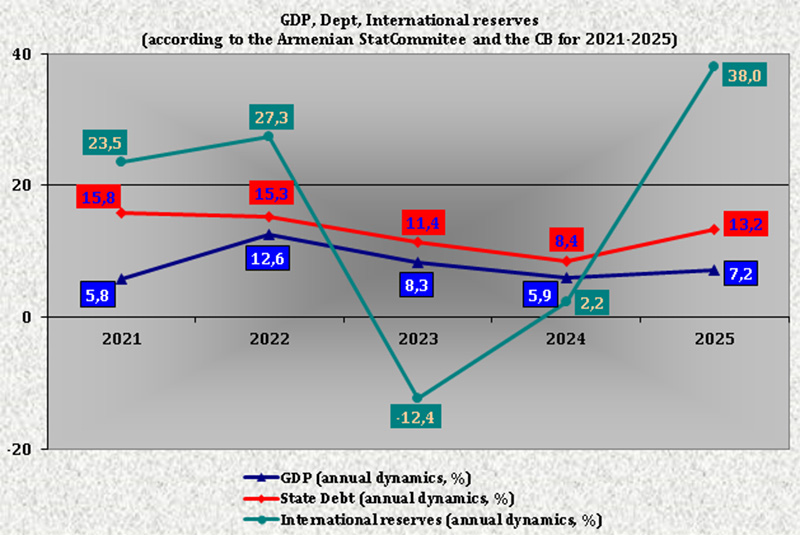



ArmInfo. The combination of macroeconomic, price, and financial stability, underpinned by a robust institutional framework, provides a vital foundation for building a deep and reliable capital market in Armenia. He made the remarks in his keynote speech at the opening of the international conference on capital market development, "25 Years of Excellence, Growth, and Global Integration," which marks the 25th anniversary of the Armenian Securities Exchange (AMX).
According to him, a look at the current state of the capital market reveals that this segment already occupies a significant place on the map of the Armenian financial market. As a result, there are currently 50 corporate issuers on the supply side. The intermediary segment is well developed, comprising 42 organizations, including 17 banks and 25 investment companies. In addition, there are six investment fund managers operating in the country, two of which manage pension funds net asset values (NAV) of approximately $3.9 billion, forming a solid institutional investor base. The market infrastructure is additionally supported by the AMX and the Central Depository of Armenia.
Speaking about the financial instruments utilized in Armenia's emerging stock market, Galstyan acknowledged that the market is still dominated by government securities, with a volume of around $7.4 billion. These are followed by corporate bonds at approximately $2.2 billion, while the equity market remains relatively small, with a market capitalization of about $0.5 billion. Nevertheless, a positive trend in market development and expansion has been visible in recent years.
Firstly, companies from the real sector are entering the market, which is an important signal. Key examples include large bond issues by ENA ($80 million), Viva Armenia ($80 million), Zangezur Copper and Molybdenum Combine ($50 million and 2.5 billion drams), Team Telecom ($45 million), and others. The stock market is witnessing the arrival of major new issuers, such as the ASCE group ($30 million), Team Telecom ($11 million), Telcell ($3.2 million), ACBA Bank ($250 million), AEB ($67 million), UniBank ($50 million), among others. Generally, more transparent and well-known companies are the first to launch Initial Public Offerings (IPOs); however, as Galstyan highlighted, it is significant that even smaller firms are increasingly viewing the capital market as an alternative to bank financing.
Galstyan cited the significantly increased volume of debt bond issuance as a second important aspect of capital market development. For instance, a bond issue worth 30 billion drams would have been unrealistic 10 years ago, whereas today such volumes are placed within a few days.
Thirdly, the investor base is expanding. The number of active accounts of residents holding securities has grown several-fold in recent years. Even retail investors are showing growing interest in the market. International investor confidence in local government bonds is at an all-time high. In 2018, foreign investor participation in the domestic government debt market amounted to only 3.6 billion drams; by 2025, this figure will increase to 177 billion drams, representing approximately 7% of the total dram-denominated issuance. Finally, the market has become more accessible thanks to key reforms, including the Clearstream link, AMX's modern trading infrastructure (including direct market access), and integration between AMX and the Warsaw Stock Exchange.
However, Galstyan noted that the market currently remains focused on government securities. The corporate securities market is in its early stages of development and requires further improvement, particularly to support investments in pension fund assets.
In this vein, he pointed out that while the country holds a substantial volume of accumulated pension savings (with a net asset value of approximately $3.9 billion), domestic investment opportunities within the economy remain significantly limited. Following the mandatory funded pension system reform, substantial savings have been accumulated in pension funds.
"We are still in the accumulation phase, and this growth trend is expected to persist. Moreover, pension fund savings have so far grown at a faster pace than banking assets. Therefore, we need new corporate securities to channel these accumulated savings into the real economy," emphasized the head of the Megaregulator, noting that the development of the funded pension system also aims to strengthen the life insurance sector, thereby adding a new layer of institutional investors to the market.
"In this regard, we already have a positive signal: a reputable international player, Grawe Group, has entered the Armenian market, partnering with C-Quadrat to acquire shares in a local insurance company. Furthermore, we are currently in negotiations with another major market player. This could serve as a catalyst for attracting new institutional investors."
Galstyan emphasized that capital markets do not develop in isolation and cannot be strengthened by measures aimed solely at the capital market itself. Rather, they are closely interconnected with other segments of the financial system, including the money market, the foreign exchange market, the government debt market, and other related financial sectors. "This is the core of our capital market development model, which we have repeatedly emphasized," the chief banker noted.