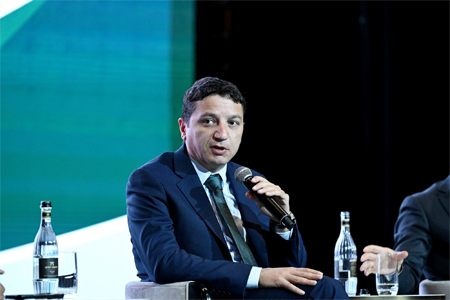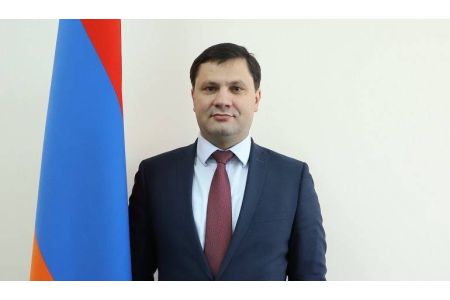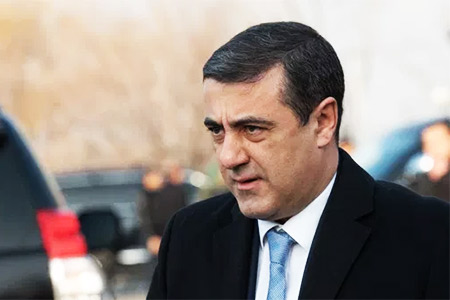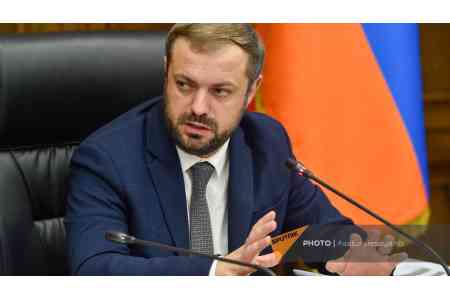
ArmInfo. If restrictions are imposed on the Russian market, Armenia is ready to completely reorient its exports to European countries. Armenian media reports that Armenian Minister of Economy Gevorg Papoyan stated this.
He noted that issues related to product quality and production volumes have already been resolved, but the main challenge remains high logistics costs. In this regard, according to Papoyan, the government is considering mechanisms to subsidize transport and customs costs for products exported to the European Union. "The amount of subsidies required for exports to EU countries has already been calculated," he emphasized. The day before, during a pre-election campaign in Byurakan (Aragatsotn Region), Armenian Economy Minister Gevorg Papoyan told reporters that authorities would find solutions within two days for the export of fruit and vegetable crops, ensuring that farmers' harvests would be sold at affordable prices for local citizens.
Specifically, he reported that these tomatoes are already being sold in Armenia. "I see some price reduction, which is quite logical," the minister said, not ruling out a further drop in prices in the coming days.
"However, we are working, including with the mayor's office, on organizing markets, and are also developing programs to promote exports to European countries," Papoyan said.
As a reminder, Rosselkhoznadzor, the Federal Service for Veterinary and Phytosanitary Surveillance, imposed temporary restrictions on the import of fresh tomatoes, cucumbers, peppers, green vegetables, and strawberries originating and originating in Armenia on May 30 due to identified violations. The agency explained that agricultural products supplied by Armenia did not comply with EAEU and Russian standards.
Rospotrebnadzor, the Federal Service for Surveillance on Consumer Rights Protection and Human Wellbeing, suspended the sale of 64.5 million units of "Jermuk" mineral natural medicinal table drinking carbonated water in the Russian Federation on May 28. The order was based on the manufacturer's violation of mandatory technical regulation requirements.
The water was found to contain excessive levels of bicarbonate ions, chlorides, and sulfates. In 2025, Armenia exported 146,500 tons of fresh fruits and vegetables, 1.4% more than in 2024. Of this volume, approximately 90% went to the Russian market. It should be noted that, according to the Statistical Committee of the Republic of Armenia, mutual trade with Russia in 2025 showed a 38.3% decline, amounting to $7.6 billion. Exports declined by 6.9% to $2.9 billion, while imports fell by 49.2% to $4.7 billion.
Meanwhile, trade turnover with EU countries increased by 7.2% in 2025, amounting to $2.5 billion (or 11.7% of total trade). Exports increased by 9% to $666.8 million, while imports grew by 6.5% to $1.8 billion.