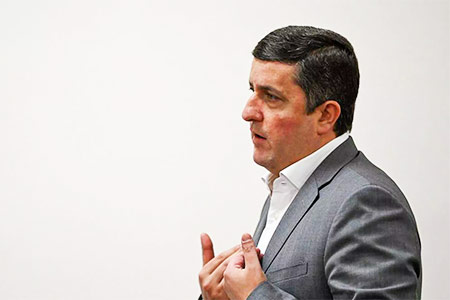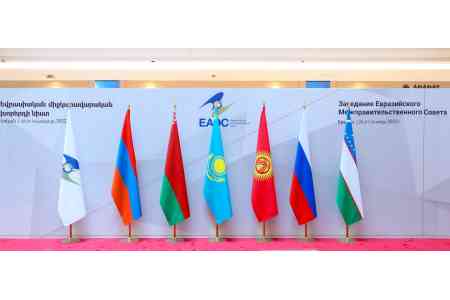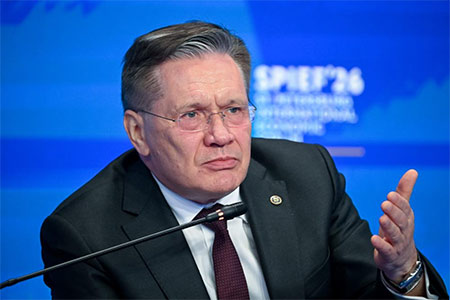


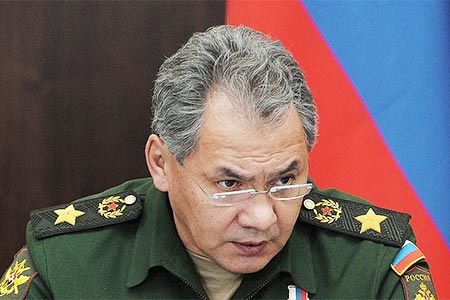
ArmInfo.Armenian Prime Minister Nikol Pashinyan's statement that a referendum on membership in the Eurasian Economic Union (EAEU) will not take place until Armenia applies for EU membership reflects an obvious reluctance to hold such a referendum. This was stated by Russian Security Council Secretary Sergei Shoigu.
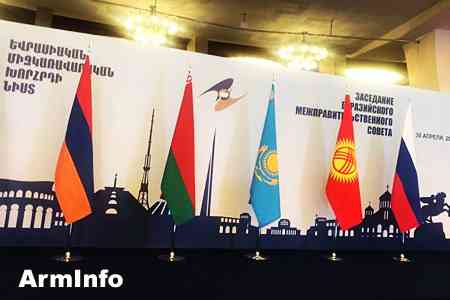
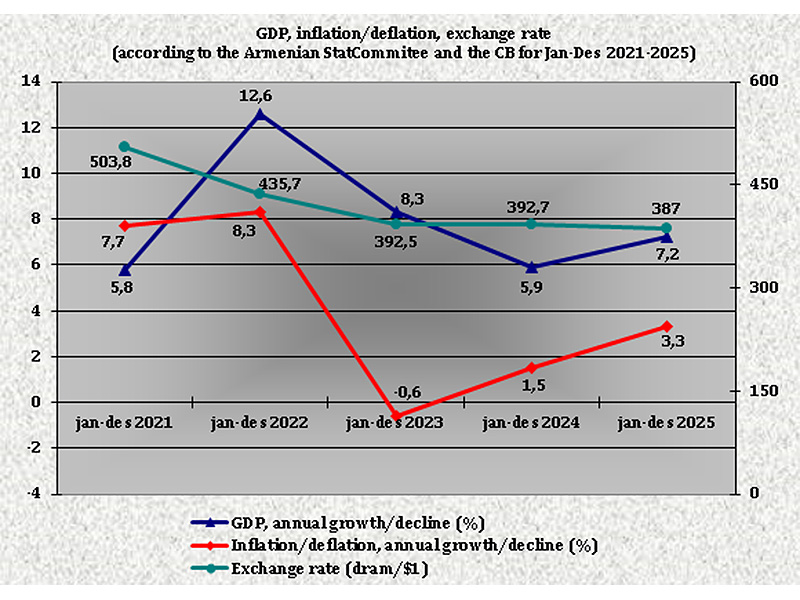
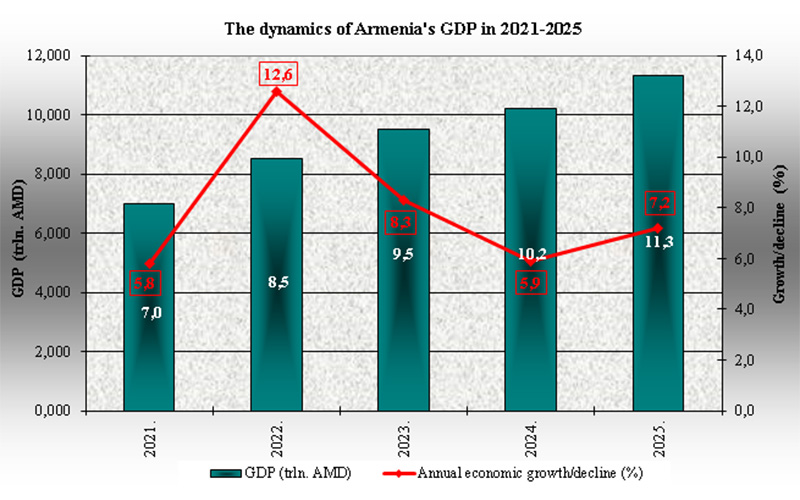
"It may well turn out that the population will speak out against it, and the current authorities in Yerevan will have to have an unpleasant conversation with European sponsors. There is another motive - the understanding that without the EAEU and Russia, Armenia will have a difficult time, to put it mildly. The Armenian authorities cannot help but realize that membership in the EAEU is an obvious benefit for Armenia. We have already spoken about this repeatedly, listing the advantages. I will only add that over the 10 years of participation in this union, Armenia's GDP has almost tripled - from $10.5 billion to over $29 billion. Moreover, the last three years have seen growth of 40%. The EAEU market comprises over 185 million consumers, and if you include free trade agreements with external partners, the figure is a full $700 million," the Security Council press service said in a commentary.
He noted that the European Union can allocate small sums to projects that benefit it-for example, ?1.5 million for the development of so-called "independent media," essentially its own propaganda. Or, for example, ?2.2 million to support visa liberalization, which clearly doesn't offset the losses from the decline in tourism from Russia, which could amount to up to $1.5 billion.
"The European Union is not prepared to shoulder real costs. For example, just covering the difference in the cost of gas, 84% of which Armenia imports from Russia, compared to global prices would require approximately a billion dollars per year. The EU is unlikely to cover this. Therefore, the burden of costs will fall on the population. Gas prices will increase three- to fourfold. Let me remind you that in Armenia, more than 40% of electricity is also generated from gas. Accordingly, rising electricity prices for industry and households cannot be avoided. In Moldova, for example, electricity prices have increased two- to two- and-a-half times over the past five years," Shoigu emphasized.
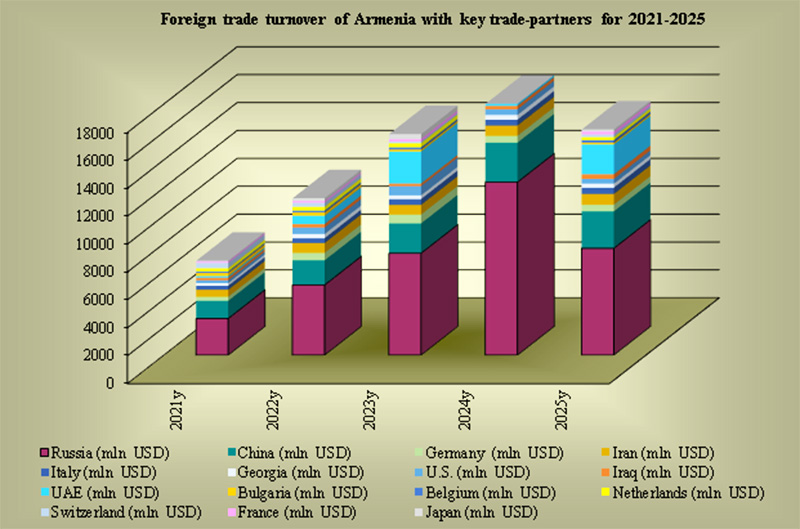
According to him, the Armenian authorities cannot help but realize that the country lacks certification of its goods according to European standards, nor markets for them. The Russian Security Council Secretary noted that almost the entire real sector of the economy is tied to Russia.
"In agricultural products alone, over 96% of which are consumed by Russia, the country will lose over $700 million annually and thousands, if not tens of thousands, of jobs. We have noted the current Armenian authorities' promises to compensate agricultural producers for losses, as well as customs duties and logistics costs when selling to new markets. What is being omitted is that this also requires considerable funds. Accordingly, we can quite expect cuts in spending on social services, healthcare, and housing and utilities," he added.
Shoigu is confident that integration with the EU, even under the guise of diversification, means a break with the EAEU and Russia, despite the assertions of some leaders to the contrary. "Such steps will lead the Armenian economy into a deep crisis. I want to say bluntly: we will not finance the expansion of Armenia's ties with the EU, the easing of the transition to European standards, or the recovery from the economic crisis that will follow," he concluded.
Relations between Moscow and Yerevan have become strained amid Armenia's European integration agenda. President Vladimir Putin previously stated that Armenia would have to choose between the EU and the Eurasian Economic Union (EAEU). Meanwhile, Pashinyan asserted that leaving the EAEU is not currently on Yerevan's agenda.
As a reminder, the Russian side stated that, under a 2013 agreement, Russia could permanently waive export duties on oil products, gas, and diamonds supplied to Armenia if Armenia continued its European integration course. Under the agreement, Moscow supplies Yerevan with oil products and gas in the amounts required for domestic consumption, as determined by indicative balances, while re-export to third countries is prohibited. On May 29, the heads of state of the Eurasian Economic Union (EAEU) adopted a resolution demanding that the Armenian government hold a referendum on the country's membership in the EAEU.
In early April, during a meeting with Armenian Prime Minister Nikol Pashinyan, Russian President Vladimir Putin noted that Russia was selling gas to Armenia for $177.5 per thousand cubic meters, while in Europe it currently costs approximately $600 per thousand cubic meters.