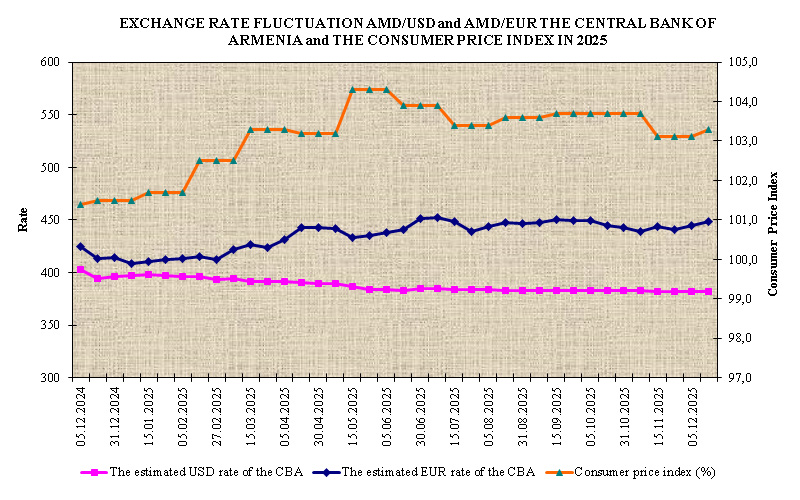


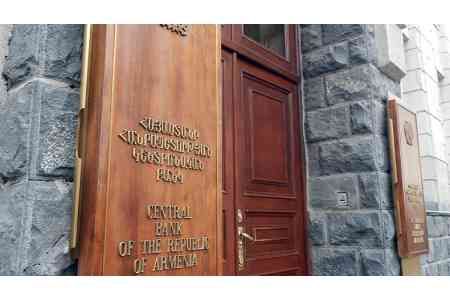
ArmInfo. In the near term, the main uncertainties regarding price growth in Armenia are related to the duration of inflationary trends emerging in global food markets, and in this context, to the speed and scale of domestic price adjustments. This is noted in the rationale for the Central Bank of Armenia's decision on June 16 to keep the refinancing rate unchanged at 6.5%.
In particular, continued high commodity prices amid tensions in the Middle East and the consequences of disruptions to trade routes could contribute to accelerated inflation in Armenia. The Central Bank notes that the rise in global oil and food prices is only partially reflected in local prices. On the other hand, problems arising in certain export markets (the Middle East, Russia, etc.), particularly given the low level of diversification of export destinations in agriculture and the food industry, could lead to excess supply of certain goods in the domestic market, leading to primarily deflationary pressure. Rising inflation in the services and non-tradable goods markets, characterized by rigid prices, continues to build near the target threshold, demonstrating certain acceleration trends. Comparing this factor with the stabilization of wage growth in the private sector within 5-6% indicates that inflation expectations continue to stabilize around the target level.
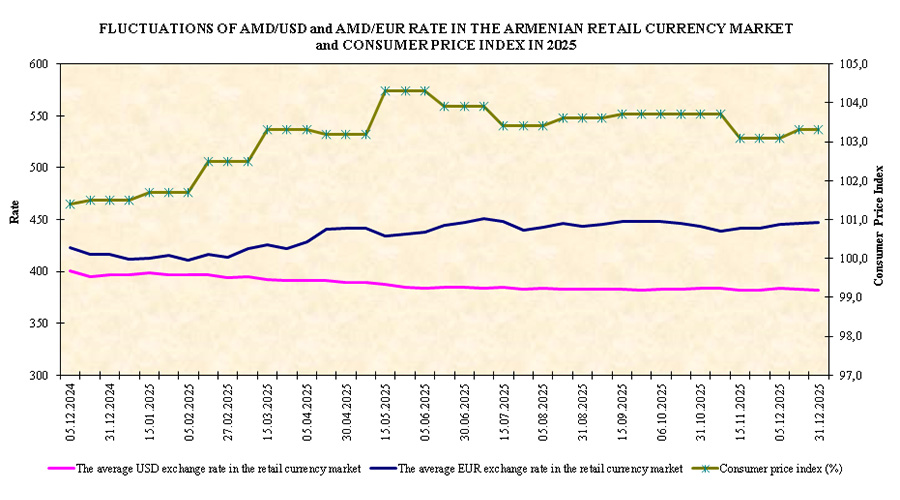
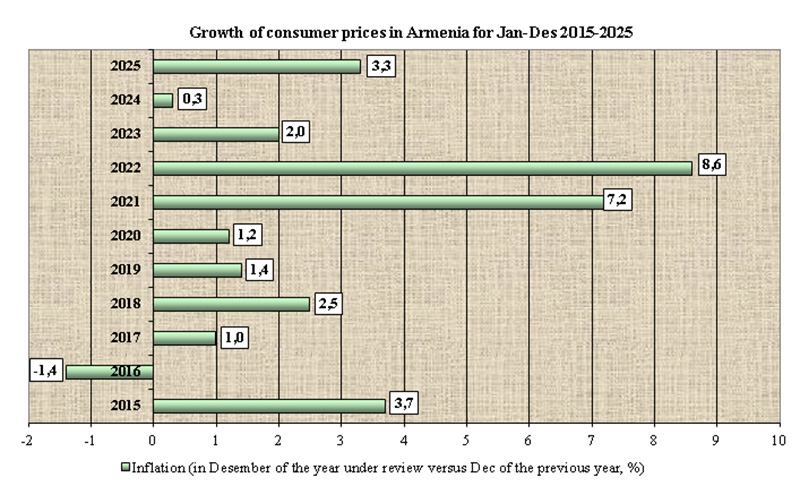
In Q2 2026, inflation continued to build above the target level (3%, +/- 1 percentage point), reaching 4.2% in May of this year compared to May 2025 (versus 4.3% a year earlier). During this period, annual core inflation also increased, reaching 5.1% (from 2.8% a year earlier). This, in turn, primarily reflects inflationary trends transmitted by imported and locally produced non-seasonal food products, driven by inflationary pressures transmitted from the global economy in recent quarters and the influence of certain supply-side factors in the domestic economy. At the same time, the acceleration of core inflation in recent months has been more widespread across product groups, which, in addition to supply-side factors, likely indicates the emergence of strong demand conditions.
In Q2 2026, amid geopolitical uncertainty and prolonged high energy prices, global demand continued to weaken, and its outlook worsened. At the same time, the risks of a higher trajectory for US government debt and, consequently, the prolonged persistence of high long-term interest rates have increased. In Armenia's other key partner countries, the risks of a slowdown in medium-term growth and demand have become more pronounced. In particular, the Eurozone and Russia experienced an economic downturn in the first quarter, and structural problems are gradually deepening, further weakening their growth potential. Meanwhile, amid relative stabilization in the Middle East, energy prices have declined somewhat, but uncertainty remains high regarding the outlook for commodity and food prices. In this context, given the high uncertainty surrounding the development of the inflationary environment, the risks of central banks in leading countries maintaining or raising their current policy interest rates for an extended period remain.
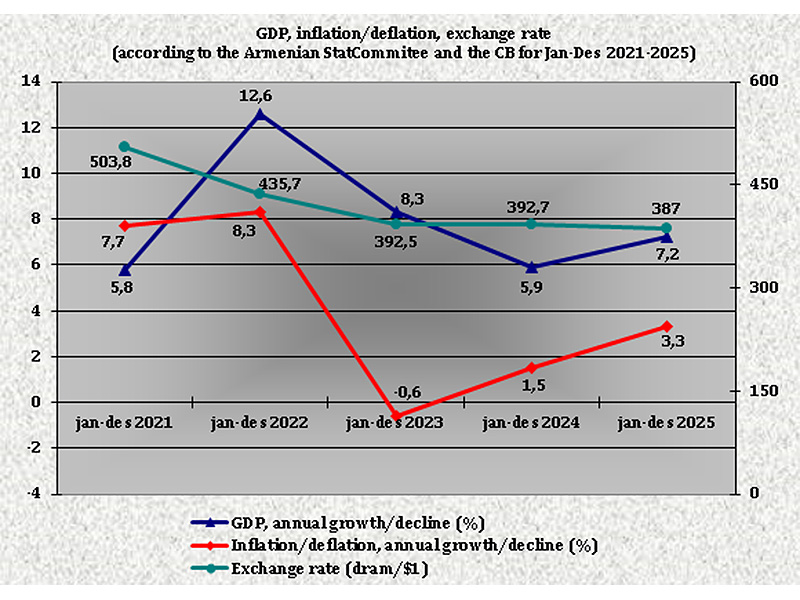
In the first quarter of 2026, economic growth in Armenia, including due to some one-off factors, slowed somewhat, but remains relatively strong. Services and construction sectors continued to contribute significantly to economic growth. High activity in the services sector is primarily driven by demand-driven subsectors, indicating strong demand conditions in the economy. Furthermore, impulses from expanding external demand are also noticeable, primarily reflected in the growth of tourist flows to Armenia. In this situation, the impact of aggregate demand on inflation is assessed as expansionary (pro-inflationary), although supply-side factors still dominate inflation behavior. On the other hand, the risks of a more expansionary fiscal policy have diminished, and private sector wage growth and inflation expectations continue to show predominantly stabilizing trends. Furthermore, problems arising in certain export markets could lead to a decline in revenues in the Armenian economy, as well as the formation of excess supply of certain goods, which carries primarily deflationary risks. Given the current macroeconomic developments, Armenian financial market participants, on average, expect the Central Bank to maintain the current key rate for somewhat longer, and likely reduce it to only 6.25% in the medium term. The Central Bank Board will continue to monitor economic development scenarios and is prepared to respond appropriately to ensure inflation remains at the target level of 3% and price stability in the medium term.
Expanding demand is accompanied by increased imports and retail trade
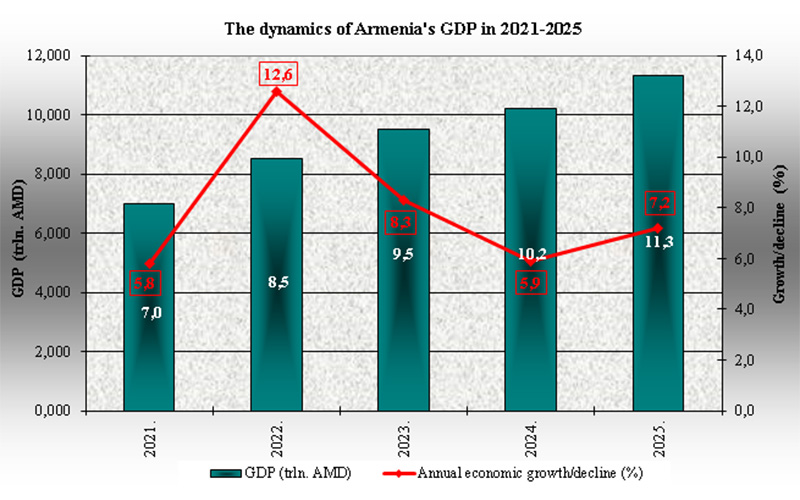
In Q1 2026, economic growth, after the high rates recorded in previous quarters (including those driven by some one-off factors), slowed to 4% year-on-year, while economic activity continues to remain at high levels of 6-7%. Economic growth and activity continued to be significantly driven by the construction sector and several service subsectors, driven primarily by expanding demand. This is also accompanied by a significant increase in imports and retail trade. This may indicate the existence of strong demand conditions and their expansion. The significant increase in tourist flows to Armenia is also contributing to the expansion of demand conditions. Growth in January-May 2026 amounted to approximately 20%, reaching a historically high level. On the one hand, this increase may partially reflect the effect of restrictions on tourism from Russia to the Middle East and may be temporary. On the other hand, the increase in inflows across countries is gradually becoming more widespread, accompanied by certain changes in the composition and structure of visitors.
In the manufacturing industry, growth has slowed somewhat, in part due to certain restrictions on trade routes amid tensions in the Middle East. These trends are noticeable in the production and export of tobacco products. Russia's tightening of import regulations for certain agricultural goods and processed food products is creating additional challenges for these industries and, if alternative export destinations are limited, could lead to a slight decline in revenues in the Armenian economy. Uncertainty remains surrounding seasonal migration trends to Russia and remittance methods. On the one hand, the prolonged retention of the ruble exchange rate at its current level could strengthen incentives for labor migration from Armenia to Russia. On the other hand, a significant slowdown in economic growth, high uncertainty regarding the medium-term prospects of the Russian economy, and a tightening of migration policy could, to some extent, curb migration flows to Russia. This, in turn, will contribute to an increase in the labor supply in Armenia and the development of deflationary risks.
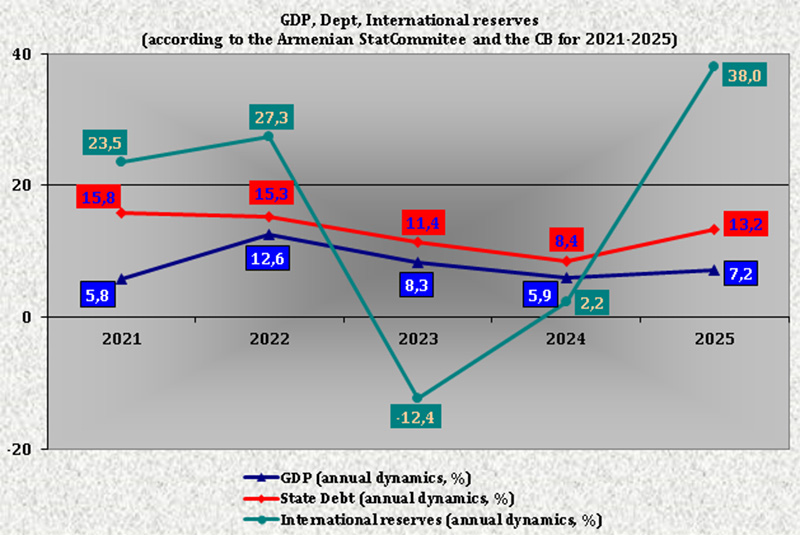
These impulses may indicate a widening of the GDP gap in the second quarter of 2026 and its formation at higher levels than previously estimated. However, the structural features of economic growth, as well as uneven and mixed processes across various sectors, exacerbate the existing uncertainty surrounding the relative balance of aggregate demand and supply in the economy. On the one hand, high rates of credit and retail growth, as well as the continued high activity in sectors driven primarily by expanding demand, may indicate significant excess demand in the economy. On the other hand, the concentrated nature of growth, as well as more moderate increases in wages and the cost of non-tradable goods with rigid prices, are consistent with a more balanced economic position. State budget revenues in the first months of 2026 were exceeded amid higher economic activity and inflation than expected. On the other hand, state budget expenditures, in line with historical trends, are under-executed, primarily reflecting the low execution of capital expenditures. Nevertheless, the risks of a more expansionary fiscal policy remain due to the implementation of a universal health insurance system and increases in pensions and benefits. At the same time, Russia's tightening of import conditions could necessitate significant additional fiscal support, which, given limited fiscal space, will put pressure on the country risk premium.
Armenia's country risk premium reaches historical low
Armenia's short-term country risk premium has declined in recent quarters, reflecting the influence of both global and country-specific factors, and has reached a historically low level. At the same time, there is growing evidence that the current low country risk premium may primarily reflect improved fundamentals and the influence of Armenia-specific factors, including the perception of declining security risks around the country. A certain amount of excess demand has formed in the labor market
Despite recent volatility, a comparison of several key indicators suggests a balance has emerged in the labor market. The unemployment rate fluctuates between 12-13%, the number of registered jobs is steadily growing, and nominal wage growth in the private sector (excluding the financial sector) continued to stabilize, reaching approximately 5% year-on-year in the first quarter of 2026. However, in recent months, consistent with increased growth in certain service sector subsectors, wage growth has also accelerated. At the same time, the current unemployment rate may also partially reflect a certain amount of excess demand that has formed in the labor market. This is especially relevant given that the unemployment rate was likely below the estimated natural rate in the second half of 2025, and the resulting risks to wages and inflation could still materialize due to wage rigidity. Meanwhile, it's also possible that the natural unemployment rate has been gradually declining in recent years, reaching a range of 11-13%. This could be driven by increased productivity and export potential since 2022, the integration of a highly skilled workforce and its long-term retention in the economy, improved efficiency in matching jobs and the workforce (thanks to the development of various electronic platforms in Armenia), economic growth patterns, and other factors.
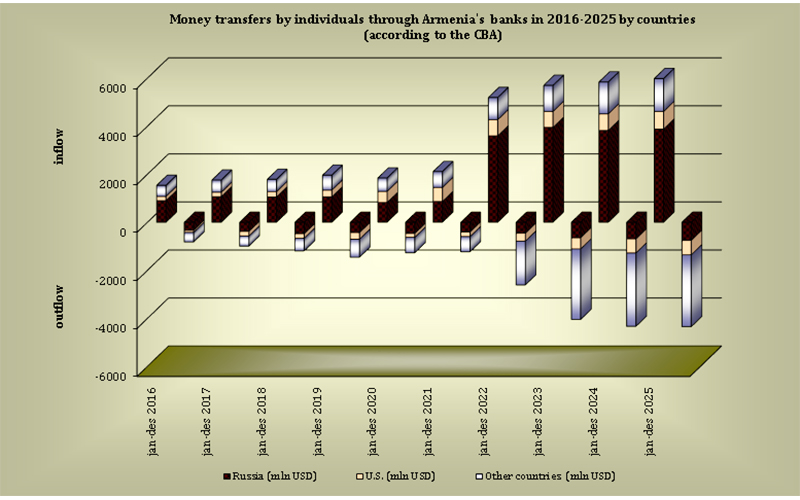
On the other hand, the volume and quantity of non-commercial remittances from Russia to Armenia have increased in recent months, which may indicate that the strengthening ruble and labor shortages in Russia have outweighed the factors limiting migration flows, stimulating growth in labor flows. In summary, the Central Bank notes that despite the mixed signals coming from the labor market, certain trends may indicate a relatively more balanced economic position. In the near term, the main uncertainty relates to the potential for growth in labor supply, especially if demand conditions expand.
Global economic growth prospects have worsened
Global economic growth prospects have worsened in the second quarter of 2026, driven by ongoing tensions surrounding the Middle East conflict, geopolitical uncertainty, and significant increases in energy prices and volatility. Amid geopolitical developments and significant economic policy shifts, US economic growth has exhibited significant volatility in recent quarters, generally weakening to reach approximately 1.6% year-on-year (q/q) in the first quarter of 2026. Fixed capital investment, particularly in artificial intelligence (AI) infrastructure, and private consumption, despite the ongoing growth slowdown, remain the main drivers of economic growth. A comparison of various labor market indicators also suggests a more balanced economic position. At the same time, prolonged geopolitical tensions in the Middle East and restrictions on trade routes pose risks of further deterioration in economic growth prospects and, at the same time, a significant expansion of the inflationary environment.
On the other hand, with the partial waiver of customs duties and the fulfillment of accumulated refund obligations, uncertainty surrounding tax revenue collection has increased. Under these circumstances, pursuing a more stimulating (expansionary) fiscal spending policy, including that necessitated by the need to increase defense spending, could lead to a significantly higher public debt trajectory in the medium term. This, in turn, creates risks of further increases in long-term real interest rates or their prolonged persistence at high levels. Such developments could impact both the US Federal Reserve's monetary policy outlook and the neutral interest rate and capital flows to developing countries. Inflation accelerated significantly during the second quarter of 2026, reaching 4.2% year-on-year (y/y) in June. Inflation of fixed prices and services also accelerated, remaining significantly above target. Under these conditions, the US Federal Reserve's objectives of ensuring price stability and full employment are significantly challenged. Economic growth in the Eurozone continued to weaken in Q1 2026, declining by 0.2% quarter-on-quarter, reflecting persistent structural problems in industry and the negative impact of the conflict in the Middle East. Amid high energy prices and high supply vulnerability, inflationary pressures will quickly materialize: in May 2026, annual inflation was 3.2%, compared to 1.9% in February. At the same time, core inflation indicators are conveying mixed signals regarding demand conditions: core inflation is close to target at 2.5% y/y, while service sector inflation remains significantly above target at 3.5% y/y, likely reflecting still-tight labor market conditions. As a result, on June 11, the ECB, in line with market expectations, raised its key interest rate by 0.25 percentage points, and financial markets anticipate further rate hikes.
In Q1 2026, the Russian economy, amid the gradual emergence of structural problems and the influence of certain temporary factors, continued to weaken, contracting by 0.2% y/y. Observed developments in certain sectors of the economy, particularly the real estate and financial sectors, may also indicate a deepening of structural problems. On the other hand, prolonged high oil prices could contribute to an expansion of demand and, in particular, fiscal space. At the same time, labor market conditions remain tough: unemployment remains at historic lows, and real wage growth has accelerated significantly since the beginning of the year. Under these conditions, despite a slowdown in general and core inflation in the first quarter of 2026, service sector price increases and inflation expectations remain significantly above target, significantly complicating the Central Bank of Russia's task of effectively managing the inflation-growth dilemma.
Oil prices declined slightly
Amid a gradual adjustment in global demand and optimistic expectations for a swift resolution of the Middle East conflict, oil prices have declined slightly, although they remain significantly higher than at the beginning of the year. Disruptions to trade routes through the Strait of Hormuz are affecting not only energy supplies but also commodities essential for agriculture, which also poses risks of further increases in food prices.