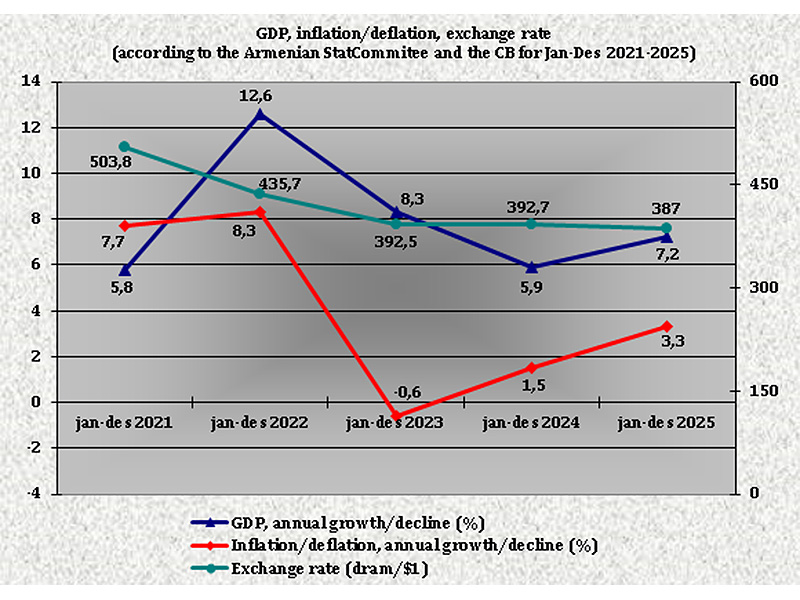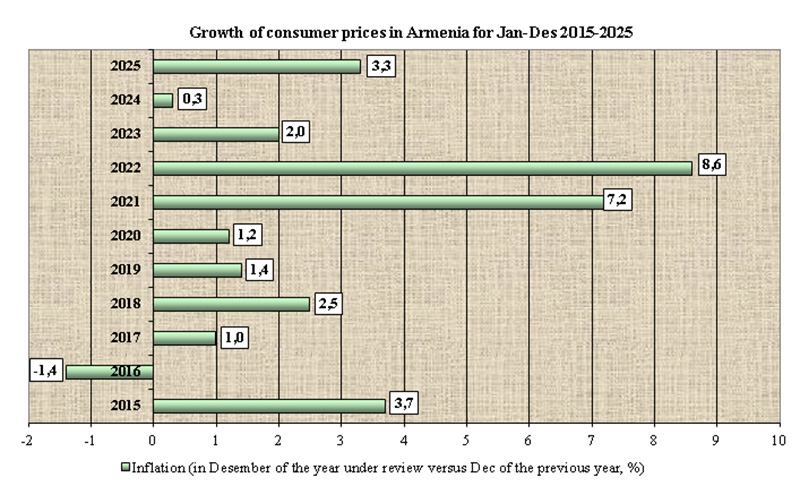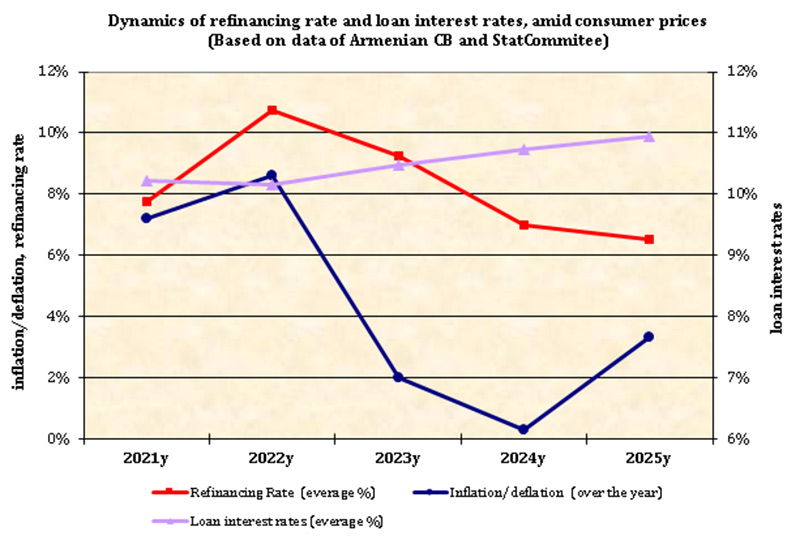



ArmInfo. If Armenian producers are unable to reorient their exports to new markets and remain dependent on the Russian market, the excess supply of certain goods could trigger a deflationary effect in Armenia, estimated at 0.6%, as stated by Central Bank Chairman Martin Galstyan during a press conference on June 16, when answering journalists' questions.
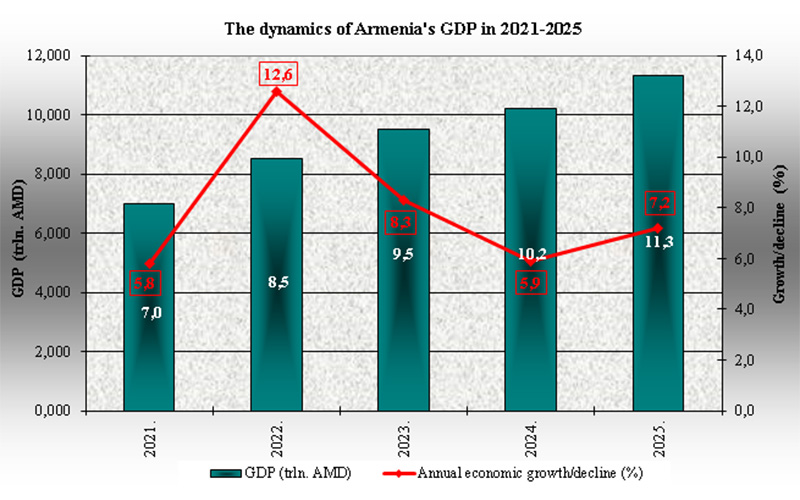
Specifically, he noted: "If the supply of fruits and vegetables, carbonated and still water, a certain portion of alcoholic beverages, and stone fruits increases, we may experience deflationary phenomena." However, this effect will be more benign if it is possible to reorient supplies so that exports are not affected, the head of the Central Bank believes. When asked about the total impact on the economy, Galstyan noted that the outcome depends on how the situation develops. He indicated that in certain scenarios, the impact on GDP could be as high as 2%, though the Central Bank's primary focus in this assessment was the influence of weakening demand and excess supply on inflation.