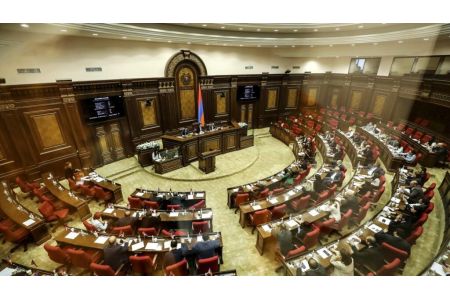



ArmInfo. For the first time, the institution of restructuring (bank resolution) of insolvent banks is being introduced in the Armenian banking system. At its June 18 session, the National Assembly of the Republic of Armenia discussed the draft law "On Bank Restructuring" and a large package of related documents submitted by the Armenian government in the first reading.
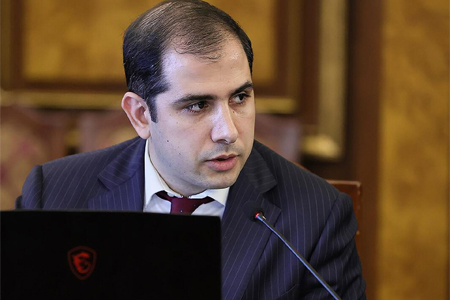
Presenting the package, Deputy Chairman of the Central Bank of the Republic of Armenia Armen Nurbekyan noted that Armenian legislation ensures the protection of depositors' interests - their deposits are protected to the established extent according to the Law "On Guaranteeing Compensation of Bank Deposits of Individuals." However, there is no unified law on bank restructuring.
Legal relations related to financial rehabilitation, resolution, and insolvency resolution of banks are carried out in accordance with the current laws of the Republic of Armenia "On Banks and Banking Activities" and "On Bankruptcy of Banks."
The Deputy Chairman of the Central Bank emphasized that the new law is necessary to ensure that the crisis of one bank does not undermine the country's entire financial system. This is also being done to align Armenian laws with the international standards of the Financial Stability Board (FSB).
The documents presented constitute Armenia's direct commitment to the World Bank and the International Monetary Fund. According to the package, Armenia will use strict legal instruments to rescue problematic or insolvent banks. The development of this law was included as a mandatory condition (structural benchmark) in the memorandum with the IMF. In international practice, bank resolution is a mechanism that allows the state, usually represented by the Central Bank, to promptly intervene in the operations of a failing bank. Instead of a lengthy bankruptcy process, the bank is "rehabilitated": management is forced to change, bad and good assets are separated, or investors are attracted to protect deposits and prevent market panic. According to the package, if a bank faces insolvency or violates regulations, it is required to submit a financial resolution program to the Central Bank.
In the event of critical financial risks, the Central Bank appoints a temporary administration, which assumes control to restore solvency. The recovery plan may include changes to the asset and liability structure, raising additional capital from shareholders, and a merger or acquisition by another bank. If the resolution measures prove ineffective, the bank is declared bankrupt, and liquidation proceedings are initiated with the participation of a liquidation commission under the supervision of the regulator.
In all cases, the Central Bank bases its decisions on court decisions. Moreover, the courts have established clear deadlines for reviewing each specific case.