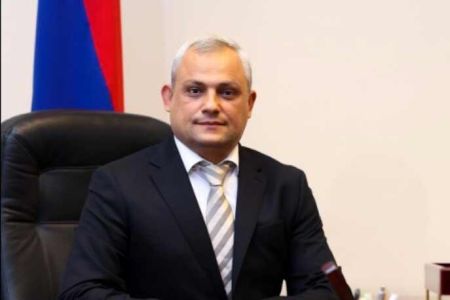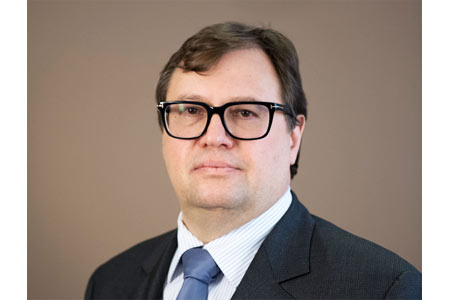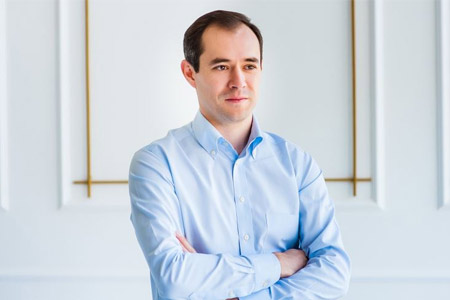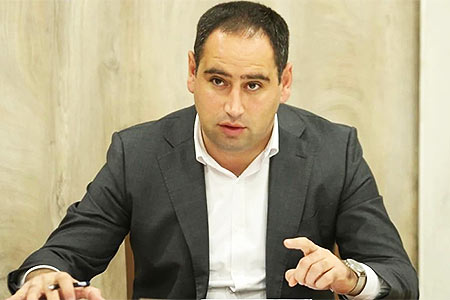


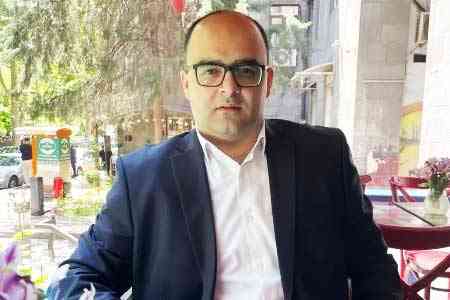
ArmInfo. Energy expert Vahe Davtyan criticized European Commission President Ursula von der Leyen's statement about the EU's readiness to support Armenia in the event of disruptions to Russian gas supplies.
In a post on his Telegram channel, the expert noted that the European Commission President cited Moldova and Ukraine as examples of successful energy crisis resolution. However, according to Davtyan, these countries are themselves experiencing severe political, economic, and humanitarian crises, making them difficult to consider "success stories." The expert recalled that Moldova is prepared to become part of another state for the sake of European integration.
In this regard, Davtyan questioned the effectiveness of potential European support in the long term. According to him, short-term subsidies and grant funding can only temporarily mitigate the effects of the crisis, but do not ensure systemic energy security.
Furthermore, the expert noted that the development of renewable energy, which von der Leyen also announced, cannot completely replace traditional generation. Davtyan noted that solar and wind power plants have a lower capacity utilisation factor than thermal and nuclear power plants, while most European countries continue to rely on gas-fired generation and develop nuclear energy.
Davtyan also pointed out that Armenia's gas transmission system is 100% owned by Russia's Gazprom, which remains a key factor in the country's energy system.
Furthermore, the expert recalled that, unlike Moldova and Ukraine, Armenia does not have direct access to European gas infrastructure, which, in his opinion, calls into question the practical mechanisms for implementing the support promised by Brussels.
As a reminder, on July 2, 2026, Ursula von der Leyen paid a working visit to Armenia, immediately following her trip to Baku, where she announced the new EU Peace through Connectivity Package initiative, worth ?200 million, to develop transport, energy, and digital infrastructure in the South Caucasus.
In Yerevan, she held talks with Prime Minister Nikol Pashinyan, following which the two sides issued joint press statements. She announced that the EU would soon allocate an additional ?18 million as part of the previously announced ?52 million economic support package to Armenia, amid Russian restrictions imposed on Armenian products. She also announced that the EU is considering eliminating import duties on almost 80% of Armenian goods exported to the European market, in order to facilitate access for Armenian producers to the EU market.