


ArmInfo. Armenia needs a large-capacity nuclear power unit. UN National Energy Expert Ara Marjanyan told ArmInfo in an interview, commenting on Rosatom State Corporation Director General Alexey Likhachev's statement that the company could offer the republic large or medium-capacity units.
A day earlier, Likhachev told reporters on the sidelines of the Innoprom 2026 exhibition that currently 30% of Armenia's electricity is nuclear, but demand is growing, and it's quite possible that the electricity capacity deficit in Armenia will reach as high as 1 GW in the coming decades. "We need to be prepared for this. And our answer is a large or medium-capacity station, one or two units that will cover the coming energy shortages for decades," said the head of Rosatom, adding that Armenia's nuclear expertise and nuclear industry are "a sign of a quality economy, a sign of a quality industry."
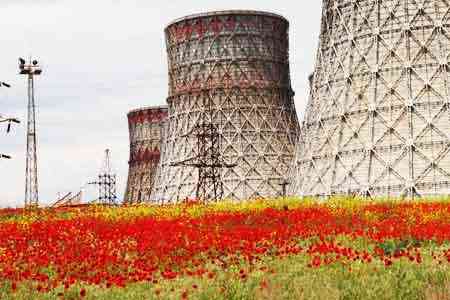
In this regard, Ara Marjanyan noted that, given the country's rapidly developing electric transport, processing industry, mining, information and high technology, data centers, and other industries, the issue of a new large-capacity nuclear unit is of crucial importance. Moreover, the expert emphasized that preference should be given to a unit with a VVER-12000 reactor of Russian design, as this reactor is well known to Armenian nuclear scientists. Marjanyan emphasized that a decision on the unit must be made as quickly as possible - either at the end of this year or early next, as time is already pressing. The expert recalled that work is currently underway at the existing second power unit of the Armenian Nuclear Power Plant to extend its service life until 2036, with the possibility of an additional 10-year extension. This opportunity must be used to make a decision, find funding sources, and begin project implementation.
Speaking about the government's position on plans to build nuclear power plants with small modular reactors, the expert noted that the interdepartmental working group for the construction of a new nuclear power unit, established at the direction of the Prime Minister of the Republic of Armenia, has not yet expressed its position on the model and capacity of the new nuclear power plant. "For this reason, all talk of the need to build a nuclear power plant with SMRs appears to be merely wishful thinking and is more political than technical and economic in nature.
Furthermore, it's important to remember that only two SMR power plants are currently operational in the world: Russia's floating nuclear power plant Mikhailo Lomonosov and a unit in China. Two more SMR power plants are currently in development, also in Russia and China. In all other countries, projects are nowhere near the licensing stage. In the United States, the first such plants, focused on energy rather than submarine-based nuclear power, will not be built until 2050. "We can't wait that long," noted Ara Marjanyan.
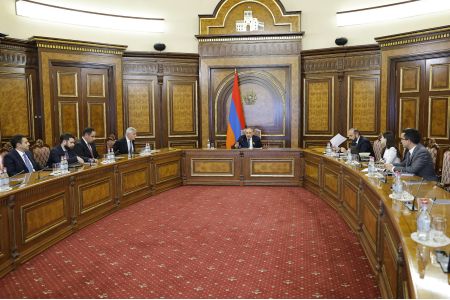
Unit 2 of the Armenian Nuclear Power Plant has been on a five-month outage since April 1, undergoing maintenance both as part of planned preventive measures and to extend its service life until 2036. As a result of this maintenance, the unit's capacity will increase by 10 percent, and safety will be raised to a qualitatively new level. At the direction of RA Prime Minister Nikol Pashinyan, an interdepartmental working group on the construction of a new nuclear power unit has been in operation since 2023. In October 2024, a working group was also established under Deputy Prime Minister Mher Grigoryan to coordinate measures with the IAEA and international partners in this area. The main tasks of the interdepartmental group are to analyze the feasibility of constructing a new power unit or introducing small modular reactors.
Previously, the possibility of constructing several small modular nuclear reactors with a capacity of 50-60 MW was discussed in Armenia. Moreover, even The possibility of constructing them in several regions of the country is being considered. However, one of the most significant challenges in this area is the lack of experience in operating these reactors among Armenian nuclear scientists. Nevertheless, as Nikol Pashinyan previously stated, the country has made a fundamental decision to build a modular nuclear reactor. Moreover, according to Armenian authorities, the country of production for the modular nuclear power plant will be determined in 2026-2027.