

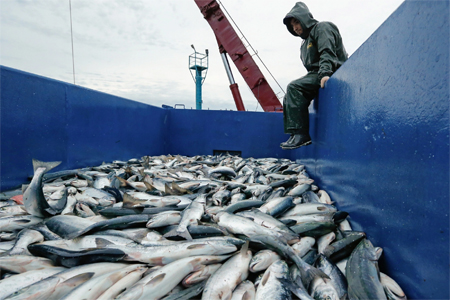
ArmInfo.Although Armenian fish farmers received permission to export fish and fish products to EU markets last year, the list of requirements for producers was only officially approved today during a meeting of the Armenian government.
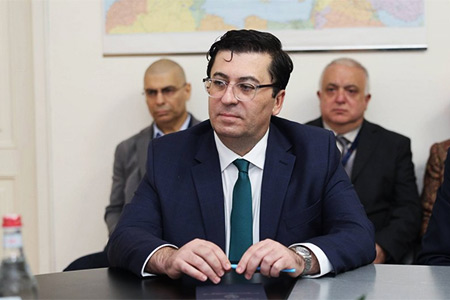
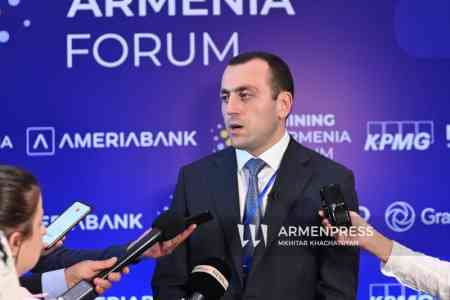
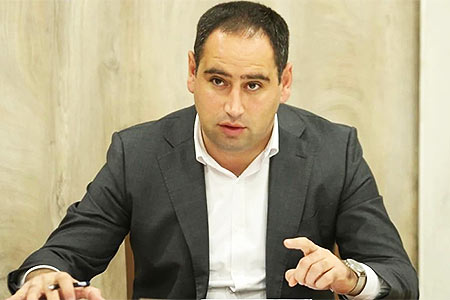
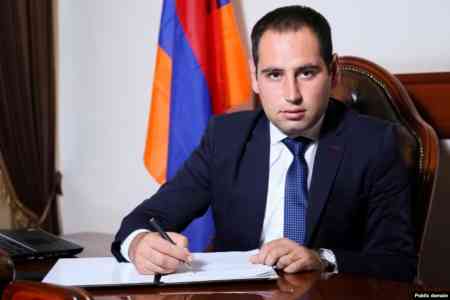
While presenting the relevant draft legislation, Armenian Minister of Economy Gevorg Papoyan explained that industry representatives must first register with the TRACES system (the EU's Trade Control and Expert System). They must then apply to the local authorized body—the Food Safety Inspection Body— which, following the necessary examinations, will submit an application to the EU to obtain a special electronic code, enabling Armenian producers to enter EU markets.
"This is a simple and transparent procedure that complies with international requirements," he assured, noting that 5 companies have already applied to the Inspection Body and are awaiting a decision.
According to the Minister, these procedures will allow Armenian fish farmers to export their products to the EU, reduce dependence on a single market, diversify their sales channels, implement EU standards, stimulate the modernization of local production, and, in general, increase food safety.
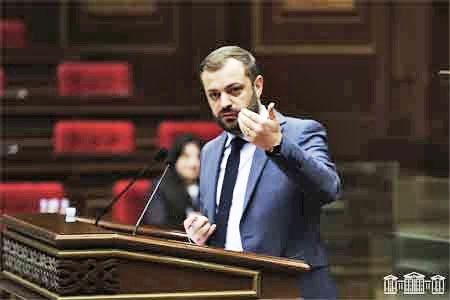
In turn, Deputy Prime Minister Mher Grigoryan noted that even if the relevant code is obtained, the country still faces an unresolved issue regarding the traceability of goods.
"Therefore, our freight carriers do not want to deal with this, and I understand the issue. This code stipulates that the goods must be sealed, and with that seal, pass to the EU border. We have not resolved the sealing issue at all; without it, a customs officer might suspect that we are transporting not fish, but, for instance, chicken. This means that additional inspections will be conducted. In such a case, the spectrum of uncertainty grows, which translates into costs. Because an additional hour at a European border or an extra two hours of transit time in Europe are all costs, which, in the context of pricing, makes our products uncompetitive," Grigoryan noted. In this regard, he instructed the Ministry of Economy, together with the State Revenue Committee, to conduct relevant discussions to find solutions. It's worth noting that Armenia received permission to export fish products back in 2025, but, according to fish farmers, not a single ton of cargo has yet been shipped to the EU. It's worth noting that fish farms do not yet see the EU as an alternative to the EAEU market. Over 80% of fish and fishery product exports have been destined for Russia for over 20 years. Since mid-May, Russia has suspended fish imports from Armenia, creating serious problems for the industry. Gor Grigoryan, head of the Armenian Fish Farmers' Union, noted that these are living organisms, and serious problems arise with fish maintenance: they are coated, grow, and require feed, which also presents challenges. He emphasized that exports to the EU require specific work from legislative and executive bodies, which remains to be done. Touching on government assistance mechanisms, Grigoryan noted that the assistance covers subsidies for exports to the EU of 140 tons of product. This applies to cases where fish farms export 70 tons per day alone. "So, they'll only help us for two days, but what about the other 360 or more days? Fish is a perishable product, with a shelf life of 14-16 days. It's logistically impossible to deliver the product to Europe during this time," the Union's head noted. He noted that he met with the Minister of Economy and offered him state assistance by covering the costs of maintaining fish farms, considering at least the fact that fish producers are the primary taxpayers in the food industry, he said, adding that the country is currently overstocked with fish—over 15,000 tons of live fish, which have nowhere to sell.