


ArmInfo. One of the most alarming features of the Armenian government's Medium-Term Expenditure Program for 2027-2029 is the overly optimistic nature of the economic growth forecasts, according to an analytical study by the Luys Foundation.
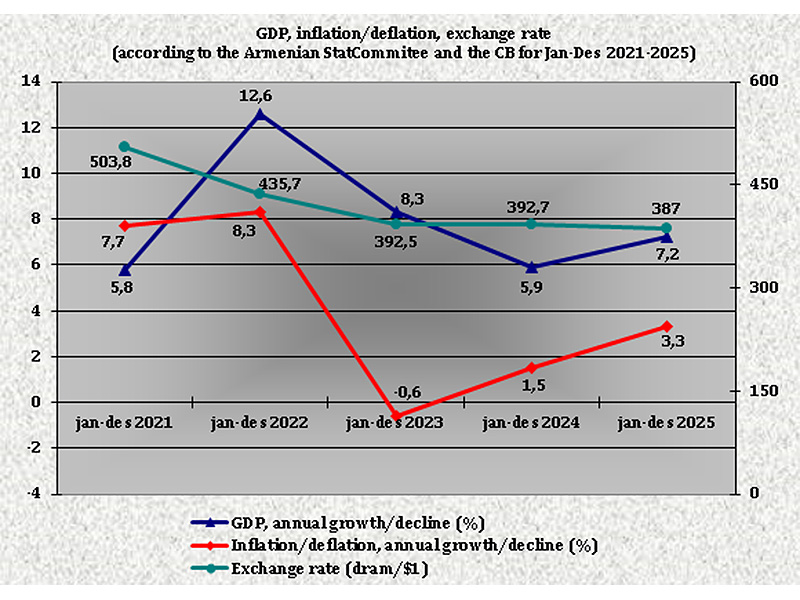
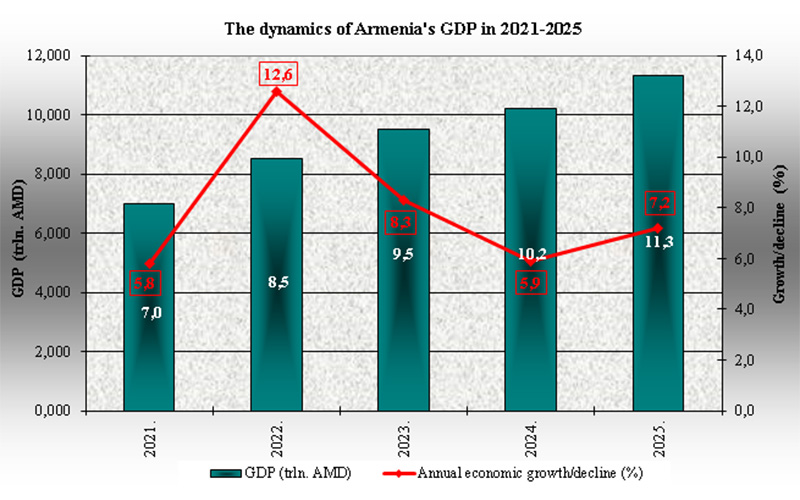
Specifically, according to the Program, the authorities forecast economic growth of 5.4% in 2026, which should gradually accelerate in the medium term and reach 6.1% by 2029.
Meanwhile, forecasts from international organizations for economic growth rates in the medium term remain significantly more restrained. Moreover, the justifications for such optimism presented in the document are primarily linked to factors whose impact is either already weakening or whose implementation deadlines have been repeatedly postponed in recent years.
Moreover, as analysts note, the program simultaneously acknowledges that Armenia's economic growth forecasts are subject to a high degree of uncertainty and include both negative and positive risks. Notably, the former predominates. In other words, the program's authors effectively acknowledge that, given significant uncertainty, the likelihood of the baseline macroeconomic scenario deviating from the forecast parameters is higher, leading to a negative outcome.
The forecasts for nominal total state budget revenues and tax revenues envisaged by the Medium-Term Expenditure Program for 2027-2029 have been revised upward. However, this increase is not accompanied by a comparable increase in their share of GDP.
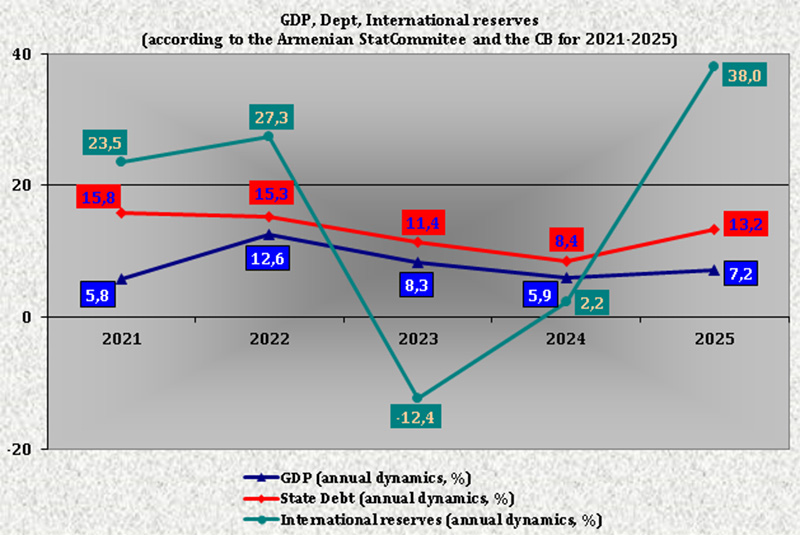
According to the program, by 2029, total state budget expenditures will amount to 4.461 trillion drams, a 35% increase over the 2025 figure. Public debt, increasing by 43.6% compared to the 2025 level of 5.355 trillion drams, will reach 7.689 trillion drams. Despite the continued growth of budget expenditures and public debt in absolute terms, their share of GDP is projected to decrease by 2029 compared to 2026, due to accelerated economic growth.
According to the document, the government's debt burden will increase significantly in the medium term. Public debt servicing costs, including interest payments, will increase by 42.4% by 2029 compared to the actual 2025 level, from 349 billion to 493 billion drams.
"It is also noteworthy that the expected budget expenditures for the current year, as envisaged by the program, even slightly exceed the figure approved by the state budget law.
Meanwhile, it is known that over the years of the current government's tenure, a persistent negative pattern of systematic underfulfillment of budget expenditures has developed. According to the latest official data, budget expenditures were underfulfilled by 29.6% in the first quarter of 2026," the study states.
Under these circumstances, analysts believe that expectations that actual budget expenditures will not only meet but even exceed the approved plan by the end of the year appear unreasonably optimistic. "And if the estimated budget execution for the current year appears unrealistic, then how reliable can the forecasts for the next three years based on this estimate be? In this regard, the feasibility of the medium-term forecasts included in the program raises serious doubts," the document states.
The full text of the study can be found at: https://www.luys.am/index.php?m=publicationsOne&pid=491