

ArmInfo. Recently, Armenian company Prime Insurance Brokers announced its entry into Lloyd’s of London, the world’s oldest and largest insurance and reinsurance marketplace. The Company has received Lloyd’s accreditation and has been registered as a Lloyd’s broker, gaining direct access to the world’s leading insurance and reinsurance market.
This is undoubtedly an unprecedented development for Armenia’s financial market, opening a door for the country to the diverse, highly regulated, tradition-driven and highly complex world of global insurance.
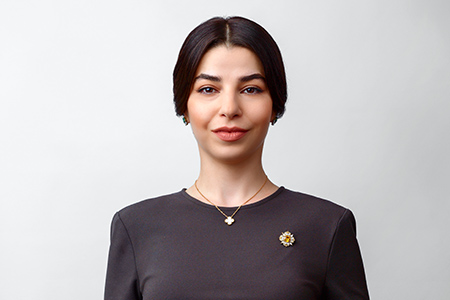
ArmInfo’s correspondent spoke with Siranush Yakhshibekyan, Chief Executive Officer of Prime Insurance Brokers, about this milestone and the Company’s future plans.
— Siranush, it is quite remarkable that a relatively small company like yours has managed to obtain Lloyd’s accreditation. How did you achieve this?
— As the English saying goes, ‘Nothing is impossible.’ Moreover, our Company has 30 years of experience in the reinsurance business, so joining the global market was a natural and dynamic step in our further development.
A great deal of preparatory work was undertaken: processes were established and procedures for placing business were introduced. Before becoming a Lloyd’s broker, we had already been very active as a reinsurance broker. Insurance and brokerage companies based outside Armenia were approaching us to provide reinsurance services. We were receiving risks from abroad and placing their reinsurance outside Armenia through our international partner network.
In other words, we already had the necessary experience, and now, with Lloyd’s broker status, we intend to further expand this area of our business.
Today, we are among approximately 410 Lloyd’s brokers operating worldwide.
— Apart from the significant reputational benefits, what does having a nationally based Lloyd’s-accredited company bring to the Armenian market?
— Our primary objective, of course, has been to work with Armenian risks, although from a business-efficiency perspective, working with international markets can often be more attractive.
Facultative underwriting—that is, the individual assessment of each particular risk—is generally more attractive in cross-border reinsurance transactions because of the larger reinsurance amounts involved, the higher quality and completeness of documentation, professional risk assessments, detailed loss histories and other relevant information.
In our market, insurance is still not always regarded as an essential and important business-management tool.
— The question, then, is how adequately Armenia’s large businesses perceive insurance products as an essential part of their business processes.
— This remains an issue when it comes to Armenian risks. In practice, the need for insurance often arises because it is required by foreign partners or international, including institutional, investors as part of contractual obligations.
At the same time, there are a number of large companies that genuinely regard insurance as a means of protecting their businesses against financial shocks. These are often clients that have already experienced significant risks and suffered major losses, sometimes precisely because they were uninsured.
Their attitude towards insurance is different. It is more difficult when a company is purchasing insurance for the first time and essentially starts from a “zero base” in terms of its understanding and experience, particularly when it comes to property insurance.
— That is surprising to hear. Is the insurance culture really at such a low level even among large companies?
— I would not put it that way. The issue is rather that when insurance is “imposed” rather than being the result of proper risk analysis and assessment, the approaches offered by insurers are not always suitable.
In developed markets, businesses turn to insurance brokers for professional assistance. In Armenia, however, a broker is still often perceived as a salesperson. The role of an insurance broker is fundamentally different.
We do not sell anything to the client. We purchase insurance on behalf of the client, helping them select the appropriate insurance product. We represent the client’s interests throughout the term of the insurance contract, and when an insured event occurs, we support and protect the client and represent their interests in dealings with the insurance company.
— Does this mean that you are also responsible for the client? You need to properly assess the client’s risks as well. How do you do this?
— In the classical sense, there are many mechanisms and instruments for doing so. In Armenia, however, what we sometimes call the “kitchen-table approach” also plays an important role.
The business community here is relatively small, and people know one another, particularly when the client is a large company. We generally know who owns the business, who manages it and what their professional capabilities are. In other words, you tend to be familiar with the company’s background and track record, at least over the previous five or six years.
— But that is the informal part of the assessment…
— Quite often, the informal part can be just as important as the formal one. If we are not confident about a client, we decline to work with them. So far, this approach has served us well.
As for the formal side, we analyze the available data, familiarize ourselves with the company and hold discussions with its representatives. We represent the client and therefore bear responsibility in relation to the client, just as we are responsible to the client for providing high-quality professional services.
— Does this mean that representing foreign companies is easier than representing domestic ones?
— From a values perspective, of course, we are strongly committed to working with Armenian companies. From the standpoint of business efficiency, however, cross-border contracts can sometimes be more attractive.
From an underwriting perspective, international business generally comes with a more comprehensive information package. With Armenian risks, the chain can be quite long and is not always stable: client – bank – insurance company – and by the time the matter reaches us, something may have changed and the entire process has to start again.
This happens quite frequently for the reasons I mentioned earlier. At the same time, the current situation should be assessed in the context of the relatively short history of Armenia’s insurance market.
The Middle East, China and Asia more broadly are rapidly growing markets. We have been approached by companies from China, Thailand, Taiwan and Central Asia, and the scale of their risks is simply not comparable with Armenia.
For example, a single premium there may reach USD 1.5 million. We do not see premiums of this size in Armenia. It is relatively rare for a large Armenian company to conclude an insurance contract with a premium of, for example, USD 1 million. For cross-border clients, meanwhile, an insurance premium of USD 1 million may represent only a minimum-size transaction.
There are also two distinct aspects to the nature of our work. When we work directly with a corporate client, we represent the client’s interests before the insurance company. When an insurance company approaches us to arrange reinsurance of its risks abroad, the insurance company itself becomes our client, and we represent its interests before reinsurers.
— Do you participate in insurance tenders in Armenia?
— We do not participate in tenders ourselves. Insurance companies participating in those tenders approach us for reinsurance support.
Local policyholders also approach us directly, in which case we help them select an insurance company and, where necessary, arrange the search for an international reinsurer.
We operate within a specialized niche. We do not actively advertise ourselves; around 95% of our clients come to us through recommendations. In some cases, even members of Lloyd’s syndicates recommend that clients approach us.
— How do you assess Armenia’s reinsurance market? At one time, reinsurance accounted for almost 90% of the market. Today, as Armenian insurance companies have become better capitalized and grown significantly, that share has declined considerably. What role does your Company play in this area?
— If we are talking about BBB—mandatory insurance of banking risks—it involves 100% reinsurance. In other cases, each insurance company operates within the requirements established by the Central Bank of Armenia, which regulate the maximum level of risk that insurers may retain.
Another consideration is the assessment of the client’s risk and its loss history. If the loss history is good and there is a sufficient safety cushion, reinsurance may not be necessary. If the loss experience is poor and the risk is significant, then even where regulatory requirements allow the insurer to retain the risk, reinsurance may still be necessary. This may, of course, increase the overall cost of the insurance contract.
Our role in the reinsurance business has two principal directions.
The first is treaty reinsurance, where general reinsurance arrangements are concluded on an annual basis. Under such arrangements, the reinsured share may represent between 60% and 80–90% of the insured amount.
The second is facultative reinsurance, where the reinsurance structure is developed individually from scratch for each particular risk. There are no standard solutions in such cases. We review the pricing proposal, negotiate the terms and structure the placement accordingly. Such arrangements tend to be somewhat more expensive.
— What does your portfolio look like today?
— Aviation accounts form approximately 30% of our portfolio, and cargo transportation represents roughly the same share.
A significant part of our business also relates to situations where foreign investors, including donor organizations, require clients to maintain insurance as part of specific programs or contractual arrangements.
The remaining approximately 40% of the portfolio includes property insurance, construction and erection risks, professional and other liability insurance, financial risks, industrial risks and even political risks.
Overall, approximately 70–75% of our total portfolio consists of reinsurance business.
— Even today, with your status as a Lloyd’s-accredited company, you are quite rightly regarded as part of the infrastructure of Armenia’s national insurance market. Nevertheless, are you prepared to work with companies from the European Union—for example, in Eastern European countries such as Poland, Bulgaria and Romania?
— Yes, certainly. We comply with Lloyd’s standards as well as the requirements of applicable local legislation.
There are, of course, certain countries where the activities of foreign insurance brokers are restricted, but there are not many such jurisdictions. Generally speaking, we are relatively unrestricted in terms of our ability to operate in European markets.
There is also another important aspect. Beyond the institutional significance of our Company obtaining Lloyd’s broker status, there is a very practical dimension: the ability to place business directly through the Lloyd’s market.
This means that we now have direct access to a market where risks are underwritten by Lloyd’s syndicates.
It is therefore important for the business community in Armenia and other countries to understand that obtaining Lloyd’s insurance coverage from Armenia is now achievable through a considerably more straightforward process.
This applies equally to major international companies with representative offices, branches or subsidiaries in Armenia. It applies to IT companies and mining companies, to all types of property risks and liability risks, including professional liability. It may also extend to medical insurance and employee life insurance.
Today, companies approach us because they are unable to obtain certain required standards of coverage in the local market or because they specifically need a Lloyd’s insurance policy. We can now provide them with that access.