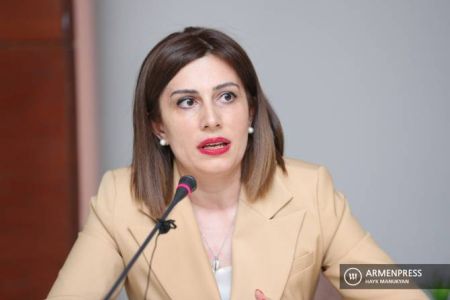
ArmInfo. The Armenian Ministry of Health will hold a new competition to fill the position of Director General of the Universal Health Insurance Fund. This was announced by Health Minister Anahit Avanesyan.
According to her, following the competition for the position of Director General of the Fund, which took place on June 24, negotiations were held with the selected candidate, Ruben Melkonyan, regarding the terms and conditions of assuming the position. However, the candidate did not respond positively to the official job offer, leaving the position of Director General of the Fund vacant, and, as a result, a new stage of the competition is beginning.
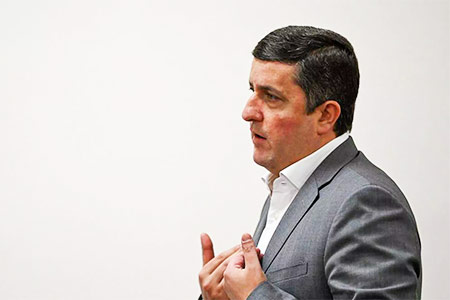
"During this period, Hayk Babayan, the Fund's Financial Director, was asked to temporarily serve as Acting Director General of the Universal Health Insurance Fund until the announcement of a new competition is published in the near future." Until the appointment of a CEO following a new competition, the Foundation's team, led by Mr. Babayan, will continue the process of establishing the Foundation and its further stable development in close collaboration with the Board of Trustees and the Ministry of Health," the minister wrote.
It should be noted that the implementation of the universal health insurance system in Armenia will be carried out in stages and will take three years. The first stage was launched on January 1, 2026. During this stage, children under 18, individuals aged 65 and older, even if employed, persons with disabilities aged 18 to 65, and members of socially vulnerable families were included in the compulsory health insurance system. The state will fully cover the health insurance policies of these categories of citizens.
Regarding the payment for insurance for individuals earning over 200,000 drams, the developers of the document opted for fixed payments, abandoning the model of withholding a percentage from salaries. Individuals with salaries of up to 200,000 drams will be included in the system starting January 1, 2027. Overall, the number of program beneficiaries is planned to approach 1.6 million people during the first stage. The basic cost of an insurance policy in 2026 will be 129,600 drams, or 10,800 drams per month. However, since the amount of payments to the Military Insurance Fund (Zinapa) will change, beneficiaries will not have to make the additional 10,800 drams monthly. In particular, individuals with salaries between 200,000 and 500,000 drams will be able to reduce their monthly contribution to Zinapa from 5,500 to 1,000 drams. The saved 4,500 drams can be used to pay for health insurance. Additionally, when filing their income tax return in 2026, they will be able to receive an additional 6,000 drams per month (as a tax deduction). For citizens with salaries between 500,000 and 1 million drams, the Zinapa contribution will also be reduced to 1,000 drams instead of 7,500, allowing them to redirect 6,500 drams to insurance. When filing their income tax return in 2027, they will be able to receive a 4,000 drams monthly refund. Those earning over 1 million drams will be able to receive a 4,000 drams monthly refund by filing their income tax return in 2027. Insurance payments will be made by a tax agent, meaning they will be withheld from wages in the same way as income tax, social security payments, etc.
In 2026, the insurance will cover the most in-demand services, including outpatient care, clinic visits, family doctor visits, emergency room visits, specialist consultations, and laboratory tests (a certain number per year). The list of services will be expanded and refined to cover certain surgical interventions, in particular, ophthalmological (cataracts), cardiovascular, and other procedures. The list of diseases will be approved by government decisions. Moreover, a single package of services will apply to all age groups. An annual medical examination will be mandatory within the system, which will begin in 2029. The 2026 budget allocates an amount of... 127 billion drams. The funds will be managed by the State Health Insurance Fund, whose director must be selected through a competition. He/she will be required to submit an annual report to the country's parliament on the work performed and the movement of funds, as well as an action plan for the following year.