

ArmInfo. The prospects for Armenian products entering European markets depend primarily on their competitiveness and compliance with quality requirements. As reported by RIA Novosti, this was stated by Russian Agriculture Minister Oksana Lut.
According to the minister, it is precisely the ability of Armenian producers to compete in foreign markets and the quality of their products that will determine the possibility of promoting them in Europe. She also wished Armenia success in this area.
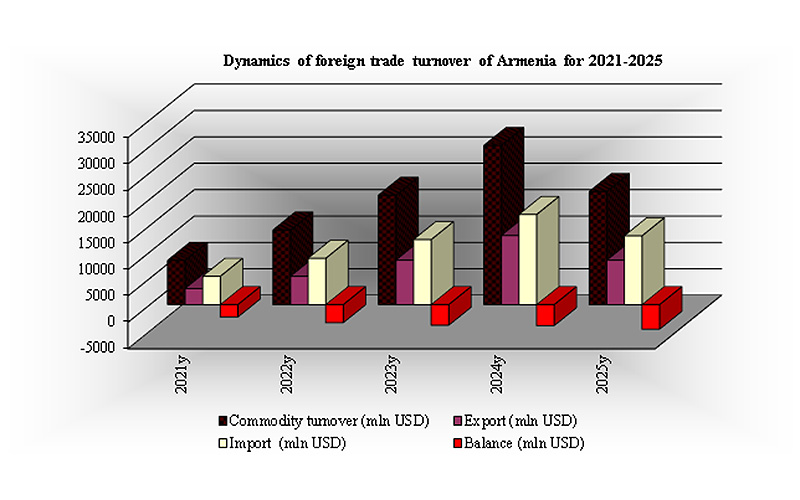
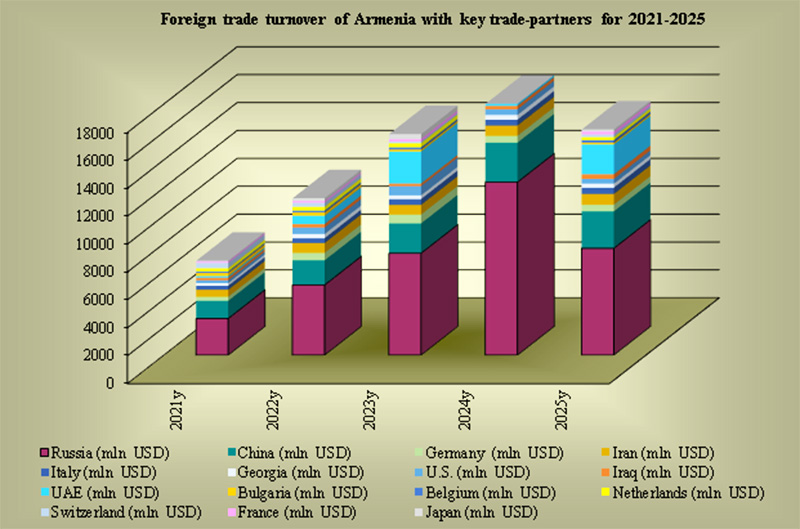
It should be noted that, according to data from the Statistical Committee, Armenia's trade turnover with the EU countries increased by 7.2% in 2025, reaching $2.5 billion (or 11.7% of total trade). Export deliveries increased by 9% to $666.8 million, amid a 6.5% rise in imports to $1.8 billion.
In January-July 2026, mutual trade with the EU countries increased by 57.2%, reaching $2.2 billion. At the same time, exports grew by 70.7% to $591.6 million, amid a 52.7% increase in imports to $1.6 billion.
It should be recalled that, starting at the end of May this year, Russian authorized agencies — Rospotrebnadzor and Rosselkhoznadzor — gradually introduced restrictions on supplies from Armenia to Russia and the EAEU market of fresh agricultural products, flowers, fish, fish products, as well as dairy products. At the same time, Armenia traditionally sent around 80-90% of its exports of these product groups to Russia. In view of the difficult situation in which Armenian producers and exporters found themselves, the government is developing support programs to stimulate exports to the EU and other countries. In particular, these involve covering transportation costs and customs duties for entering new markets.
Thus, the following picture emerged in mutual trade with Russia in January-July 2026: trade turnover decreased by 20.5% to $3.1 billion. Exports amounted to $1.4 billion, down 8% year-on-year, while imports amounted to $1.7 million, declining by 28.8% year-on-year.
Trends in trade with the EAEU countries are also not encouraging. The volume of mutual trade during the reporting period decreased by 18.4%, amounting to $3.3 billion. At the same time, exports declined by 7.2% to $1.5 billion, amid a 26.1% decrease in imports to $1.8 billion.