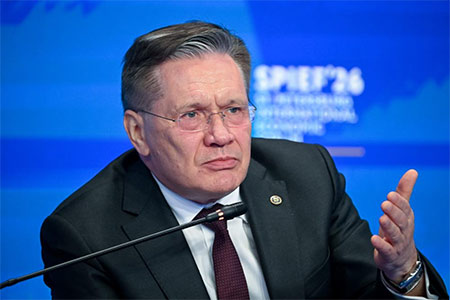
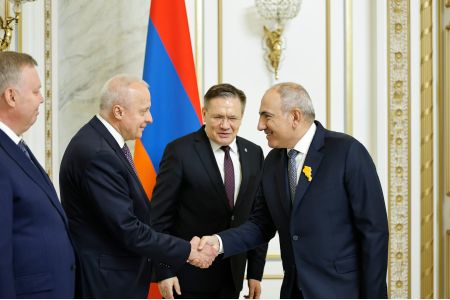
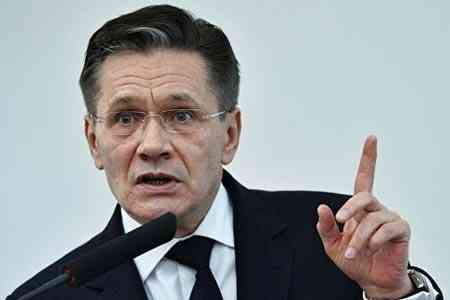
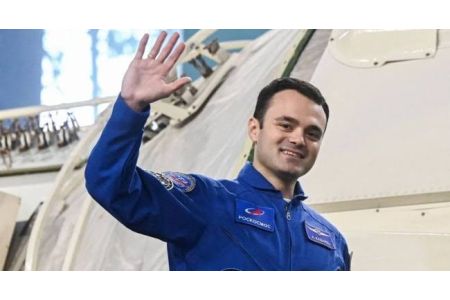
ArmInfo. Rosatom State Corporation is offering Armenia the construction of a new nuclear power plant with a capacity of 1 GW. This was announced by Alexey Likhachev, head of the Rosatom State Corporation, in a conversation with journalists in Yerevan on September 29.
According to him, Rosatom is currently faced with the task of formulating the most competitive proposal in the coming months so that Armenia can select a partner and vendor for the construction of the new unit. "And in our understanding, this unit should be at least one, with a capacity of at least 1 GW (1000 MW). This is how we assess the needs of the energy system deficit through 2040. And if we talk about longer terms—and we should always plan decades ahead, not just one—then, of course, I think, decisions about a second unit are not far off. But I want to emphasize once again that this is the sovereign, competent decision of the Armenian government. Now, returning to our proposals. We made a specific proposal to the Armenian government for a 1,000-unit unit within the framework of our best-in-class VVER-1000 design. These are the VVERs we are replicating domestically, these are the VVERs we built and continue to build in India and Iran, and they combine very high economic efficiency, namely low electricity costs, with all the necessary Generation 3+ safety systems," Likhachev stated.
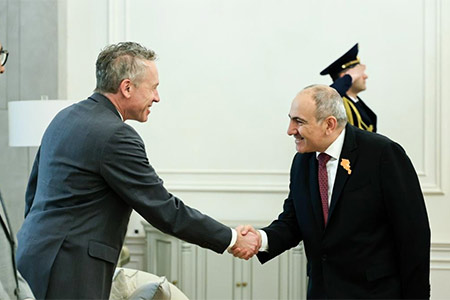
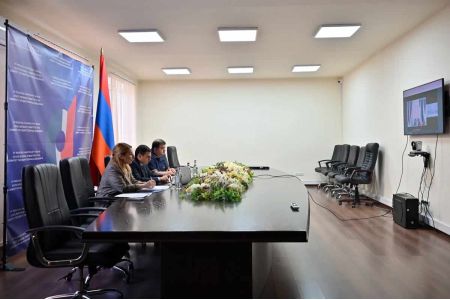
According to him, this proposal is the best currently available on the global market. He added that all necessary materials for the initial stage of discussions, to initiate this debate, were officially handed over to Armenian Prime Minister Nikol Pashinyan and his team today.
Likhachev added that Rosatom is prepared to view this project as an integrated international one, involving international suppliers, with whom the state corporation, despite all external pressure, continues to actively cooperate. "Well, it's well known that in our international projects in Egypt, Turkey, Uzbekistan, and Kazakhstan, we use best international practices, in agreement, of course, with the national customer. And a number of competent companies from the European Union and Asian countries may be involved. For now, we cannot discuss specific companies, names, or competencies, because here we will act solely on the wishes of the customer, the Armenian government, and the specialists who will lead the technical side of the negotiations," he added. He then cited an intergovernmental agreement and contract with Kazakhstan, where a two-unit VVER-1200 reactor will be built in an international consortium involving French, Korean, and Chinese manufacturers, as a well-known example of Rosatom's victory in the global nuclear market. "This is simply an example of how we can implement projects with international suppliers, but, I emphasize again, exclusively at the request of our customer," he said. When asked about where such a large amount of generated electricity would be sold, given that Armenia already has an electricity surplus, Likhachev disagreed with this assessment.
"Let me disagree with you about the capacity surplus." "So there may be a capacity surplus, but the availability of electricity at reasonable prices, in my opinion, is, well, I'd say, just barely enough, without offending anyone, using the Russian word "just barely enough." But look at the rate of electricity consumption growth in Armenia. Last year, it was 7%. And even if we project a very ambitious 4% annual consumption growth, we'll reach a capacity deficit of approximately 1 GW by 2036, that is, by the very start of operation, taking into account the decommissioning of Metsamor, you see? Therefore, perhaps in terms of installed wind and solar capacity, you have enough, as they say, on paper, but in terms of practical and affordable electricity on the grid, it's a question mark," he said.
The second point, he continued, is that Armenia has very pronounced peaks in daily consumption fluctuations. According to the head of the state corporation, this is due to the large share of solar power and solar generation. "And what's so good about nuclear power? It's 24/7, regardless of sun, wind, weather, nature, and everything else: they bring in fuel for 10 years, and for 10 years, like clockwork, the unit operates, you see? So, in this sense, well, the generally accepted thesis that in global generation, only nuclear power and, in some places, hydroelectric power plants can play a basic function, a basic role—this is already, as they say, a historical fact. And once again, I want to emphasize that we heard today with great satisfaction the words that nuclear competence, the competence of the nuclear energy industry in Armenia will develop. I believe this is a very important stage of our negotiations. "Firstly, I can't predict who will be chosen as the vendor or how the project itself will be structured, both from a technological standpoint (technological design) and from an economic perspective. Secondly, frankly, I don't know, as that's the government's responsibility. Obviously, new intergovernmental agreements will be required," Likhachev noted.
In this vein, he noted that the construction of a power plant—whether small or large—is always the subject of separate intergovernmental agreements, and the financial scenario will be no less important. "We have experience working with various financial scenarios and am confident that we can find something that is truly acceptable not only from a technological standpoint, but also from an economic standpoint for Armenian consumers," he concluded.
It should be noted that the life extension program for Unit 2 of the Armenian NPP is designed for the plant's operation until 2036, with the possibility of further discussions on an extension until 2046. The first stage of the extension program (until 2026) was carried out with financial support from Russia ($270 million in loans and a $30 million grant). The main work was aimed at modernizing equipment and justifying the safety of Unit 2 until 2026. In December 2023, Armenian Nuclear Power Plant CJSC and Rosatom Service JSC signed a formal agreement to extend the plant's service life for another 10 years. Approximately $165 million from funds saved during the first phase of the project has been allocated for these purposes. Armenian and NPP management are considering operating the power unit until 2041-2046, subject to all assessments and approval by the IAEA. Negotiations are also underway to build a new nuclear power plant.