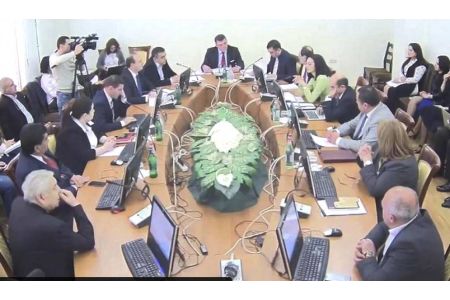


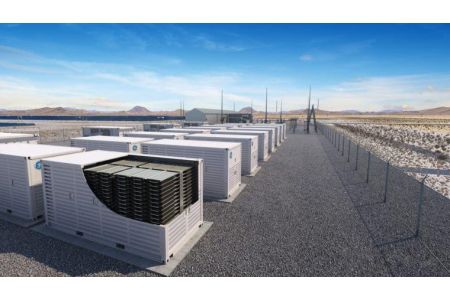
ArmInfo. The Public Services Regulatory Commission discussed draft bylaws necessary for the full implementation and operation of storage stations. This was reported by the PSRC press service.
According to a source, representatives of the company "Kinetic" are assisting in the development of the bylaws, with financial support from the Armenian branch of the Swiss development organization Helvetas. During the discussions, the issue of the company's ongoing consulting work for the Commission was raised.
This work concerns the process of developing bylaws necessary for regulating the operation of storage stations. Electricity in connection with amendments to the Law "On Energy."
During the meeting, the issues under current discussion were clarified and deadlines for summing up the work were set.
It should be noted that the rapid growth of solar energy in Armenia has led to serious risks to the stability of the energy system, the environment, and the country's economy. Following the record-breaking year of 2025, the country's installed solar capacity surpassed 1 GW and approached 1.1-1.2 GW. In 2025 alone, approximately 615 MW of new solar capacity was commissioned in the country. Meanwhile, the Armenian power grid was not originally designed to handle sudden surges in solar generation. During the day, excess generation is released to the grid, and in the evening, when the sun sets, the system experiences a deficit, which can lead to accidents and outages without industrial energy storage systems. Due to the excess solar energy during daytime hours, dispatchers are forced to forcibly limit or shut down other power plants (such as thermal or nuclear power plants), which disrupts the optimal operation of the entire energy system. Operators and networks are recording large-scale disruptions from independent producers (such as unauthorized connections or data corruption), leading the Electric Networks of Armenia to estimate preliminary damages in the billions of drams.
The uncontrolled installation of large ground-mounted solar power plants on fertile land also leads to the withdrawal of valuable agricultural land from circulation. Armenia currently lacks effective capacity and standards for the safe recycling and disposal of used solar panels containing toxic elements.