ArmInfo. Net foreign investment in Armenia's economy increased threefold year-on-year in the first half of 2026, reaching $395 million (145.2 billion drams). Net foreign direct investment (FDI) increased significantly, reaching $309 million (113.5 billion drams). This is evidenced by data from the RA Statistics Committee.
According to statistics, the significant increase in these indicators stemmed from the net flows from the UAE and Russia moving from negative to positive—a total of $416 million. Russia also regained its lead in FDI at $145.5 million. Luxembourg ranks third in terms of positive net total foreign investment in Armenia at $73.3 million, which is entirely FDI. Moreover, Luxembourg ranks second in FDI, while the United States ranks third at $46.5 million, a fivefold increase year-on-year (with the leading negative net investment flow at $187.4 million, a significant decline from the positive level).
In particular, the leader in positive net investment flow, the UAE ($224 million), resumed investing in the mining industry, directing almost its entire volume there, with the remainder going to the food industry, automobile trade, transportation, and financial intermediation. At the same time, the UAE continues to reduce investment in cigarette production, electrical equipment, air transport, and law and accounting.
Russia, which ranks second in positive net investment flow at $192 million, directed almost all of this investment into metal ore mining, with the remainder going to retail, ground transportation (South Caucasus Railway), financial intermediation, food processing, crop production, livestock and fisheries, textiles, home improvement, and research and development. Russia also continues to reduce investment in electricity and gas supply, telecommunications, real estate and housing construction, beverage production, air transport, software development, and law and accounting. Investment from Russia in computer manufacturing, electronic and optical equipment, wholesale trade, telecommunications, sports, entertainment, and recreation has completely fallen to zero.
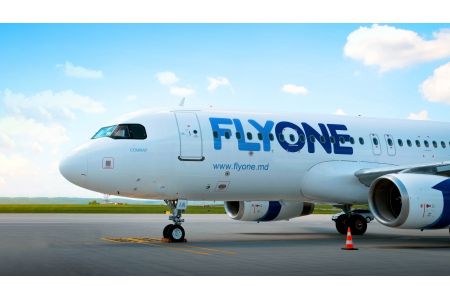
Luxembourg, which ranks third in positive net foreign investment at $73.3 million, directed almost all of its investment into air transport, with the remainder going to warehousing and support services, cigarette production, and research and development, while simultaneously reducing investment in energy projects.
As for the US, which ranked third in FDI at $46.5 million, this amount was almost entirely directed toward software development, consulting, and computer technology, with the remainder going to housing construction and wholesale trade. At the same time, US investment in beverage production, cigarettes, basic metals, energy projects, consumer services, and research and development has declined.
In terms of negative net total investment flows, in addition to the US (leading at $187.4 million), Kazakhstan, India, Singapore, the United Kingdom, Moldova, Lebanon, Canada, Switzerland, Sweden, Hong Kong, Bulgaria, and Poland also saw their net investment decline from positive to negative, as well as investments from the Philippines, Qatar, Japan, Cyprus, Croatia, France, and Italy, which remained negative. As a reminder, a year earlier (in the first half of 2025), Kazakhstan, Singapore, Switzerland, and Canada were among the top 5 countries in terms of positive net investment inflows into the Armenian economy, while Russia, Cyprus, and the UAE led in terms of negative investment.
Note that the net investment reported in the statistical report is the difference between attracted and repaid foreign investment. (The calculated exchange rate of the dram against the US dollar as of June 30, 2026, was 367.89 drams per US dollar).