


ArmInfo. Long-term growth opportunities for Eurasian countries and economic policy in the context of structural change were discussed by participants in the roundtable discussion "Growth Potential of Eurasian Economies: At the Intersection of the Desirable and the Possible" on the sidelines of the Eurasian Fund for Stabilization and Development (EFSD) International Economic Conference "Towards Balanced Economic Development."
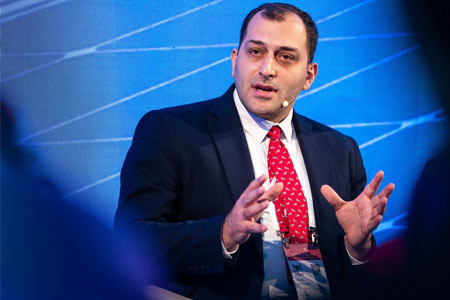
"Potential output is a key benchmark for economic policy. It answers two questions: how quickly an economy can grow sustainably, and to what extent its current dynamics correspond to these potentials. For the EFSD, these estimates form the basis for dialogue with the authorities of member states. In 2022-2025, growth in the region excluding Russia amounted to approximately 7.2% per year. This was driven by strong domestic demand, high investment activity, and fiscal stimulus. Growth is above potential almost everywhere, and the output gap is positive across all six countries. "This points to excess demand and risks of macroeconomic imbalances," noted Taras Tsukarev, Director of the EFSD Research Department.
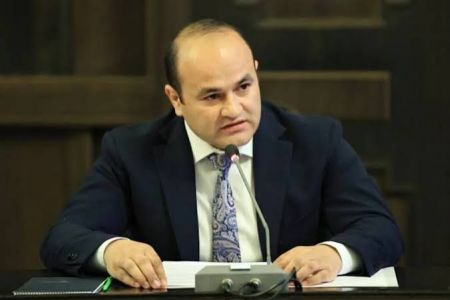
The discussion was moderated by Valery Chernookiy, Professor of Economics at the Russian School of Economics. Participants included Asan Darbayev, Vice Minister of National Economy of Kazakhstan; Taras Tsukarev, Director of the EFSD Research Department; Donato De Rosa, former Lead Economist at the World Bank; Roman Mogilevsky, Senior Economist for Regional Cooperation at the Asian Development Bank; Nurbulat Mukanov, Advisor to the Chairman of the National Bank of Kazakhstan; and Alisher Tolepbergen, Macroeconomic Advisor at the IMF's CCAMTAC Regional Center.
The participants examined the role of institutional, technological, demographic, and investment factors in long-term growth, as well as reform priorities and the regional impact of economic policy. Estimating potential GDP was a separate topic: approaches to this may vary among national regulators, international organizations, and independent experts.
The Eurasian Fund for Stabilization and Development (EFSD) is a $9.8 billion regional financial mechanism established in 2009 by Armenia, Belarus, Kazakhstan, Kyrgyzstan, Russia, and Tajikistan. The EFSD's key mandate is to promote economic and financial stability in its member states and support their sustainable development. The EFSD is an integral part of the global financial safety net, its regional element for Eurasia.