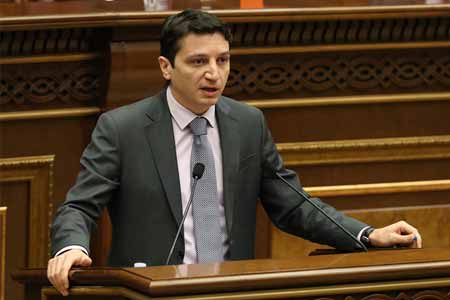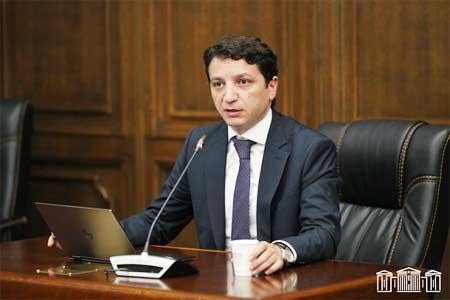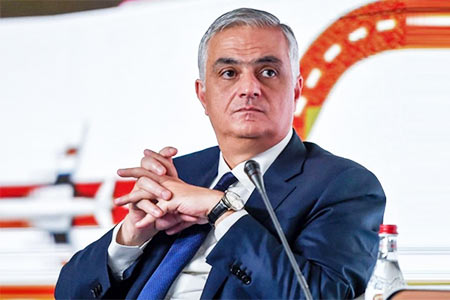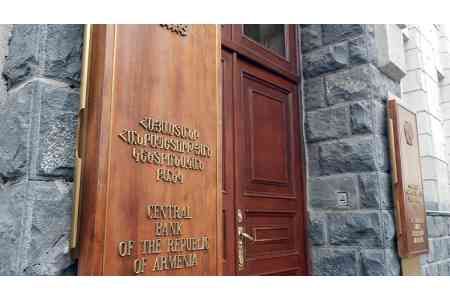


ArmInfo. The positive impact of a number of short-term factors that contributed to economic growth in previous years is gradually weakening, and therefore maintaining sustainable and high rates of economic growth in the future will largely depend on increased productivity, stimulation of exports and private investment, and the effective implementation of measures to improve the investment environment. Central Bank of Armenia Chairman Martin Galstyan expressed this opinion on November 2 at a hearing on the country's draft state budget.
He noted that fiscal policy will be guided by the goal of ensuring economic growth at 5.8%, while taking into account the need to continue fiscal consolidation and strengthen debt sustainability.
According to the head of the Central Bank, the tax-to-GDP ratio is expected to increase by 0.6 percentage points, reaching 25.4%, and revenues will have a moderating effect on GDP.
At the same time, the tax-to-GDP growth structure in 2027 includes: Certain revenue sources, particularly royalties and health insurance payments, will continue to play a significant role.
In the medium term, Galstyan noted, a consistent reduction in the current expenditure balance is envisaged, while capital expenditure remains above the historical average.
He stated that current expenditure as a percentage of GDP will increase by 0.1 percentage points, reaching 24.3%, while capital expenditure will increase by 0.1 percentage points, reaching 5.6%. As a result, the total expenditure as a percentage of GDP will remain at 29.9%. The head of the Central Bank noted that the growth of current expenditure is significantly impacted by increased expenditure on social benefits and pensions, as well as health insurance. He noted that capital expenditures are primarily focused on developing economic, educational, and security infrastructure, which could contribute to increased economic growth potential.
The budget deficit in 2027 will be 3.4% of GDP, 0.6 percentage points lower than the 2026 figure, but higher than the level outlined in the medium-term expenditure program for 2027-2029.
The government debt-to-GDP ratio will increase by 0.7 percentage points to 47.2%, remaining below 50%.
Galstyan noted that amid geopolitical and economic uncertainty worldwide, external and internal risks associated with economic growth, tax revenues, and government spending remain. To manage risks, he noted, it is planned to create a reserve fund equal to 0.3-0.6% of GDP and a liquidity cushion in the treasury stabilization account of at least 1% of GDP. In this regard, he emphasized the importance of strictly adhering to the limits on the use of reserve funds.
Summing up, Galstyan noted that, according to estimates, fiscal policy will continue to focus on fiscal consolidation and stability in the medium term, with a moderately restrictive and countercyclical nature.