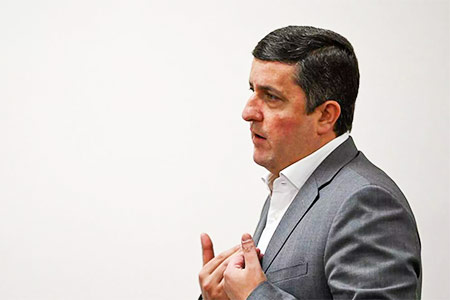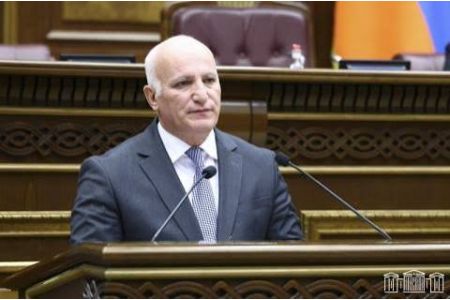


ArmInfo. Armenia has had no SME development strategy since 2024. This was announced by Hakob Avagyan, head of the SME Association of Armenia, during a panel discussion on "Limitations and Opportunities for Business Expansion Outside Yerevan," initiated by the Union of Armenian Banks in Gyumri.
He noted that the latest strategy was scheduled to be completed in 2024, and discussions have been ongoing since then, but no concrete details have emerged. The expert lamented the closure of the National SME Development Center, which had branches in the regions and Yerevan, almost five years ago. He noted that this structure had been "leading businesses by the hand" from the very beginning, attempting to introduce competition for banks by launching loans of up to 5 million drams without collateral, with a 5% interest rate.
Avagyan, citing official data, reported that in 2024, the number of active business entities in Armenia was 72 thousand, increasing to 75 thousand in 2025. Of these, according to him, 97% are active SMEs. At the same time, in terms of areas of activity, manufacturing accounts for only 11% of SMEs. "That is, imagine what we are dealing with," he noted. The head of the Association also noted that there are 5 thousand SMEs operating in the Shirak region. SMEs, of which over 90% are microbusinesses, number approximately 3,000 without employees.
Recalling that Shirak is the poorest region of Armenia, he emphasized that one of the effective ways to overcome poverty is the development of SMEs. Avagyan welcomed the construction of schools in the country's regions, but noted that no matter how excellent an educational institution is, people will leave their cities if jobs are not created. In this regard, he cited the example of the people of Artsakh, who, after being forcibly displaced to Armenia, in most cases found refuge in the regions, but many then moved to Yerevan in search of work.
The head of the Association noted that the economic policies of Yerevan and the regions should differ based on the specific characteristics of each region. For example, he emphasized that the tax system could be the primary source of differences. "A store in the courtyards of Gyumri cannot be taxed the same way as a store in the courtyards of Amiryan Street in Yerevan," he said.
This point of view was also supported during the panel discussion by Vahram Mirakyan, head of the Mantashiants Business Club. He noted that the country's regions lack the opportunity to compete with Yerevan. Infrastructure and jobs are concentrated in the capital. "What can be done in this case? We need to equalize opportunities!" he said, deeming it appropriate to introduce legislative changes, particularly in the area of taxation. The business club representative stated the need to introduce tax incentives in the country's regions—either in the form of a change in the profit tax or a reduction in the income tax, etc. "We need to create some kind of advantage so that, at least based on tax incentives, it would be possible to attract investment to the regions, after which infrastructure will be built there. I think we need to equalize opportunities." "But at the moment, Yerevan has a competitive advantage," Mirakyan noted.
He also cited a shortage of highly qualified personnel in the regions as one of the existing problems, as they are concentrated in the capital. "No good specialist is ready to move from the capital to the region, including due to the lack of infrastructure, insufficient leisure facilities, etc.," he said.
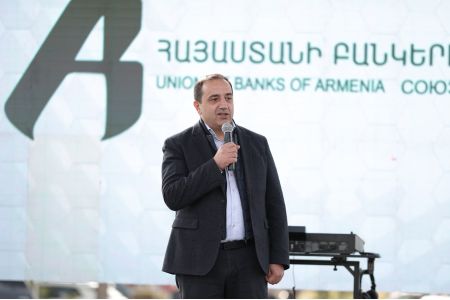
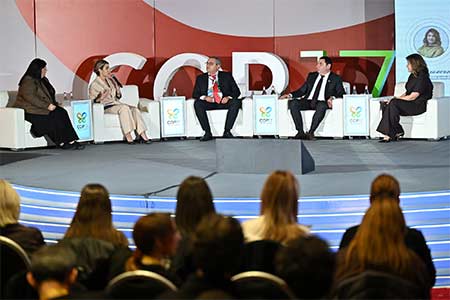
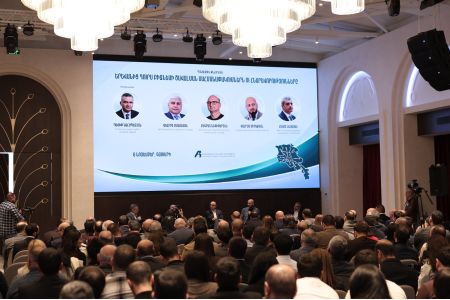
It's worth noting that, at the initiative of the Union of Banks of Armenia, a conference dedicated to the dialogue between business and the banking sector is held twice a year in regional cities across the country. Events have already taken place in the Aragatsotn, Syunik, and Lori regions and the city of Yerevan. This time, the Union of Banks of Armenia hosted guests in the Shirak region. In addition to the traditional conference, this year's event featured an expo, "Banks and Business in Gyumri," where Gyumri residents had the opportunity to learn about banking products, special offers, and services.
In the afternoon, a conference, "Armenia's Economy Outside Yerevan," was held. Its purpose was to bring together representatives of the banking system, government and international organizations, and the business community. The conference presented business financing opportunities outside Yerevan and available financial instruments, and discussed prospects for expanding economic activity, investment, and access to financial services in the regions.
In particular, panel discussions were held, as well as a screening of the film "Success Stories," which vividly depicts the journey of entrepreneurs in the Shirak region, the efficient use of local resources, and the results of a reliable partnership with the banking system.