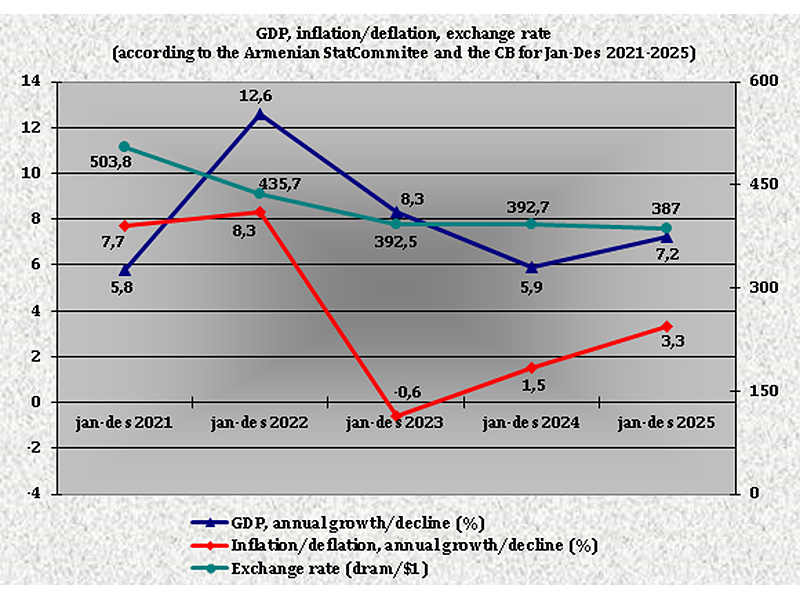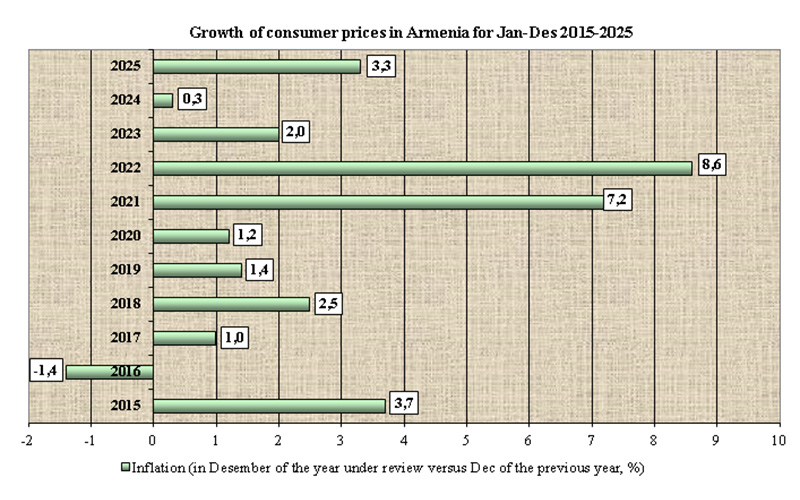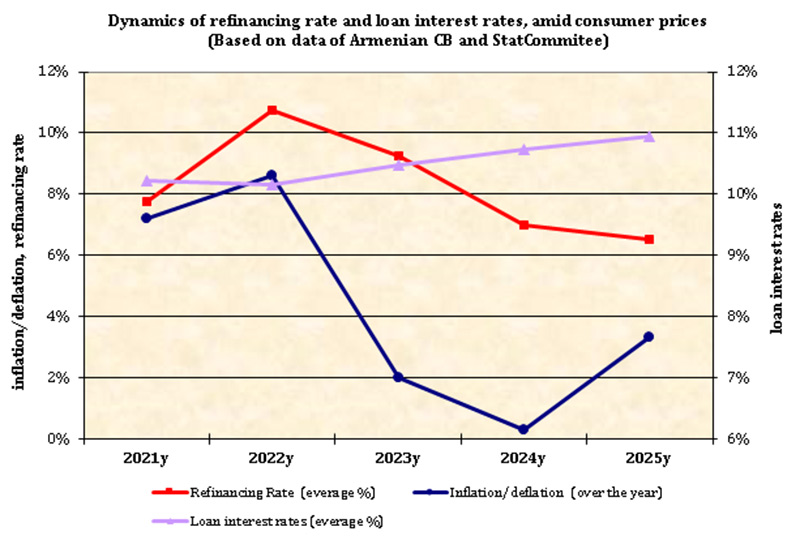



ArmInfo. Among the EAEU countries, Armenia had the lowest annual inflation in September 2026 at 4.3%, while Kyrgyzstan had the highest at 12.2% (compared to 9.4% in 2025). For comparison, among the EAEU countries, Armenia also had the lowest inflation in 2025 at 3.3%, while Kazakhstan had the highest at 12.3%. This is evidenced by the on the consumer price index in the EAEU, the EU, and other countries.
Meanwhile, in September 2026, annual inflation in Kazakhstan retreated to 9.3%. Inflation fell below this level in Russia, at 6.3% (compared to 5.6% in 2025), and in Belarus, at 4.6% (compared to 6.8% in 2025).
In Georgia, Armenia's neighbor, annual inflation accelerated from 4% in 2025 to 5.6% in September of this year. Among the post-Soviet countries, Ukraine is also mentioned, where annual inflation in September of this year was 5.6%. amounted to 10% (versus 8% in 2025).
Globally, the highest inflation remains in Turkey - 29.7% (versus 30.9% in 2025), while the lowest was recorded in Sweden and Switzerland - 1% and 1.2%, respectively (versus 2.1% and 0.2% in 2025).
In the EU, annual inflation in September of this year was 3.8% (versus 2.3% in 2025), and the highest level was recorded in Romania - 6.5% (versus 8.6% in 2025). Lithuania followed with 6.1% (versus 3.2% in 2025), Bulgaria with 5.6% (versus 3.5% in 2025), Luxembourg and Cyprus with the same 5.2% (versus 3.3% and 0.1% in 2025), Greece with 5.1% (versus 2.9% in 2025), and Spain with 5% (versus 3% in 2025). In the remaining EU countries, inflation fluctuated between 2-4.5%, with prices accelerating in most of them, with the exception of Sweden, where inflation fell to a world low (1%).
By comparison, Romania also recorded the highest inflation among European countries in 2025 (8.6%), while Cyprus had the lowest level at 0.1%, the lowest in the world. Incidentally, inflation in Switzerland was very close to this minimum in 2025 at 0.2%, where inflation was also near the minimum (1.2%) in the reporting period.
Among other countries, inflation remained unchanged over this period in Japan at 2.1%, but increased in the United States from 2.7% to 3.7%, in Canada from 2.4% to 3.1%, in the United Kingdom from 3.3% to 3.5%, in Norway from 3% to 3.4%, and in Moldova from 6.8% to 8.6%. However, the highest inflation remains in Turkey, with a slight decline (from 30.9% to 29.7%).
As a reminder, according to the RA Statistical Committee, the 4.3% annual inflation in Armenia in September was largely due to a 6.4% increase in food prices and a continued rise in services prices of 2.9%. At the same time, non-food prices accelerated to 2.4%. For the entire year of 2025, food prices increased more modestly – by 4.6%, services – by 3.1% (almost the same as today), and non-food products – by only 0.9%.
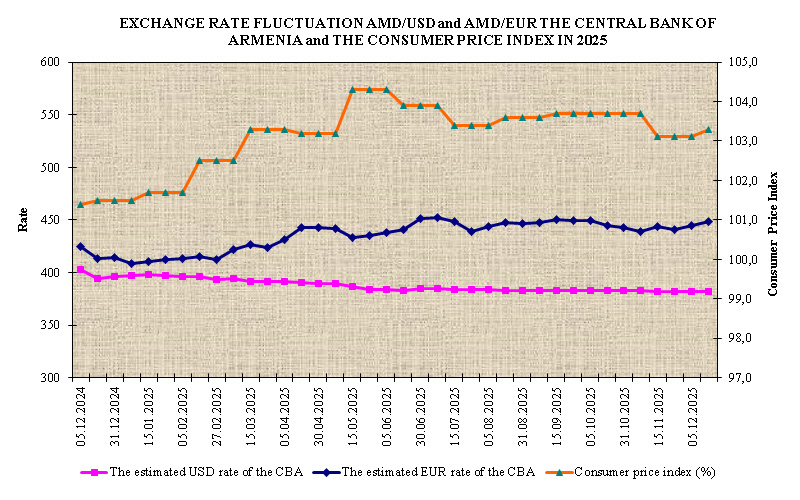
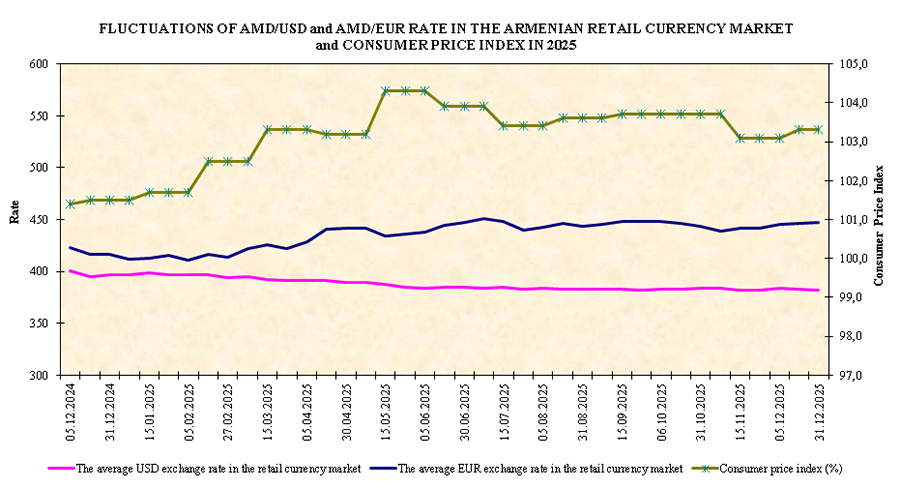
It is worth noting that, according to the Central Bank's updated forecast in September, inflation in 2026 is expected to be in the range of 4.5-4.2% (versus the previously projected 4.1-3.9% and actual inflation 3.3% in 2025), with a target of 3% (+/- 1 percentage point). For 2027, the Central Bank forecasts inflation in the range of 3.4-2.7% (against the previously forecast 3.6-2.9%). Moreover, according to the new forecast of the Central Bank, inflation in the segment of non-exportable goods, characterized by rigid prices, will increase more noticeably in 2026 - to 3.8-3.7% (from 2.2% in 2025), than the previously forecast 3.5-3.4%, and will move further in 2027 to 4.7-3.5% (against the previously forecast 3.5-2.7%).