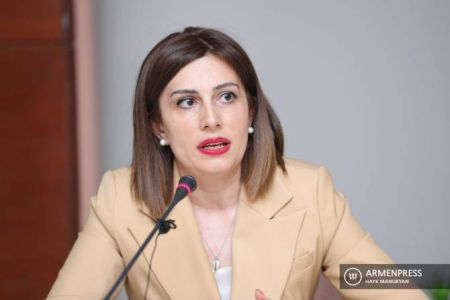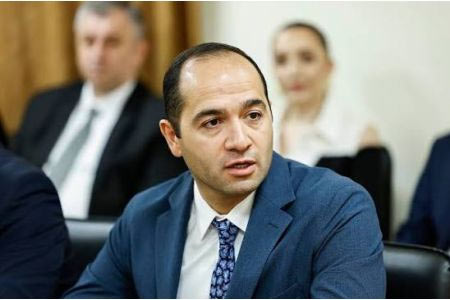


ArmInfo. A turning point has been reached in Armenia’s financial system. Finance Minister of the Republic of Armenia Vahe Hovhannisyan stated this on November 18 while presenting the draft state budget of the Republic of Armenia for 2027 to the National Assembly of the Republic of Armenia.
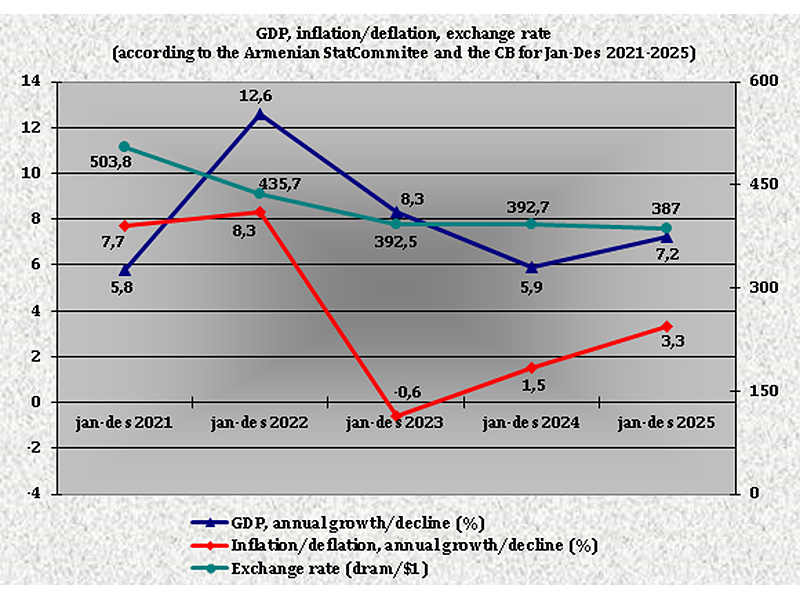
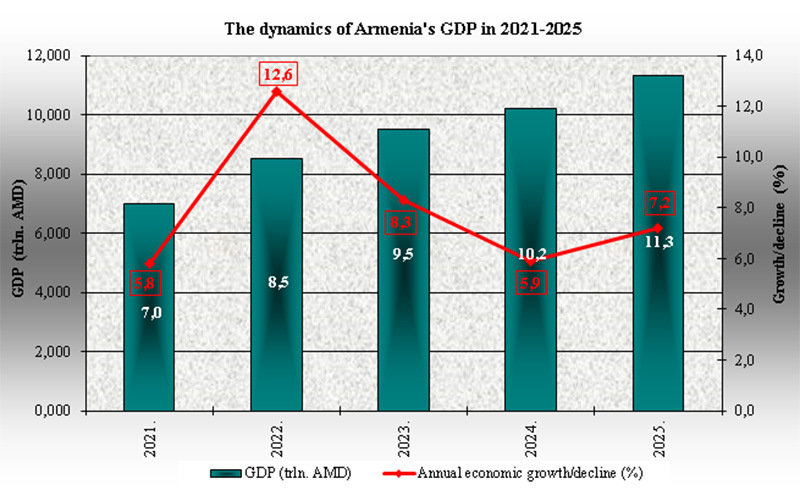
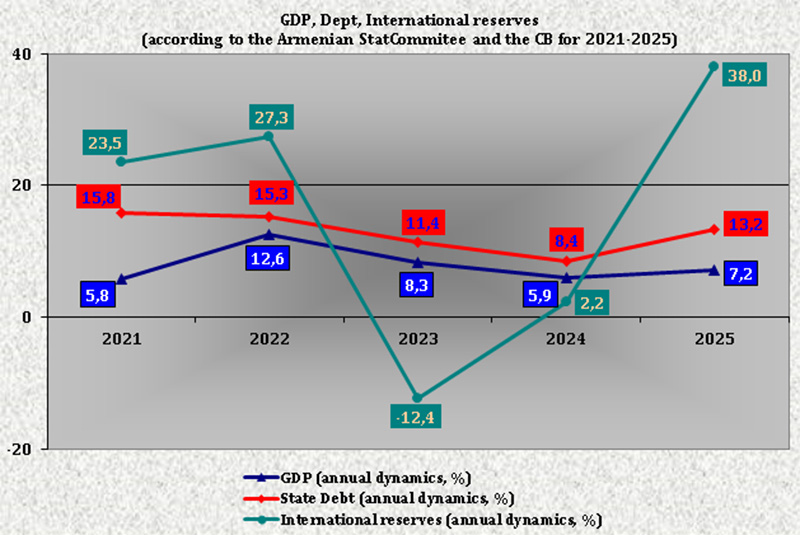
According to him, three years ago, the task was set to create innovative financial systems, which were ultimately established. In 2021-2025, it was possible to ensure average annual economic growth of 7.9%. In 2027, as Hovhannisyan noted, state budget expenditures will double compared with 2021, reaching 4 trillion drams, which in itself indicates a turning point in development. Compared with 2022, capital expenditures will also double, which, according to the minister, means not only the creation of new infrastructure, but also an expansion of the capabilities of the public and private sectors. "The implementation of capital expenditures is not only a matter of money, but, first and foremost, an expansion of the capabilities for the synchronized operation of public administration systems. And if today we have recorded this result, we can say that development has indeed reached a turning point," Hovhannisyan said, recalling that Armenia’s 2027 state budget draft is the first budget within the framework of the five-year government program, which should ensure the financing of reforms from the previous stage and provide a solid foundation for the implementation of future programs.
The minister noted that economic growth of 5.8% is forecast for next year, while in the medium term, annual GDP growth is projected at 6%. Nominal gross domestic product is forecast at 13 trillion 614 billion drams, which will be twice the corresponding figure for 2021.
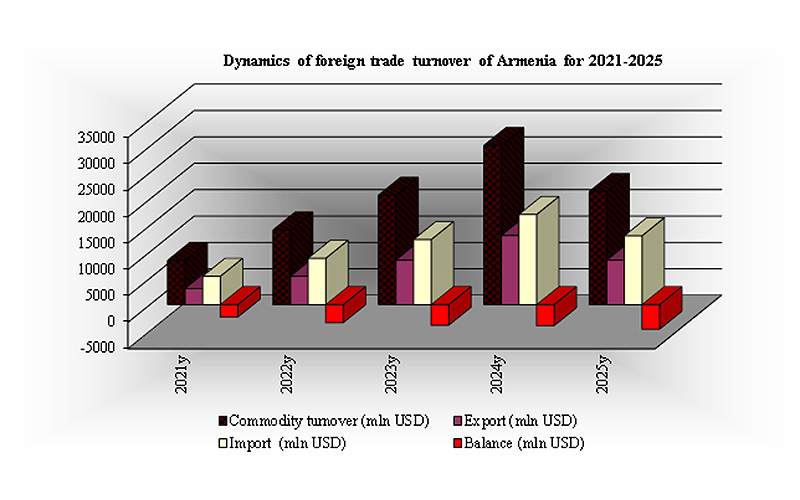
Hovhannisyan recalled that during discussions in the National Assembly committees, the opposition frequently raised the issue of the republic’s shrinking trade balance and the country’s growing deficit, linking these circumstances solely to external factors, which does not correspond to reality. According to the minister, Armenia not only effectively addressed the state budget deficit, but also significantly increased its foreign reserves. As of the end of October 2026, these reserves amounted to approximately $7.2 billion, a record level nearly twice the figure for 2021. Armenia is also becoming an attractive country for developing the capital market, which has attracted both direct investment and credit portfolios. Moreover, growth has been recorded in the private sector, including in the real estate market. This did not occur through the attraction of new credit resources from external markets. On the contrary, consistent work was carried out to change the structure of public debt, in which the share of external borrowing decreased while the share of domestic borrowing increased.
Armenia’s 2027 state budget draft, approved by the government on October 1, 2026 and discussed in parliamentary committees, provides for increasing state treasury revenues to 3 trillion 604 billion drams, equivalent to 26.6% of GDP. Of this amount, tax revenues will account for 3 trillion 463 billion drams (25.4% of GDP). Expenditures are projected at 4 trillion 072 billion drams, while the state budget deficit will amount to 468.18 billion drams, or 3.4% of GDP (for comparison, the deficit in the 2026 budget amounted to 537 billion drams). The deficit is planned to be covered through domestic sources (approximately 187.5 billion drams) and external sources. The GDP deflator is set at 3.1%. Expenditures on the security sector will amount to 835 billion drams, while capital expenditures will total 761 billion drams.