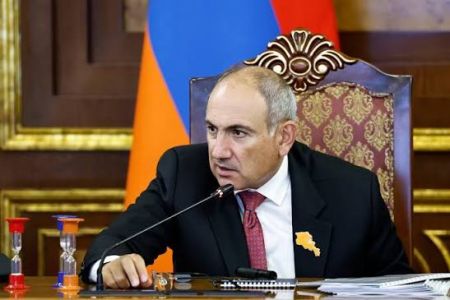


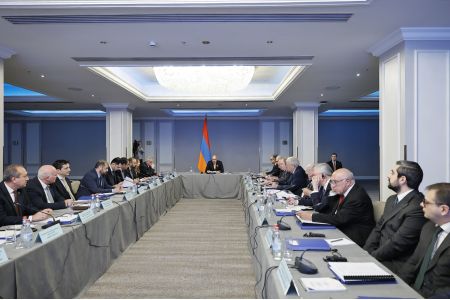
ArmInfo. At a meeting of the Council on Nuclear Energy Safety, Armenian Prime Minister Nikol Pashinyan expressed hope that there would already be clarity regarding the choice of a new nuclear power unit in 2027.
"Opening the meeting of the Council on Nuclear Energy Safety, I would like to emphasize the importance of working in this format, as it is aimed at increasing the level of safety of the Armenian Nuclear Power Plant, while our actions are aimed at ensuring reliable and safe operation. Our international partners have been accompanying the Republic of Armenia in this important mission for quite some time, and we highly appreciate their support," Pashinyan said, as quoted by the government press service.
He reminded those present that the design service life of the second power unit of the Armenian Nuclear Power Plant expired in 2016, and in accordance with a decision by the Armenian government, it was extended by 10 years. Pashinyan emphasized that the Armenian Nuclear Power Plant plays a special role in ensuring Armenia’s uninterrupted electricity supply, thereby contributing to the energy security of our country.
He noted that the NPP’s operating life will be extended for a second time, from 2026 to 2036, during which a number of necessary technical measures will be implemented, for which the government allocated $160 million from Armenia’s state budget. Pashinyan added that about 60% of the work has already been completed, while the remainder is in progress.
"The construction of a new nuclear power unit in the Republic of Armenia, which will replace the existing power unit after it is decommissioned, is extremely relevant and on the agenda. This is the only way to ensure our country’s energy security in the future. Work is underway to select a new nuclear power unit, and we hope that clarity on this issue will be achieved in 2027," the Armenian prime minister said.
For his part, Council Chairman Miroslav Lipar noted that Pashinyan’s participation in the meeting was important evidence of the Armenian government’s commitment to nuclear energy and safety. According to the Council chairman, this in itself is a valuable opportunity for a direct and transparent exchange of opinions and views between the Armenian Cabinet, the nuclear safety sector, nuclear safety authorities and independent international experts. Lipar emphasized that all Council members had consistently demonstrated their ability to continue this activity, which once again underscores their shared readiness to ensure the safe operation of the Armenian Nuclear Power Plant.
"Of course, we are also ready to support Armenia in the best possible way on this path. I consider today’s meeting the opening of a new chapter in our relations, including with the Security Council. The Security Council has a long history of cooperation and also possesses the relevant capabilities," he said.
Lipar added that their mission would primarily involve providing highly qualified advice to the Armenian government in the field of nuclear energy and safety. "Today’s mission is becoming particularly relevant and important, first and foremost, especially at the subsequent stages of the Council’s work, since Armenia is faced with the need to make a fundamental decision in the context of its nuclear energy development program. Namely, it is first necessary to ensure the safe operation of the existing nuclear power plant, including the need to continue implementing safety measures within the framework of long-term operational programs. On the other hand, Armenia is preparing to make an important decision regarding a new nuclear power plant. These decisions will undoubtedly determine the country’s energy future for the coming decades. Such a decision requires not only political responsibility and economic analysis, but also a systematic assessment of all relevant technical and nuclear safety concepts," he said.
Lipar also emphasized that their goal was to develop a broader, strategic perspective, taking into account international experience and assessing potential risks, while also creating and ensuring independent expert capabilities.
He pointed to the importance of Armenia’s continued effective use of the country’s experience, particularly within the framework of existing nuclear programs, as well as the experience and capabilities of the IAEA, the European Commission, Rosatom and, at the same time, the experience of the US Department of Energy. According to him, the Council can help expand this cooperation by bringing international experience into the strategic decision-making process.
"The prime minister’s presence at today’s meeting is a very important signal for everyone, emphasizing that nuclear safety is not only the responsibility of the sector or the regulatory body, but also the foundation of national strategic importance, which undoubtedly requires constant attention and commitment at the highest level. Therefore, the expected results and our cooperation should be coordinated. I hope that today’s discussion will allow us to assess the most important challenges facing Armenia’s nuclear energy sector. We must be able to identify priorities for the Council’s future work," he said.
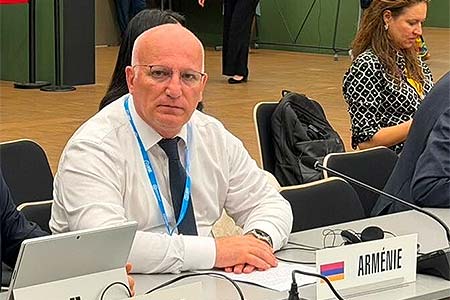
Members of the Armenian government, as well as nuclear energy specialists from Russia, the United States, France, the Czech Republic and Finland, took part in the Council meeting.
The meeting addressed issues related to ensuring the safe operation of Armenia’s existing NPP power unit and extending its service life, improving safety and reliability, as well as the prospects for constructing a new power unit in the Republic of Armenia. It was emphasized that the relevance of these issues was also обусловлена by the Armenian government’s study of options for constructing a new power unit and the need to apply international standards and best practices in the field of nuclear safety. As a result of the discussions, various proposals and comments were presented.