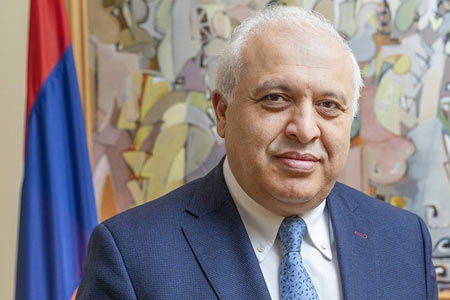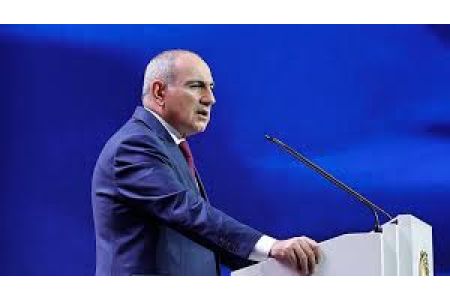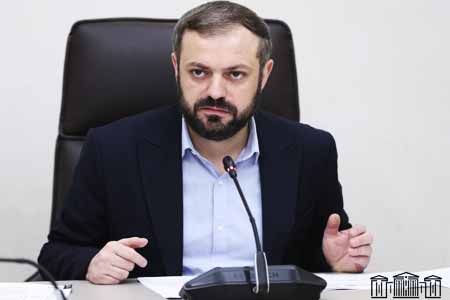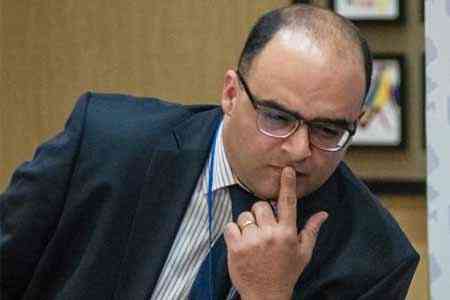
ArmInfo. Cashier's checks will again become tax documents confirming the costs of business entities in Armenia from January 1, 2019, Chairman of the State Revenue Committee of Armenia David Ananyan stated on July 13 answering the question by ArmInfo. Meanwhile, from January 1, 2018, the Armenian businessmen are obliged to present an invoice to the tax authorities to confirm any costs starting from buying toilet paper, ending with restaurant parties with business partners.
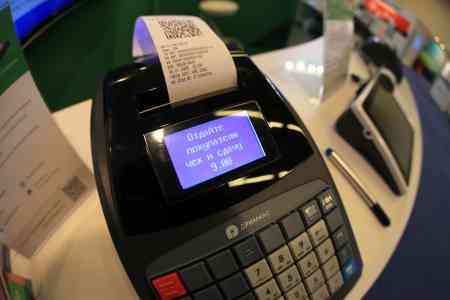
According to the Chairman of the Committee, back in December 2017, when the country's financial authorities were discussing a package of tax changes, it was decided to accept a cash voucher as a justification for confirming costs, if it contains information about both sides of the deal. As a result the Committee was obliged before July 1, 2018 to regulate the issue and create appropriate technical capabilities. "Unfortunately, due to subjective and objective reasons, we were not able to carry out the process until July 1," Ananyan said. He informed that as of July 5, the department completed process of developing an appropriate software solution. Starting from this moment, the next generation cash registers can issue checks, which show both sides of the transaction. But, as Ananyan explained in order to implement this process, the State Revenue Committee should come up with a legislative initiative. Meanwhile, the National Assembly is on vacation at the moment, and the proposal of the tax authorities will be considered at best in September this year. "I think that starting from January 1, 2019, the cash receipt, which fully identifies both sides of the transaction, will become a document confirming the expenses," he said. At the same time starting from January 1, 2019, old-generation cash receipts will not be valid.
David Ananyan refrained from naming the percentage of economic entities that still continue to work using old cash registers as of July 13. "I can only say that a sufficient number of new cash register machines have been delivered to the relevant warehouses. At the same time they will be provided free of charge to the businesses of the border areas (for the rest, the maximum price is set at 160 thousand AMD ed. note)," he said. In addition, according to the head of the Committee, the department plans to completely liberalize provision and sale of cash registers. Until now, this field has been monopolized by the state non- governmental organization , which was founded specifically for this purpose. Thus, if everything goes according to the plan, starting from January 1, 2019, business entities - organizations or an individual entrepreneur in order to justify their expenses in the taxation body can just present their tax identification number (TIN) to the cashier. The cashier finds the organization in the database and its TIN is printed on the check.
It should be noted that the Armenian government has repeatedly extended the terms of introduction of a new generation of cash register machines. There were made mendments to the law "On the application of cash register machines", in accordance with which the introduction of new generation cash registers in Armenia was postponed for a year - until January 1, 2016, and then - until January 1, 2017. And if earlier, depending on the size of the business turnover, a differentiated attitude was envisaged in issuing a cash receipt, for today the only exception is the implementation of activities on the frontier zone.
Meanwhile, according to independent experts, the new initiative to replace cash registers and the history of checks does not withstand any criticism. A few years ago, a proposal was made to the government: instead of creating difficulties for business entities and obliging them to go for additional spending, which sometimes is too high for small businesses, to adopt a resolution that obliges them to use only corporate banking cards, naturally attached to the bank accounts of a legal entity. This measure is low-cost and effeicient in terms of identifying both the seller and the buyer. There was also a bill according to which the presence of POS-terminals would be mandatory for all outlets in the country. Moreover, new types of cash machines introduced in 2012 are already equipped with the possibility of accepting bank cards, and banks have a direct interest in providing the necessary software on a free basis to trade and service facilities. The government's unwillingness to follow this simple and effective solution, which would significantly reduce the volume of cash turnover in the economy, testifies to a simple deceit. Therefore, experts do not doubt that the difficulties created for business entities are not accidental: the tax authorities will again start to "horrify" the business, and the import of new cash registers will be entrusted to the next oligarchic structure.