

ArmInfo. In the difficult conditions of reduction of credit margin amid lack of client base, the restoration by the local national system Armenian Card of its market positions can be considered a significant event in the banking market last year. This is stated in the regular 20th anniversary analytical bulletin "Armenian Banks in the Card Business", prepared by the Rating and Marketing Information Agency (ArmInfo IC). The bulletin is published twice a year.
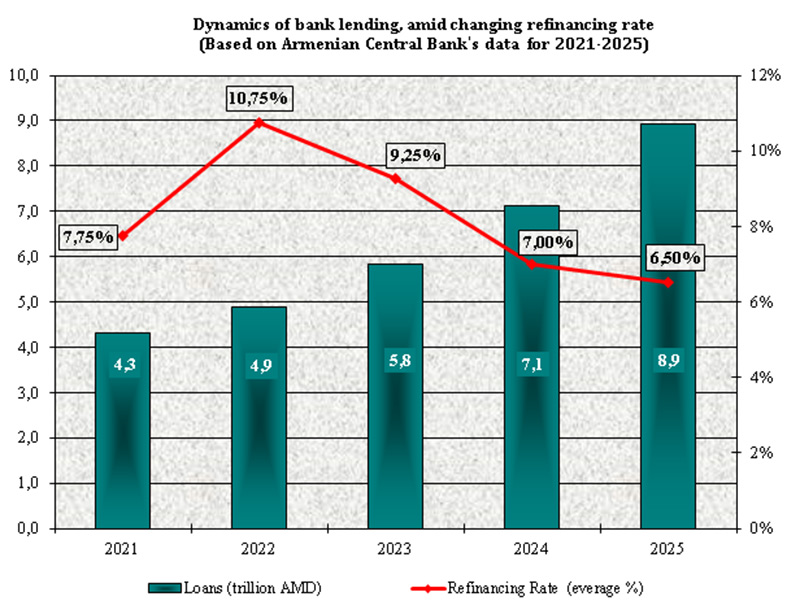
As noted in the study, the number of issued active local cards increased by almost 14% over the past year, and their total number, after a long period of stagnant growth, again approached a share of 40%, which is higher than the number of active cards of international payment systems separately. The revival of ArCa national cards, according to analysts, is the result of several key factors: low emission costs, convenience as a tool for consumer lending, including as gift cards, the introduction of certified chip technology by Armenian Card, Single Card Payment System, and most importantly, access to foreign markets due to intersystem interaction with the Russian payment system MIR. As noted in the bulletin, the low interest rate policy has not yet been able to revive the corporate lending market, but it has significantly increased the activity of banks in the credit retail segment (up to 30%), which was reflected in the further quantitative and qualitative growth of the plastic card business. However, the limited number of new customers, both in the corporate and retail segments, left the rate of quantitative growth of active bank cards unchanged-by an average of 17% per annum. Apparently, the country's banking system has already overcome the low base effect, and the dynamics of further growth in the number of cards will depend on economic activity, the state of aggregate demand in the country and increasing household incomes. In today's conditions of over-lending to the population, significant quantitative shifts should not be expected.
Despite a slight decrease in activity in Internet commerce,compared with the initial boom associated with the low base effect and the significant introduction by banks of technological solutions and their own innovations to activate it, it is likely that the growth rate of this business will now be in the range of 20- 25% year-on-year, taking into account the restrictions introduced as part of regulatory customs measures by the EAEU. And, nevertheless, as for today bank cards remain the dominant tool against the background of poor integration of the country into international electronic payment systems.
In 2020, in the conditions of cautious optimism with respect to the general state of the economy (decrease in GDP growth rates forecasted by international organizations) and the banking system, in particular, due to the presence of risks of falling profitability, one should not expect significant revitalization in the plastic market. The market, most likely, will drift in the medium-term sideways trend, the drivers of which will be the largest and most innovative banks who have resources. Note that, according to the Central Bank of Armenia, the total number of plastic cards was 2.4 million. And the total volume of plastic transactions exceeded 2.3 trillion drams.