ArmInfo. In Armenia, a security system has not yet been formed that would be able to quickly and clearly respond to unforeseen shock events that could negatively affect the socio-economic situation in the country.
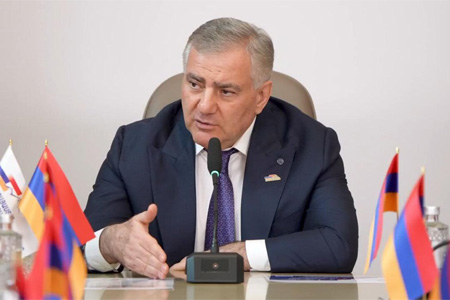
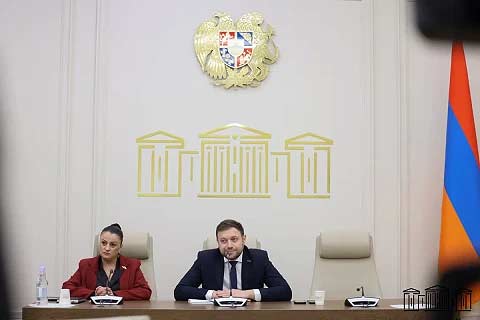
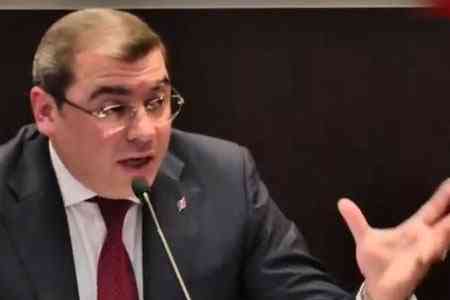
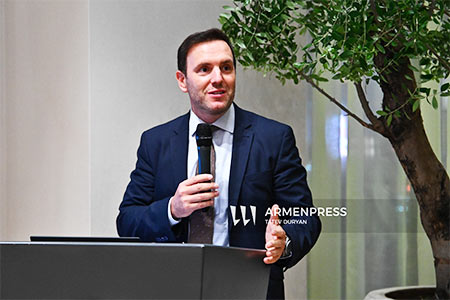
This opinion was expressed by well-known economist, head of Ameria Management Advisory Tigran Jrbashyan at a press conference on the possible impact on Armenia of the devaluation of the Russian ruble after Russia's refusal to extend the OPEC + agreement against the backdrop of the coronavirus pandemic. The economist warned that in the modern globalized world, the Black Swan events (the theory by the economist Nassim Taleb) will occur more and more often due to the unpredictable situation like the current coronavirus epidemic, trade wars, or sharp rises in world energy prices. According to him, Armenia should be more or less prepared for such force majeure situations through the adoption of certain legal acts and institutional adjustments that will allow, in such case, to make non-standard and operational decisions. The country needs to create an adequate and effective crisis management institution.
Meanwhile, according to the economist, the current situation is significantly different from that which developed during the crises in 2008 and 2014. The degree of resistance of the Russian Federation to such shocks has increased significantly, the country's foreign exchange reserves have increased significantly, the degree of the ruble's exchange rate dependence on world oil prices has fallen. This, of course, does not mean that the Russian economy is no longer responding to such shocks - they exist, but tough scenarios should not be expected any longer.
According to Jrbashyan, Russia's rejection of OPEC + was most likely an expected step, well-balanced by the Russian side. Moreover, Russia, having somewhat weakened the national currency, thereby facilitated its exports and, of course, increased budget revenues denominated in rubles. However, according to Jrbashyan, Russia, being in a single economic space with the EAEU member countries - an already fully established union structure, should coordinate its steps with partners, taking into account their interests.
Speaking about Armenia's dependence of transfers from Russia, Jrbashyan emphasized the fact that the country is less dependent on the transfer component, and a decrease in the share of foreign transfers in GDP. However, the fall of the Russian ruble to a greater extent may affect the possibilities for exporting Armenian products to the Russian Federation, given that supply contracts are usually tied to the ruble.
However, the weakness of the Armenian economy is also directly related to the deformed domestic oil products market, where the principle of supply and demand does not work well due to the fact that this field remains highly monopolized, not only domestically, but also from the transport companies of neighboring Georgia, which supply fuel to Armenia. As a result, the decline in world oil prices will not have a mitigating compensation effect for the country's economy. The most vulnerable area of the Armenian economy from such external shocks as the ruble devaluation and the coronavirus pandemic can be called tourism. On the one hand, the flow of tourists will decrease due to the pandemic, and on the other hand, visits of Russian tourists, which keep increasing, will become a more expensive pleasure. Meanwhile, the Armenian economy itself, taking into account its foreign exchange reserves, is more ready today to counter crisis situations.