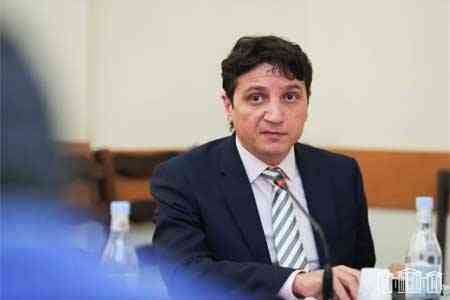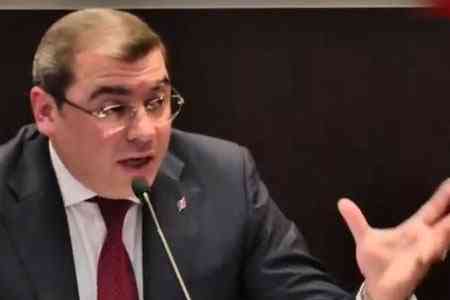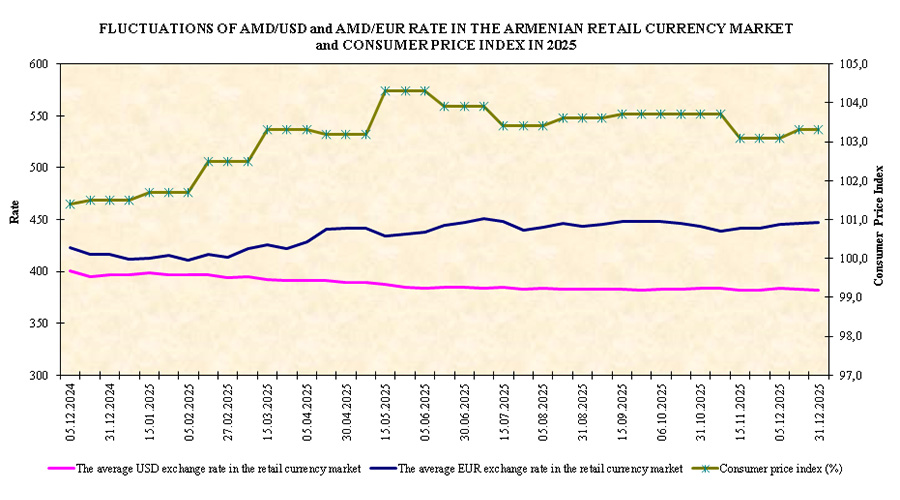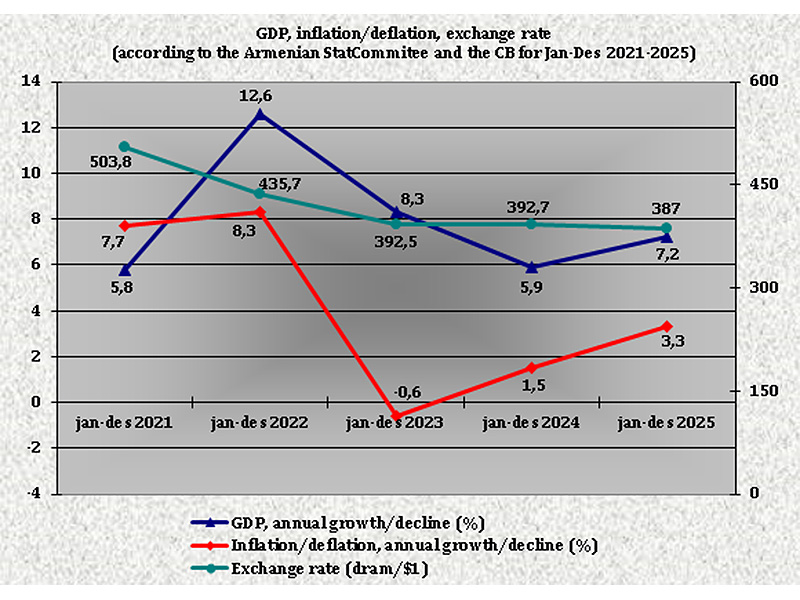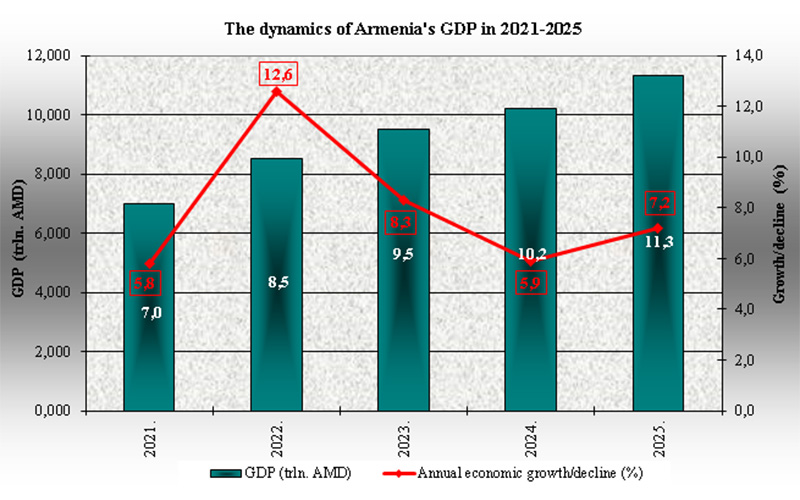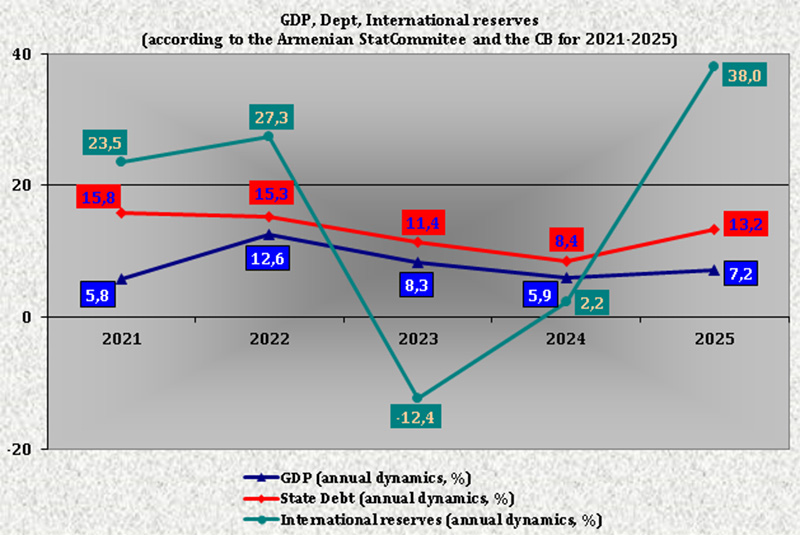


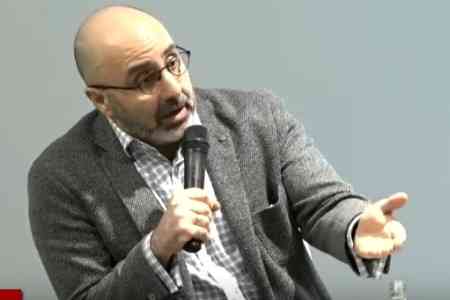
ArmInfo. Armenia has been living in a state of very low inflation for too long - a situation that does not contribute to increasing the competitiveness of the country's economy, stimulating exports and investments. This opinion was expressed by well-known economist, head of Ameria Management Advisory Tigran Jrbashyan at a press conference on the possible impact on Armenia of the devaluation of the Russian ruble after Russia's refusal to extend the OPEC + agreement against the backdrop of the coronavirus pandemic.
According to the expert, monetary policy should be considered as one of the medium-term policy instruments to increase the economic organism's resistance to external shocks and crises, which Armenia may increasingly face due to global instability, or the so-called unpredictable factors that are usually called "black swans" (the theory of the economist Nassim Taleb, which considers unforeseen and rare events that have significant consequences for global economy- ed. note).
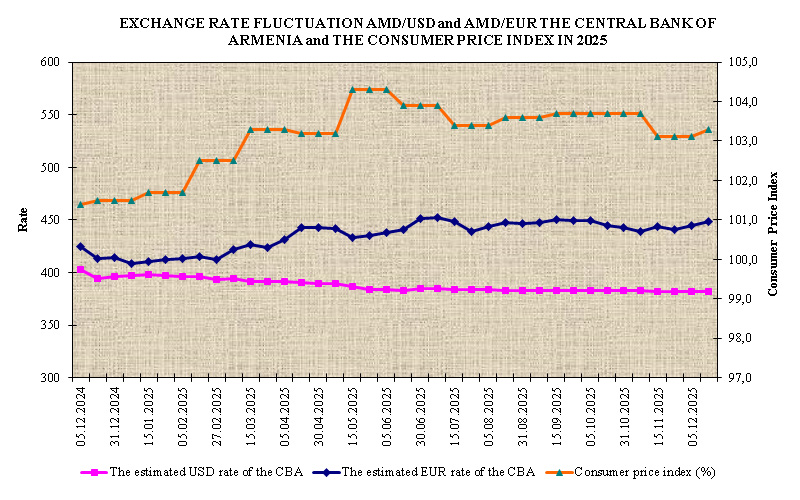
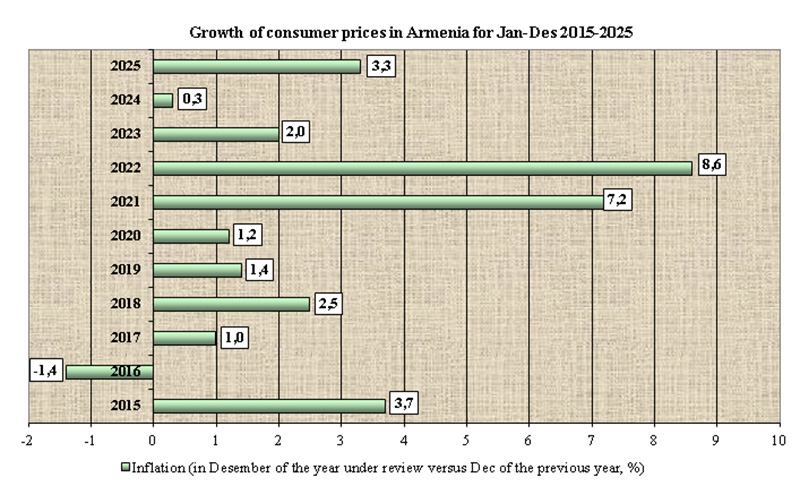
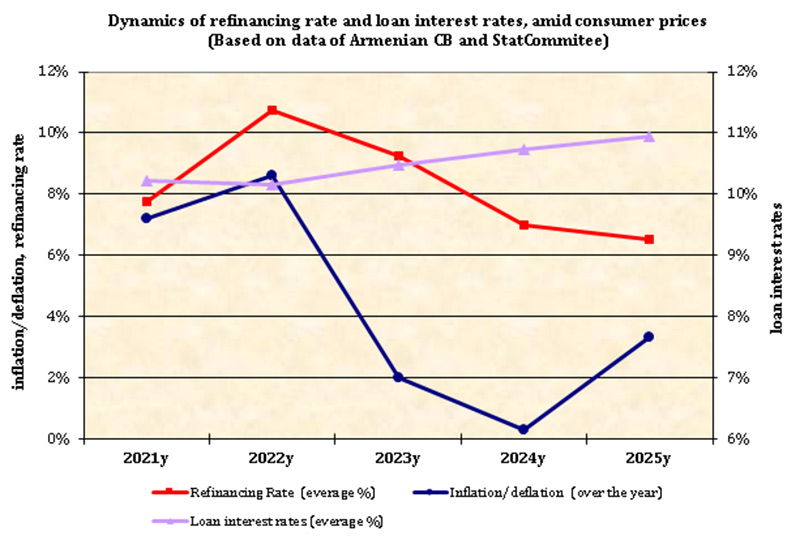
According to Jrbashyan, low inflation and a stable exchange rate lead to a decrease in export opportunities and inhibits growth. Therefore, it should be realized that may be the monetary authority should adhere to the inflation targets and sometimes take certain risks, switching, when possible, to an expansionary monetary policy and spurring inflation-controlled growth. "The fact that the inflation rate has been significantly lower than the target indicators for several years (4 + _1.5%) is bad. Price stability does not mean the absence of inflation, it means that the monetary authority is able to provide the target level of inflation, but does not do this, constantly reinsuring itself. We are trying to be more Catholics than the Pope", Jrbashyan said. Such a policy, the expert believes, fines potential economic growth, export potential, and makes export services less competitive. And this has fundamental significance for growth. "As a first step, I would suggest our monetary authorities to be bolder when dealing with inflation. The Central Bank should understand that its task is not to ensure zero price stability, but their forecast target support>.
In the same vein, the regulator behaves with respect to the application of the principles of Basel III. , the economist wondered. Developing the topic, Jrbashyan drew attention to the significant underfulfillment of capital investment programs by the Armenian budget in 2019 (about $ 600 million - Ed. note). The government promised to significantly increase these costs in order to stimulate demand and promote growth. However, while we do not see these projects. The expert agreed that there may be obstacles, including institutional ones, that limit the effectiveness of government investments in various projects and programs. But there are other support mechanisms, such as the expansion of subsidies on credit rates to support the development of certain industries, or the possibility of declaring tax holidays for certain types of business, for example, for income taxes.
''Our studies of the state of SMEs show that, unfortunately, the Armenian economy is mainly turned inward - there are 4 importers per exporter. But unlike importers who do not strive for development and innovation, it is the manufacturers-exporters who are full of ambitions to expand their production, cherish investment programs, and strive to increase productivity, including through the introduction of innovations. This is pleasing, and therefore it is precisely this field that needs a special attitude towards itself, including within the framework of the macroeconomic policy of the state'', the expert concluded.