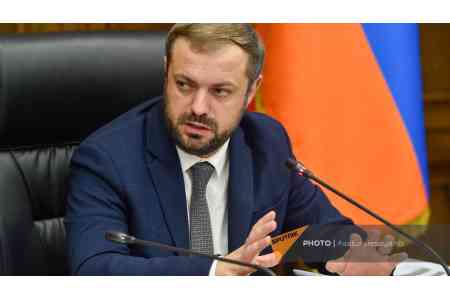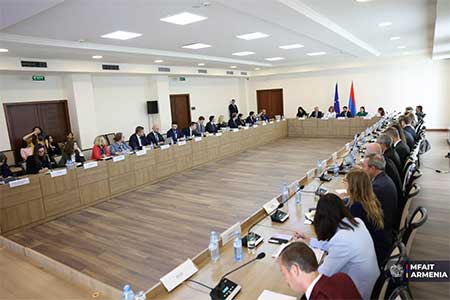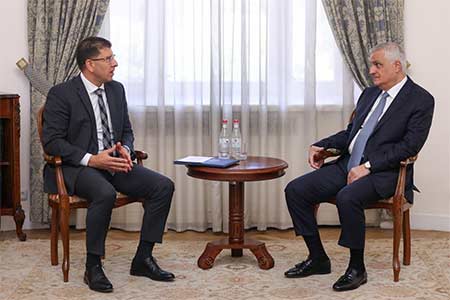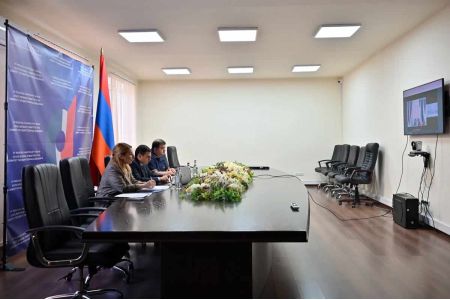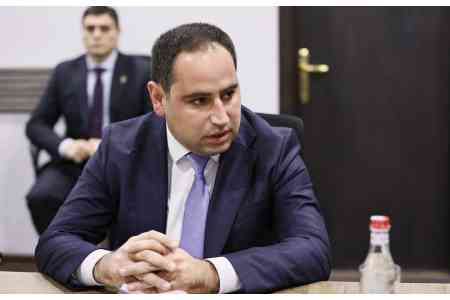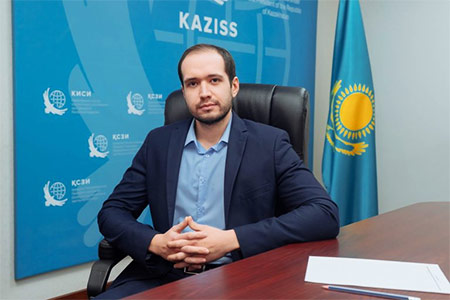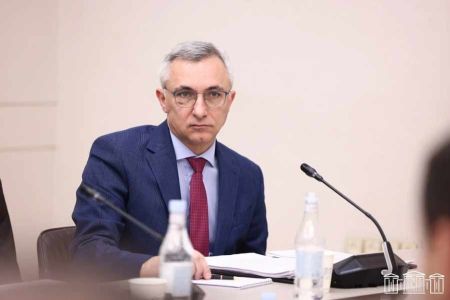



ArmInfo. So far, it is still difficult to foresee the positive progress in terms of FDI in the real sector of the Republic of Armenia. Deputy Minister of Economy Avag Avanesyan stated this during a meeting of the RA NA Standing Committee on Regional and Eurasian Integration.
In this regard, he emphasized that at the moment there is a slowdown in the growth rate of the real sector, while in the financial sector things are much better. In particular, the deputy minister drew attention to the fact that a slowdown in FDI has taken place in the global economy over the past 3-4 years. At the same time, when there was a decline in a global sense, according to Avanesyan, the Armenian economy showed good results.
He recalled that according to the investment policy review prepared by the OECD (Organization for Economic Cooperation and Development), Armenia took 7th place in terms of legal protection mechanisms for investors. At the same time, as the Deputy Minister noted, a report was ordered from the UN with an analysis of the investment policy of the Republic of Armenia. < The report states that we support investors more than the norm requires. In addition, UN analysts (UNCTAD) gave a positive assessment to the legislative field of Armenia, noting that there is a need to improve legislation only on certain points>, he said.
Referring to the results of the report, the Deputy Minister emphasized that for investors, Armenia's advantage is primarily in the possibility of entering markets, which are closed to many developed European countries. On the other hand, according to Avanesyan, investors should follow the main goal of increasing production efficiency. "That is, we must concentrate on these two points," he stressed. For this reason, according to the deputy minister, in the post-crisis period, the government will prioritize the development of infrastructures, human capital (education), health care and certain issues of the investment field, for example, the introduction of a more liberal depreciation regime for fixed assets and other private aspects.