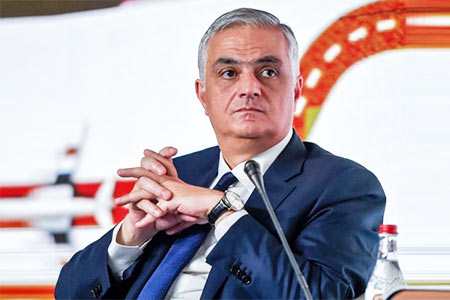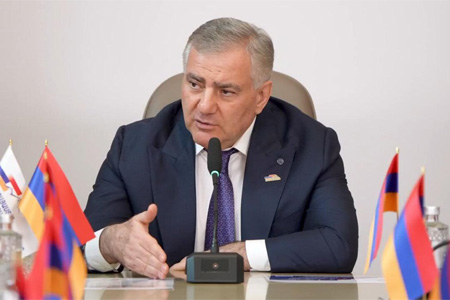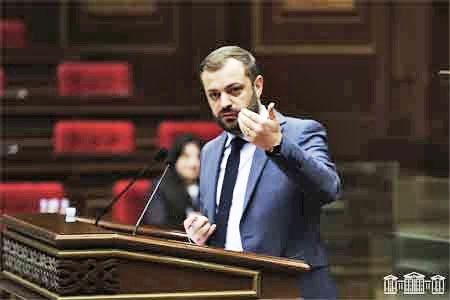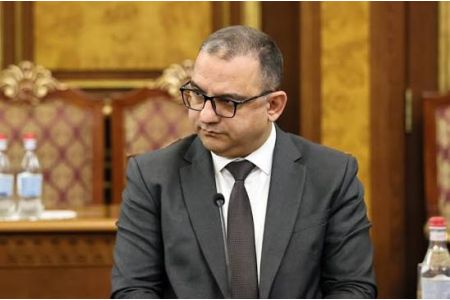


ArmInfo.Tough reforms in the Armenian economy seem inappropriate in the conditions of global transformations observed in the world, member of the My Step parliamentary faction Varazdat Karapetyan expressed a similar opinion to ArmInfo.
"In this light, the periodic statements about the need for tough reforms I personally raise questions. We need to constantly monitor, evaluate the situation, in order to understand what actions we need to expect from the government to prevent a slowdown in the economy. We cannot launch tough reforms, especially in today's conditions. First of all, it is necessary to understand and analyze the situation, "the parliamentarian said.
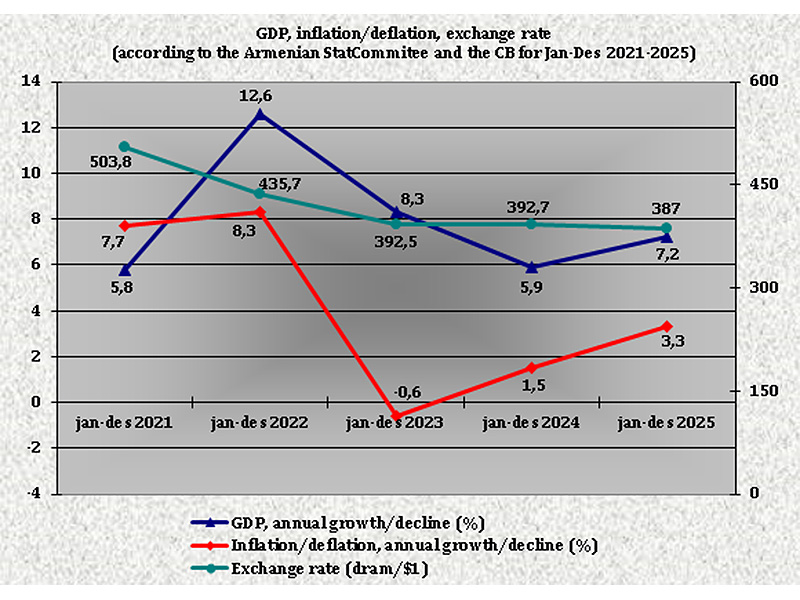
In the pre-coronavirus period, the economy, according to Karapetyan, developed at a pace that was encouraging. And even today, these rates are still being held. According to the parliamentarian, paradoxically, against the background of the observed reduction in the economy, according to April data, 3 thousand new jobs were created in Armenia. According to him, this is due to the beginning of large-scale construction, agricultural work.
Karapetyan recalled that when calling the government to launch reforms or accelerated development, it is always necessary to consider that the process of economic development is directly provided not by the government, but by business entities. The role of the government is limited to ensuring the formation of appropriate infrastructure, the creation of communications, and assistance tools. "The economy of Armenia is not planned, so that the government develops it by its own means. Accordingly, it is necessary to approach strict reforms with restraint," the MP said.
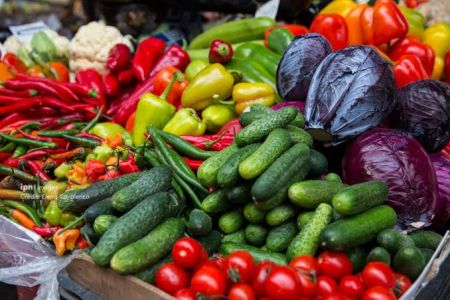
Commenting on the economic opportunities that are opening up due to the coronavirus pandemic, Karapetyan singled out in this context the prospects for expanding the agricultural sector. According to him, in addition to facilitating the provision of low-cost loans, since last year the government has been moving from exclusively credit instruments to stimulate the sector to direct financing. In this light, he noted grant programs for partial financing by the state of the construction of the so-called "smart" farms - cowsheds and greenhouses.
"At the moment, the government is also discussing measures to stimulate agriculture, in particular, the production of wheat in order to improve food security. In this case, direct financing and not loan funds will become an instrument. In this, the government follows the path of countries subsidizing agriculture in order to increase its competitiveness. In this regard, we are no longer satisfied with the provision of loans even with a zero interest rate. Raising the competitiveness of the agriculture field certainly requires more drastic measures ", the MP summarized.