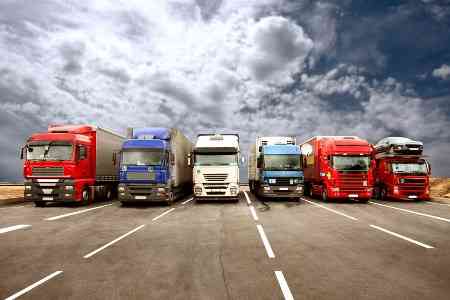
ArmInfo.The volume of cargo transportation in Armenia in the I quarter of 2020 increased by 2.6% compared to the same period of the previous year - up to 2927.3 thousand tons, against the decline by 60.3% a year earlier. Of these, 1,592.8 thousand tons (54.4% of the total) accounted for road transport, which decreased by 4.8%, against a decline of 72.2% a year earlier. This is stated in the report of the Statistical Committee of the Republic of Armenia.
According to statistics, rail freight for the reporting period increased by 9% - up to 710.7 thousand tons, air - by 12.8% - up to 4.4 thousand tons. The pipeline was delivered 619.4 thousand tons of natural gas, which is 17.9% more than a year ago. Cargo turnover increased by 10.3% - up to 1,315.7 million tons-km.
At the same time, passenger transportation during the reporting period accelerated the annual decline from 0.5% to 16.2% - amounting to 30,048.7 thousand people. Automobile passenger transportation decreased by 16.9% to 32,336.5 thousand people, railway - by 8.2% - to 74.3 thousand people, air - by 24.2% to 600.3 thousand people, and passenger transportation by electric transport - by 10.8% to 5037.6 thousand people. Passenger turnover decreased in the I quarter of 2020 compared to the same period last year by 14.1% to 494.3 million passenger-km.
It should be noted that in Armenia, as part of measures to prevent the spread of the coronavirus pandemic, a state of emergency was introduced from March 16, which will last until May 14 inclusive. In this regard, some activities in the first month of emergency were imposed a temporary ban, which was partially lifted in the second half of April. Since May 4, the list of permitted types of economic activity has been further expanded to ensure the vital functions of the economy. But while there are catering facilities and services whose activities are still temporarily suspended, the work of shopping and entertainment centers and public transport is also prohibited, and the activities of international air, rail, and bus services are limited.