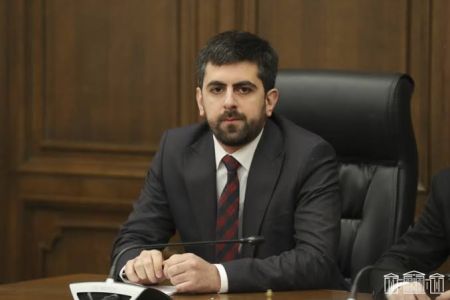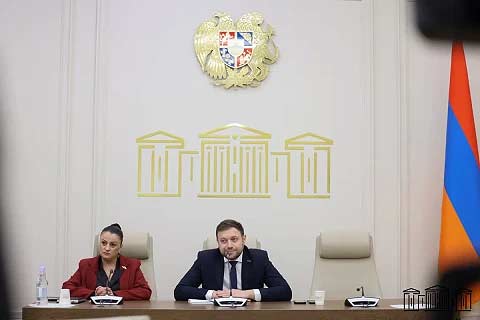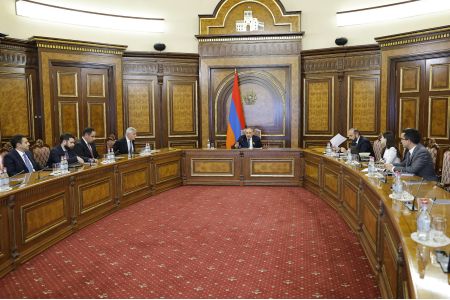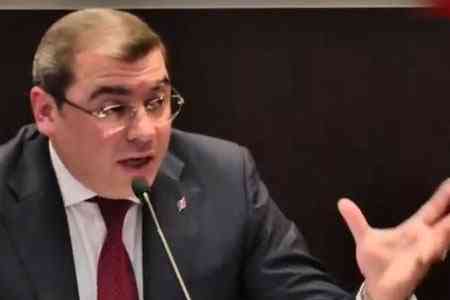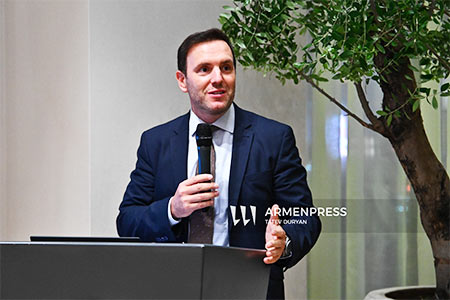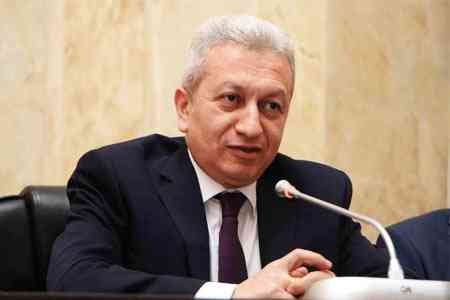
ArmInfo.In the face of uncertainty caused by the COVID-19 pandemic and ongoing military action, it is necessary to ensure a smooth consolidation of fiscal funds in order to ensure budgetary performance and public debt indicators. The Minister of Finance of the Republic of Armenia Atom Janjughazyan stated on November 3 at a joint meeting of parliamentary committees on Economic Affairs and Finance, credit and budgetary issues, presenting the draft state budget of the country for 2021.
According to the minister, the main goal of the government next year will be to assist in economic recovery, while not lowering the targets set for 2020. It is envisaged, in particular, a slight increase in state budget expenditures. This means maintaining capital expenditures at the same level, which should lead to an increase in the growth potential of the economy. They also took into account the capabilities of the state, especially taking into account the ratio of capital expenditures to the country's GDP, which should exceed the average volume of capital expenditures in previous years. At the same time, when programming capital expenditures the capabilities of both the customer and contractors and service providers were taken into account. There is confidence, as the minister noted, that joint efforts will increase these opportunities. As for income, as Janjughazyan noted, it is planned to receive 1.569 trillion drams for 2021, 96% or of which 1,500.9 trillion drams should be tax deductions. At the same time, the ratio of taxes to GDP will be 23.3% versus 21.2%. At the same time, grants will have a relatively small weight in the state budget. For the current year they will amount to 23.2 billion drams, of which 7 billion drams - to support the state treasury, the rest - to implement the target programs. The Minister also considers it necessary to revise the provision concerning the turnover tax, which should be considered as an alternative type of tax, and not as a benefit. This type of tax, according to the minister, was used taking into account the experience of other states, but not its best option. He added that work is underway to provide documentation of agricultural products.
Janjughazyan continued that the introduction of the institution of universal declaration of income of individuals will also be of great importance, which is very important both from the point of view of unlocking the potential of individuals who are not considered employees, and disclosure of information that can be used to develop policies in other areas such as social assistance, health care, etc. The minister recalled that this year the state budget of Armenia was twice amended, due to the overcoming of the negative consequences of the coronavirus epidemic and military actions, which could not but have an impact on the economy, and, as a result, on the revenue side of the state treasury. Unfortunately, he continued, both factors continue to exist today, with the result that the level of uncertainty remains high enough. The Minister informed that the program of medium-term expenditures was approved, which established the criteria for 2021, both in terms of macroeconomic stability and budget parameters, defining the framework for the same indicators for 2022. It should be noted that despite the difficulties in the Armenian economy, the state budget for 2021 assumes an increase in capital expenditures by 215 billion drams. In relation to GDP, capital expenditures will amount to 3.2% - one of the highest in all years. The government does not intend to cut current expenditures, in particular, on health care, education, social support. They will grow in comparison with 2020, and even with the pre-crisis 2019. In particular, compared to 2019, spending on health care will grow by 2.1%, on education and culture - by 1.2%. Social security spending will increase by 2.2% compared to 2020. The expenses will be saved thanks to loans to replenish the budget, which the republic receives from the IMF (up to 420 million dollars).