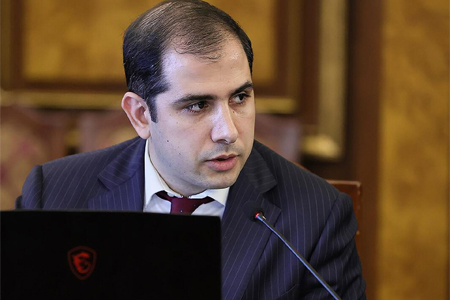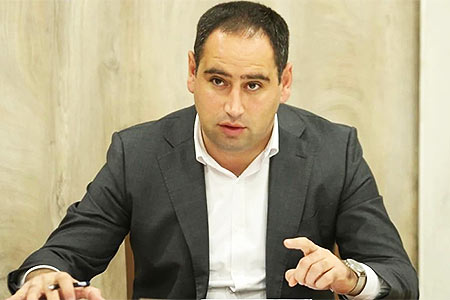
ArmInfo. Military actions and territorial losses in Nagorno-Karabakh only exacerbated the difficult situation in the field of agriculture and ensuring food security in Armenia. An independent expert, former Minister of Agriculture of Armenia Gagik Petrosyan expressed this opinion at a press conference organized by the Club of Economic Journalists. He noted that the problems of the industry have been accumulating over the years, and the fact that the field has faced a bad situation cannot be considered the result of the work of the last 2-3 years.
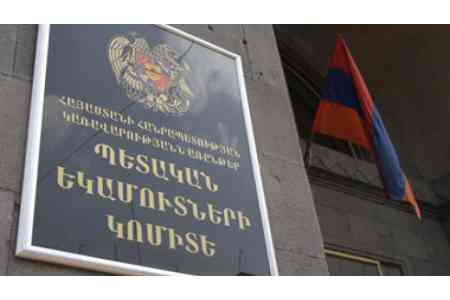
In this context, the expert highlighted several serious mistakes made by both the incumbent and previous governments. He does not understand the motives for the liquidation of the Ministry of Agriculture by the current government and the transfer of its functions to the Ministry of Economy, as a result of which the management of the industry has seriously weakened and many specialists who could be useful for implementing reforms remained without job.
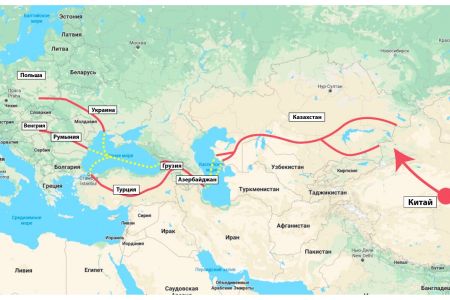
The next unresolved issue is insufficient work in the field of organizing the export of agricultural products, logistics routes and neutralizing artificial barriers in the direction of exporting products to the Russian market. The activities aimed at greater diversification of sales markets for Armenian agricultural products and winemaking were also insufficient.
At the same time, the state has not been able to solve the problem associated with the processes and procedures for harvesting grapes, which is why many wine and vodka enterprises - procurers, except for 1- 2, taking advantage of the dominant positions in the market, actually impose on peasant farms their low purchasing prices, sometimes forcing peasant winegrowers to work even at a loss. Instead of regulating the sector, the state "extinguishes the fires" by providing procurers with "zero credits" for purchases while they get high profits.
In terms of export, the expert believes, the state needs to think about supporting the export potential of Armenian small and medium-sized producers, since large players, despite the costs, are still able to overcome barriers. ''But no one thinks about how medium and small producers can export their products. And without established export supplies with their own clear logistics, small producers will not survive, not to mention developing within a small local limited market'', the expert noted.
At the same time, losing the war with Azerbaijan will certainly make its own serious adjustments in the development of the agricultural sector. This is, of course, first of all, the loss of pastures, many of which went beyond the border line of the Soviet period, and the current arable land for grain crops. Thus, Armenia will lose a part of its own grain harvest and at first it will be limited in the possibilities of developing pasture animal husbandry, which will have to be covered by imports.
And nevertheless, the specialist believes, these losses can become challenges, which can be overcome by intensifying agricultural production, increasing its productivity, modernizing fixed assets, as well as increasing arable land, given that in Armenia itself about 35% of land of agricultural destination is simply not processed. The reason is the lack of incentives that the state should create. "Unfortunately, the state still cannot decide on its policy in the agricultural sector and actually does not support its agricultural producer in any way," Petrosyan noted.