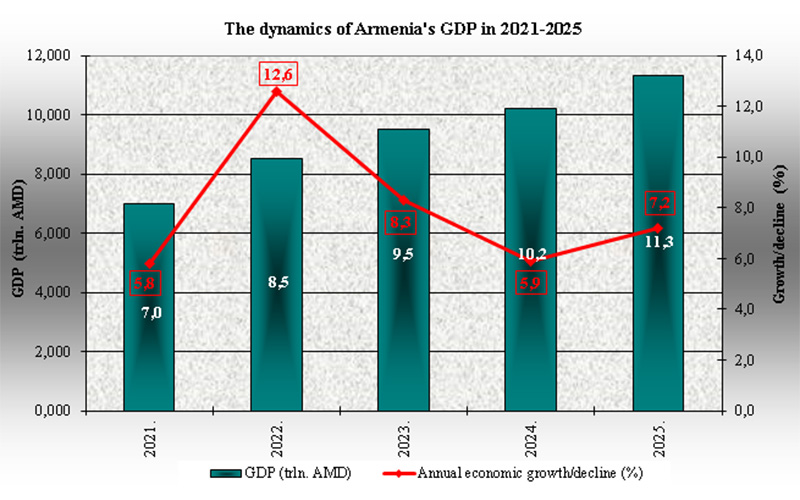


ArmInfo.The World Bank (WB) predicted 3.1% GDP growth in Armenia for 2021 with an acceleration in 2022 to 4.5%, against an actual decline of 7.6% in 2020 (with a projected 8%). This is stated in the new WB report "Global Economic Prospects", which contains forecasts for 2021-2022.
GDP of neighboring countries will also grow. In the new forecast, the WB also improved expectations for the runway of the neighboring countries with Armenia: in Georgia - growth by 4% in 2021 will accelerate in 2022 to 6% (against the actual decline in 2020 by 6.1%); in Azerbaijan - growth by 1.9% in 2021 will accelerate in 2022 to 4.5% (against the actual decline in 2020 by 4.3%); Turkey - growth of 4.5% in 2021 will accelerate in 2022 to 5% (against an estimated positive 0.5% in 2020).
Kyrgyzstan and Armenia will differ in GDP growth in the EAEU
According to a new WB report, in the EAEU countries, GDP expectations for 2021 have also improved towards growth, except for Belarus, whose economy is expected to deepen to 2.7% with a weak 0.9% growth in 2022.
In particular, Russia's GDP is projected to grow by 2.6% in 2021 with an acceleration in 2022 to 3% (against an actual 3.1% decline in 2020), Kazakhstan - by 2.5% with an acceleration in 2022 to 3%. , 5% (against the Actual 2.6% decline in 2020), in Kyrgyzstan - by 3.8% with an acceleration in 2022 to 4.5% (against the actual 8.6% decline in 2020). And on the second line, after Kyrgyzstan, according to the GDP growth projected for 2021 among the EAEU countries, Armenia appears - 3.1%, but according to the forecast for 2022 they share the first place with the same 4.5% GDP growth.
The world economy in the forecast of the WB does not look better
Growth in the global economy, according to the new forecast of the World Bank, will amount to 4% in 2021 with a slowdown in 2022 to 3.8% (against the estimated negative 4.3% in 2020), and in the region of Europe and Central Asia - 3.3% from acceleration in 2022 to 3.9% (against the estimated minus 2.9% in 2020). The US economy will grow by 3.5% in 2021 with a slowdown in 2022 to 3.3% (against the actual 3.5% decline in 2020), the Eurozone - by 3.6% growth with an acceleration in 2022 up to 4% (versus estimated minus 7.4% in 2020), Japan - by 2.5% growth with a slowdown in 2022 to 2.3% (versus estimated minus 5.3% in 2020), and China's GDP will accelerate growth to 7.9% (from an actual 2.3% in 2020) with a slowdown in 2022 to 5.2%.
WB President specifies economic prospects:
“Following the devastating COVID-19 health and economic crisis, the global economy appears to be emerging from one of its deepest recessions and embarking on a restrained recovery. Beyond the short-term economic outlook, this report makes it clear that policymakers are facing huge difficulties - in health, debt management, fiscal policy. And central bank policies and ongoing structural reforms are trying to ensure that this still fragile global recovery picks up steam and sets the stage for sustainable growth and development over the long term, "said the President of the World Bank David Malpass.
He stressed that governments and businesses must all embrace the changed economic landscape. Protecting the most vulnerable will require successful policies that allow capital, labor, skills and innovation to shift towards new targets to create a greener and stronger economic environment after the coronavirus. Some countries already moving towards this type of dynamism and resilience will have to redouble their efforts. For the rest, the changes are especially important now, when financial positions are severely stretched by the pandemic, and other drivers of long-term growth have weakened.
Noticing that investment collapsed in 2020 in many emerging market and developing countries after a decade of weakness, D. Malpass predicted a resumption of investment growth in 2021. At the same time, he noted that the experience of past crises raises another concern - without an urgent correction of the exchange rate, the weakness of investments will persist for many years. “To counter the investment headwind requires significant efforts to improve the business environment, increase labor and product market flexibility, and enhance transparency and governance.
Even before the pandemic, already at record levels, both domestic and foreign debt burdens have become much heavier due to devastating income cuts in emerging and developing economies. Addressing the external debt burden requires a comprehensive set of policy measures: increased participation of all private and official bilateral creditors in debt relief efforts; deep debt reduction in countries in debt distress; Debt transparency practices to overcome limitations in debt contracts; legislative reforms to accelerate private sector debt restructuring; and a clearer sequence of these processes, "- he explained.
D. Malpass clarified that the problem of debt sustainability is complicated by the possible weighting of the already high public debt with contingent liabilities from growing private debt. “During the pandemic, many governments supported lending to firms to address liquidity constraints, including loan guarantees, payment moratoriums and regulations.
As the health and economic crisis eases, these policies need to be periodically reviewed to ensure transparency in asset quality and avoid undermining bank capitalization. Policymakers also need to strengthen supervisory assessments of loan quality and improve debt settlement and collection regimes to address potential problems associated with rising corporate debt levels. With a rise in NPLs, faster bankruptcy and domestic debt resolution processes will be essential to freeing assets from litigation and repurposing them for new purposes. Adding new investment to existing productive assets will be vital to sustainable development, ”he said.
With regard to growing climate and environmental issues, he noted that this reinforces the need for policy action. “Investing in green economy projects, phasing out fossil fuel subsidies and providing incentives for sustainable technologies can support long-term growth, reduce carbon emissions, create jobs and help adapt to the effects of climate change.
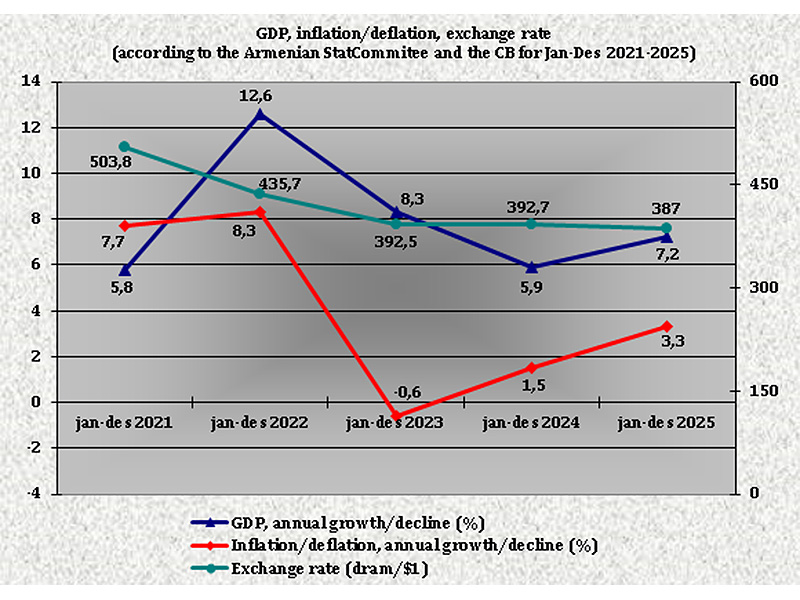
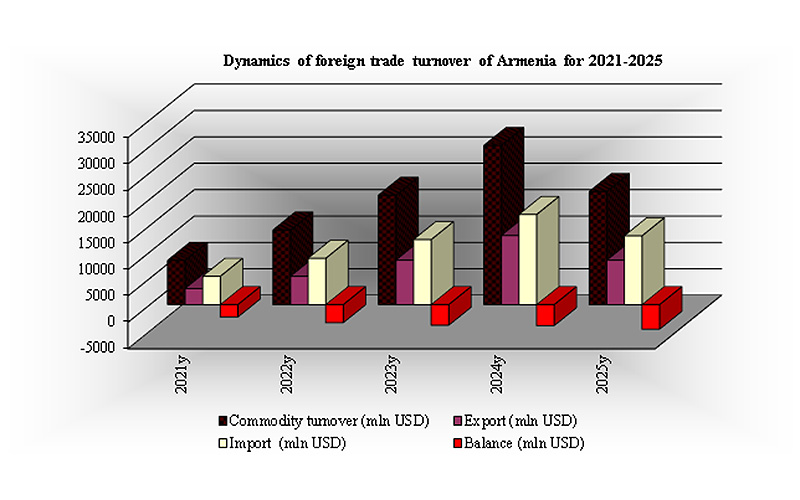
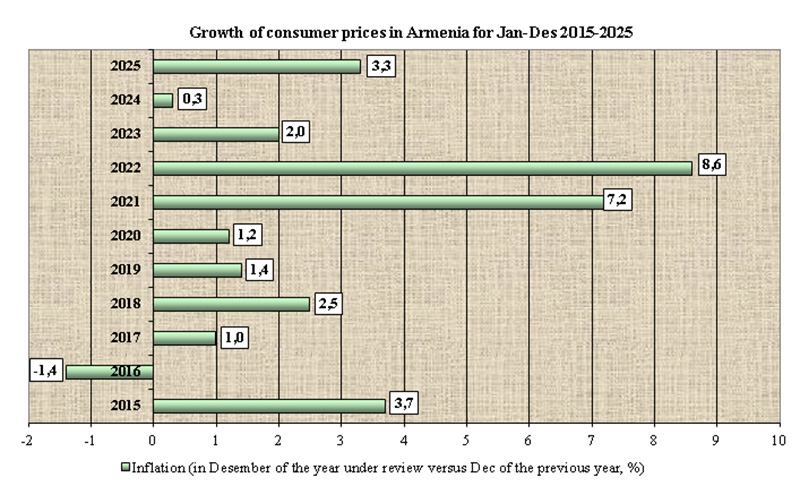
Making the right investments is now vital, both to support economic recovery and to bolster sustainable growth. The correct response to the pandemic crisis will determine the common future for many years to come. and will lay the foundations for a strong, fair and sustainable global economy, "said D. Malpass. Note that according to forecasts of the Central Bank of Armenia for 2021, GDP growth will be 2%. The state budget of the country for 2021 is based on GDP growth of 3.2% and inflation of 1.5% (+/- 4%). According to the Statistical Committee of the Republic of Armenia, in 2020, Armenia's GDP decreased by 7.6% (against 7.6% growth in 2019), against the background of a decline in exports and imports by 3.9% and 17.7%, respectively. Of the sectors of the economy, only the energy complex and the agricultural sector showed growth - a scanty 1.2 and 1.4%, respectively, and the rest fell into recession, and in the deepest - the service sector and the trade sector - 14.7 and 14%. Consumer inflation in 2020 was 3.7% (versus 0.7% in 2019).