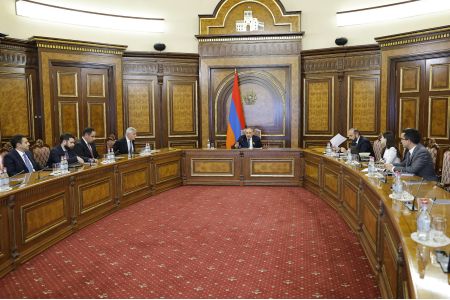


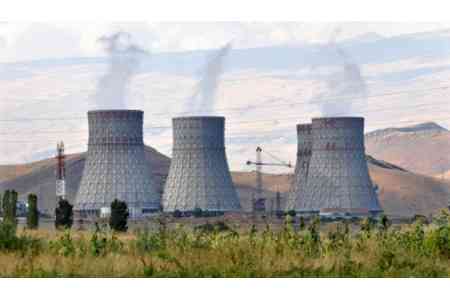
ArmInfo.The Ambassador of the European Union to Armenia and the leadership of the Armenian Nuclear Power Plant (ANPP) discussed the possibilities of expanding cooperation within the framework of projects to ensure a high level of responsible and safe management of spent fuel and radioactive waste within the CEPA framework. This became known following the working visit of the EU Ambassador Extraordinary and Plenipotentiary to Armenia Andrea Wiktorin to the Metsamor NPP.
According to the EU Armenian office, EU Ambassador Andrea Wiktorin paid a working visit to the Metsamor Nuclear Power Plant (NPP) and followed up the implementation of the 2019 EU Peer-Review safety improvements in discussion with NPP senior management. Nuclear safety in Armenia is and will remain an absolute priority for the EU, with a long history of substantial EU investments and technical cooperation on the NPP safety.
In line with the European Green Deal, the EU favours alternative, green energy sources in Armenia as an engine for green growth and jobs, investments and prosperity in Armenia. Parties discussed enhanced cooperation on responsible and safe management of spent fuel and radiological waste and new solar projects in line with CEPA.
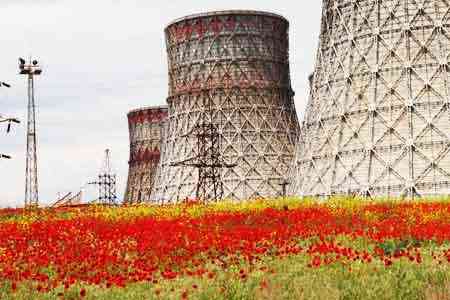
To note, the Armenian NPP consists of two units with Soviet (Russian) VVER reactors. The first unit was put into operation in 1976, the second - in 1980. In March 1989, after the devastating Spitak earthquake, which killed 25 thousand people, the work of the station was stopped. In November 1995, in connection with an acute energy crisis, the second power unit of the station with a capacity of 407.5 MW was put into operation.
In March 2014, the Armenian government decided to extend the life of the second power unit. To this end, Armenia attracted a loan of $ 270 million and a grant of $ 30 million from the Russian Federation. As of early 2020, the residual resource of these funds was $ 107 million. For objective and subjective reasons, it was not possible to agree with Russian partners on this residual resource. For this reason, it was decided to attract a budgetary loan of 63 billion drams.
Today the ANPP provides more than a third of all electricity in the country and ensures its energy security and independence. The development of the Armenian nuclear industry was achieved thanks to the scientific centers and industrial enterprises of the country: the Scientific Research Institute of Energy, the State Committee on Nuclear Safety Regulation under the Government of Armenia, the Armenian Scientific Research Institute of NPP Operation, the National Polytechnic University of Armenia and others. The nuclear industry is not limited to energy and has made it possible to apply technologies in such areas as medicine, space, agriculture.
In particular, nuclear medicine is actively developing in Armenia - over the past few years, the production of isotopes has begun in the country, the first positron emission tomography has been carried out for the first time. Work in this direction is carried out by the National Scientific Laboratory. A. Alikhanyan (YerPhI), National Center of Oncology named after. V. A. Fanarjyan, Center for Radioactive Isotopes, Yerevan Nuclear Medicine Center.
It should be noted that the strategic program for the development of the energy sector of Armenia until 2040 provides for a repeated extension of the life of the Armenian nuclear power plant after 2026, and in the future, the construction of a new nuclear power plant.
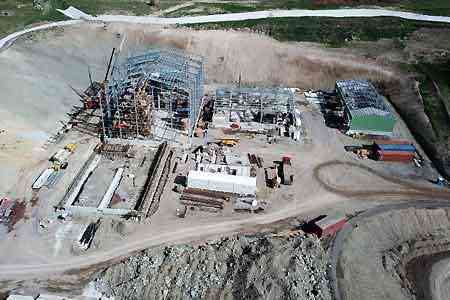
Let us emphasize that the Armenian NPP implements its own program for the management of spent nuclear fuel (SNF). The premises available at the station allow storing spent nuclear fuel in them. This work is carried out in close cooperation with France Atom. The SNF is divided into five components according to the degree of activity, and, apart from the intermediate level, NPPs have no problems with storage and maintenance. As for intermediate-level spent nuclear fuel, construction of the fourth stage of a dry storage facility for spent nuclear fuel will begin in the near future, which will allow, at least until 2036, to solve this problem. For this, the necessary containers and modules were delivered to Armenia. Taking into account the possibilities of extending the operation of the ANPP until 2036, the station is fully provided with the necessary storage areas. In these storage facilities, fuel can be stored for at least 50 years, and at most 300 years.
Meanwhile, it should be emphasized that the European Union has repeatedly called on the Armenian authorities to close the Armenian nuclear power plant for security purposes, but the country does not yet have a real alternative to replace a third of generating capacities.