

ArmInfo.. The banking system in Armenia is sound and well-regulated, but the financial sector is not highly developed, according to investors. Banking sector assets account for over 80 percent of total financial sector assets. This is stated in the published report of the US State Department on the investment climate in Armenia for 2021.
The document notes that nearly all banks require collateral located in Armenia, and large collateral requirements often prevent potential borrowers from entering the market. U.S. businesses have noted that this creates a significant barrier for small- and medium-sized enterprises and start-up companies.
As the report reads, the Armenian government welcomes foreign portfolio investment and there is a supporting system and legal framework in place. Armenia's securities market is not well developed and has only minimal trading activity through the Armenia Securities Exchange, though efforts to grow capital markets are underway. Liquidity sufficient for the entry and exit of sizeable positions is often difficult to achieve due to the small size of the Armenian market.
The Armenian government hopes that as a result of pension reforms in 2014, which brought two international asset managers to Armenia, capital markets will play a more prominent role in the country's financial sector.
It is noted that, Armenia adheres to its IMF Article VIII commitments by refraining from restrictions on payments and transfers for current international transactions. Credit is allocated on market terms and foreign investors are able to access credit locally.
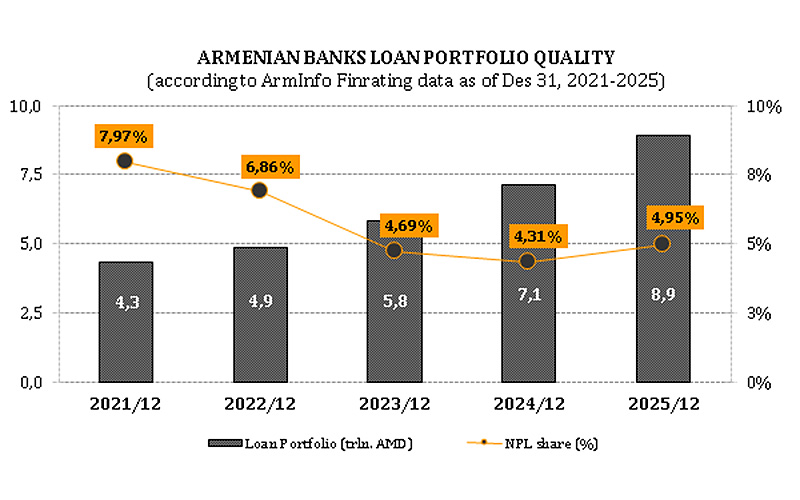
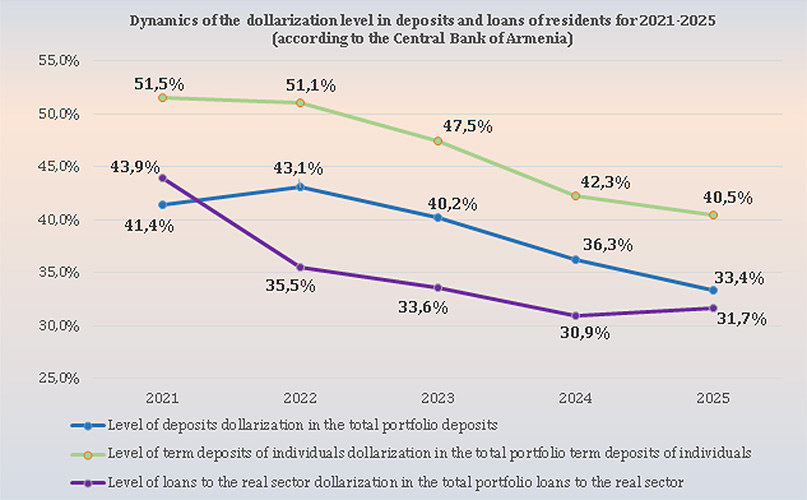
According to the report, since 2020, the banking sector has withstood the twin shocks created by COVID-19 and the Nagorno-Karabakh conflict. Indicators of financial soundness, including capital adequacy and non-performing loan ratios, have remained broadly strong, though with some deterioration more recently. The sector is well capitalized and liquid. Non-performing loans have ticked upward slightly from rates of around five percent of all loans. Dollarization, historically high for deposits and lending, has been falling in recent years. There are 17 commercial banks in Armenia and 13 universal credit organizations. There are extensive branch networks throughout Armenia. At the end of 2020, the top three Armenian banks by estimated total assets were Ameriabank (909 billion Armenian drams (AMD), or $1.7 billion), Armbusinessbank (889 billion AMD, or $1.7 billion), and Ardshinbank (880 billion AMD, or $1.7 billion). The minimum capital requirement for banks is 30 billion AMD (around $58 million). There are no restrictions on foreigners to open bank accounts. Residents and foreign nationals can hold foreign currency accounts and import, export, and exchange foreign currency relatively freely in accordance with the Law on Currency Regulation and Currency Control. Foreign banks may establish a subsidiary, branch, or representative office, and subsidiaries of foreign banks are allowed to provide the same types of services as domestically-owned banks.
According to the Express-Ranking of Banks of Armenia, as of June 30, 2021, prepared by ArmInfo IC, the total capital of the banking system exceeded $ 1.8 billion, assets reached $ 13.7 billion, credit investments and other loans amounted to $ 7.9 billion. At the end of the first half of 2021, the banking sector's net profit amounted to USD 82 million.