

ArmInfo.. Professional associations in Armenia are fictitious rather than efficient. In fact, they must protect the interests of their members and therefore such a position as membership fees should become a prerequisite for their legal existence.
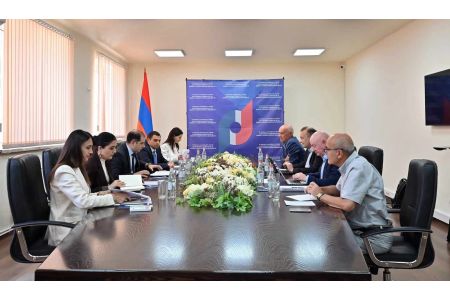
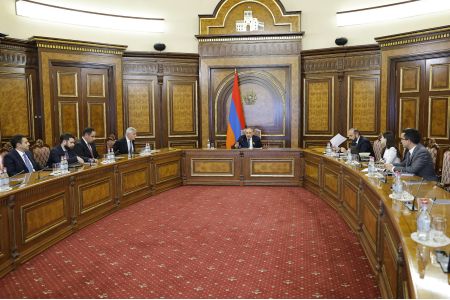
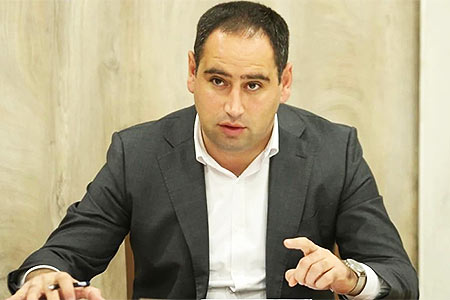
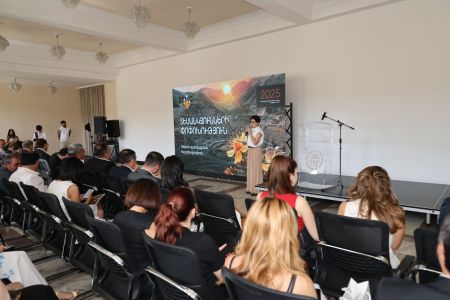
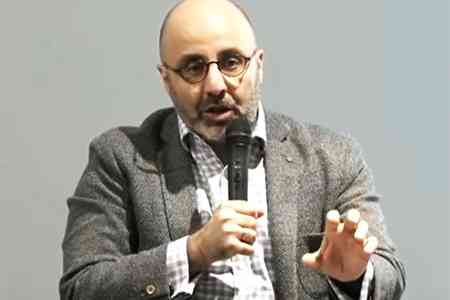
During the meeting of stakeholders on the topic "Public-Private Dialogue in Armenia", organized by the USAID Program to Improve the Business Environment in Armenia in cooperation with the RA Ministry of Economy, a well-known economist, Head of Management Advisory at Ameria Group Inc. Tigran Jrbashyan expressed such an opinion.
According to him, such associations and unions that do not receive monetary contributions from their members are a problem and the state should limit its work with such formal "virtual" bodies, the existence of which is aimed only at "promotion" of leaders.
At the same time, Jrbashyan noted that, there has never been a dialogue between the state and the private sector (PPD) in Armenia, and successful cases in this regard are completely unrelated to its existence. Successful cases, according to the expert, were not associated with the mutual interest of the parties, and primarily the state, but with the fact that the presence of such a dialogue was a prerequisite for international donors paid for the preparation of certain legislative initiatives of the government. This was the case with the changes in the Tax Code, when the professional community, even under the previous authorities, prepared a large package of proposals, which never found their reflection in the document. It is good at least that the current government responded more to these recommendations and made changes to the tax legislation.
According to Jrbashyan, the failure of the draft.am Internet platform, where draft legislative initiatives of the government are published, lies in the fact that these materials are not substantiated in any way, there is completely no causal relationship, namely for what, for what purpose this or that document is adopted. This, he said, speaks of the formal approach of government bodies to the so-called private-public dialogue (PPD). In this context, Jrbashyan stressed that government bodies are not ready for such a dialogue, because it leads to political responsibility, since by justifying a particular decision and consulting with the professional community, the heads of departments become more accountable to society in their decisions. But they are afraid of this, so they limit themselves to formalities.
But there is also another side of the issue. According to the expert, very often businesses use the PPD format to promote their narrow and even personal interests, instead of solving complex and systemic problems.
The expert expressed the opinion that in order to use the PPD, the country needs to find a systematic approach and an institutional solution.
In this regard, in his speech at the meeting, Director of ArmInfo Information Company Emmanuil Mkrtchyan expressed the idea that the lack of PPD culture can be compensated for in a different institutional way- the formation of the National Council for the Implementation of Reforms in the country. It should not be accountable to the government, but financed from the budget, according to the decision of the parliament, where various political forces are represented and there is more or less a conflict of interests. This option will allow the Council to work with various professional associations and unions, as well as business structures and other non-governmental organizations in developing initiatives in various sectors of the economy and activity of the country. This format will make it possible to force the government, like the parliamentary forces, to listen to the professional opinion and expertise of independent bodies and market participants, as well as to intensify work with the media.