ArmInfo.The International Monetary Fund (IMF) sharply improved its forecast for GDP growth in Armenia for 2021 to 6.5% from the previous 1%, but warns that the IMF sharply improved forecast for GDP growth in Armenia for 2021 to 6.5%, but warns: "Downside risks remain elevated".
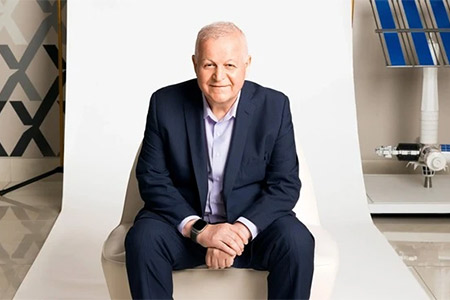
Thus, according to a press release from the IMF Communications Department, received by ArmInfo, an International Monetary Fund (IMF) team, led by Nathan Porter, held virtual staff-level discussions with the Armenian authorities during September 7-14, 2021. The discussions covered recent developments, the economic outlook, and policy priorities ahead.
According to the source, at the end of the visit, Mr. Porter issued the following statement:
"Spurred by strong external and domestic demand, the Armenian economy is rebounding from a severe recession in 2020 with GDP growth of almost 5 percent in the first half of 2021. Annual inflation accelerated to 8.8 percent in August driven by a surge in food prices, dram depreciation though the first quarter, pent-up demand for in-person services, and supply constraints. In 2020, the fiscal deficit widened to 5? percent of GDP and central government debt reached 63? percent of GDP, reflecting higher health spending and government support to the economy. The fiscal deficit narrowed in the first half of 2021 owing to the economic recovery and stronger revenue collections, and a gradual scaling down of spending support. The external position has also improved, with the currency strengthening over the past few months.
"The economic recovery is set to continue in the second half of 2021 and through 2022 with GDP growth of 6.5 and 4.5 percent, respectively, expected this year and next. Downside risks remain elevated, however, including from geopolitical tensions, a slowdown in external demand, and heightened global financial market volatility. A new wave of Covid-19 infections could also pose risks and, in this context, the recent rapid increase in vaccinations is very welcome. Inflation is expected to start moderating in the second half of 2021, as the temporary impact of imported food inflation and dram depreciation dissipate, and recent monetary policy actions have an impact. Despite the recovery in domestic activity, robust exports and remittances are expected to narrow the current account deficit modestly in 2021, and international reserves are projected to increase from the 2020 levels, supported by the recent IMF allocation of Special Drawing Rights.
"The Government's success in maintaining political, external, financial, and fiscal stability is notable amid the twin shocks of the pandemic and military conflict. Policy priorities are to fast- track large-scale vaccinations; secure the recovery; balance fiscal support and medium-term sustainability; reduce inflation towards the Central Bank's target of 4 percent; safeguard financial stability; and deliver sustained, strong, and inclusive growth. The focus of the Government's 5- year program on the pursuit of a knowledge-based, export-oriented, investment-driven growth strategy, aimed at reducing poverty and improving living standards is very welcome. As envisaged under the government's program, steadfast implementation of reforms is needed to continue strengthening governance, improving the business environment, enhancing social safety nets, and fostering economic inclusion. The mission looks forward to discussing the details of their program's implementation with the authorities in due course.
"Maintaining a credible medium-term fiscal framework remains critical to further strengthen resilience and economic growth. This should be underpinned by tax-base broadening measures (such as turnover and environmental tax reforms, the removal of tax exemptions and deductions, and improved compliance risk management) and current expenditure restraint. These measures would help ensure a more efficient and transparent tax system and generate adequate resources for social protection and capital projects. They are also crucial to achieve the authorities' debt reduction objectives under the fiscal-rules framework, including bringing debt-to-GDP below 60 percent in the short term and below 50 percent in the medium term. Progress on structural fiscal reforms should continue, including strengthening program-based budgeting, public investment management and implementation, creating a pipeline of construction-ready public projects, and improved fiscal risk management.
"The Central Bank of Armenia (CBA) has remained proactive in managing the challenges from above-target inflation and an uncertain global environment. It has raised the policy rate by 300bps since December 2020, and is carefully monitoring the inflation outlook, standing ready to adjust its monetary stance as necessary while allowing the exchange rate to be a shock absorber. The authorities' plan to develop capital markets is also welcome and its timely implementation would help increase access to finance and promote investment. While the financial sector weathered the twin shocks in 2020 relatively well, the global pandemic is evolving and the authorities should continue to monitor capital and liquidity buffers, perform regular stress tests, and enforce provisioning rules compatible with international standards.
"The mission would like to thank the Armenian authorities for fruitful discussions and commend their commitment to the IMF-supported program. It looks forward to conducting the pending review under the Stand-By Arrangement and the Article IV consultations with the authorities later in 2021."
To note, the World Bank, having updated its forecast in June, left unchanged the expected growth of GDP in Armenia in 2021 at the level of 3.4%. In its June forecast, the EDB improved its expectations for GDP growth in Armenia for 2021 by only 0.9 p.p. - up to 4.2%. Moody's, in its August report on Armenia's sovereign rating, forecasted 4.5% growth in the country's real GDP in 2021. And an earlier (March) forecast of the Fitch rating agency forecasted Armenia's real GDP growth by 3.2% in 2021. The Central Bank of Armenia turned out to be much more optimistic, with each quarterly update of the forecast, improving expectations for GDP growth for 2021 - from 1.4% in March to 4.6% in June, followed by an increase in September to 5.4%.