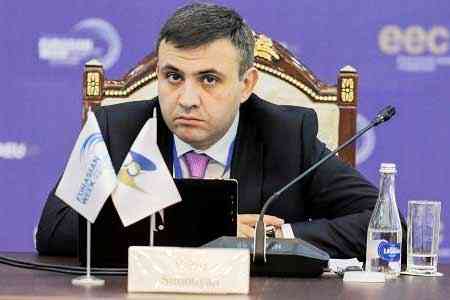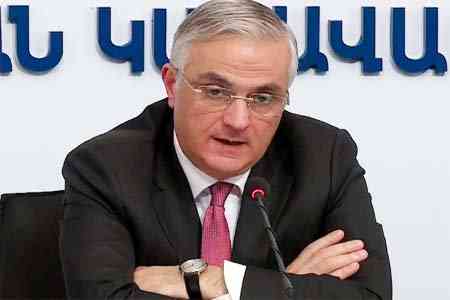



ArmInfo. On the eve of the New Year, Governor of the Central Bank of Armenia Martin Galstyan made an appeal to the citizens and the business community of the country, urging them to remain vigilant, since inflation in the outside world is not weakening and 2022 contains tangible, as before, inflationary risks and challenges. So, as reported by the press service of the Central Bank, Galstyan in his speech noted, in particular:
" The year 2021 is coming to an end and in retrospect, we can state that it was a difficult year for our economy. Still, we can assess that due to our joint efforts we have been able to maintain price and financial stability in the Republic of Armenia.
Since the beginning of the year, we have faced significant external inflationary pressures that have passed through the domestic inflation. In this situation, the foremost priority for the Central Bank was to ensure price stability at the lowest cost to the economy. From this perspective, we consider our monetary policy conducted during the year as very balanced. It is true that inflation is above our target level today, but as a result of the Central Bank's actions, it will gradually decelerate, approaching the target. The moderate increase in the refinancing rate during the year allowed, first of all, to avoid a worse scenario of inflation, to anchor the inflation expectations of the population, at the same time not hindering the recovery of demand. And while in the coming months we will already witness a certain decrease in inflation rate, however, we must continue to be vigilant, because global inflation is not going to retreat, and the coming year still poses significant inflation risks and challenges.
2021 was challenging in terms of financial stability either. The shocks that occurred in 2020 had their inevitable impact on the financial system outcomes in the current year. Since the beginning of the year, because of the significant increase of uncertainty, risk appetite of both the economy and the financial system shrank affecting credit of the banking system, especially given the significant lending under the Government's programs last year. However, our financial system has not only overcome these difficulties, but even made a significant contribution to alleviating the country's economic issues. Financial institutions have also undertaken a certain burden of addressing social problems, which had emerged as a result of the pandemic and the war.
Evidenced by the latest data, the recovery of credit is already taking place and we will end up the year with positive developments in financial intermediation. At the same time, I would like to emphasize that future price and financial stability in Armenia is secured, and the key precondition for it are not the distinct indicators, such as international reserves or banking sector capitalization, but knowledge and professional skills of the Central Bank staff, due to which we were able to withstood many severe shocks and have been often highly praised by our domestic and international stakeholders. Among the important achievements of the Central Bank in 2021 we can single out the new strategy, which presents the mission, vision and values of the Central Bank, as well as the main directions of our development and policy. Especially I would like to emphasize the agenda of financial sector digitalization, which is a cornerstone of our strategy. Having a digital society, digital ecosystem and digital accessibility in the 21st century is a must, and I think, digitalization is precisely the way to enable our citizens benefit from more accessible and convenient financial services. I believe that the joint agenda of the Government and the Central Bank to form a digital economy and society, under the leadership of the Government will be the keystone of the digital transformation of finances, and I want to assure that the Central Bank and the financial system are fully committed to their high mandate.
We can conclude that the Central Bank has now entered a new stage of transformation, which is gradually beginning to reveal itself in various spheres of our activity. Along the way, we appreciate the support of our society, the National Assembly and the Government: we are confident that in a few years we will have a more capable, leading institution based on research and innovation excellence, which will continue to lead the development of our economy under its mission of ensuring prices and financial stability.
I wish all of us a new year full of success and achievements. Congratulations on 2022!", he concluded.
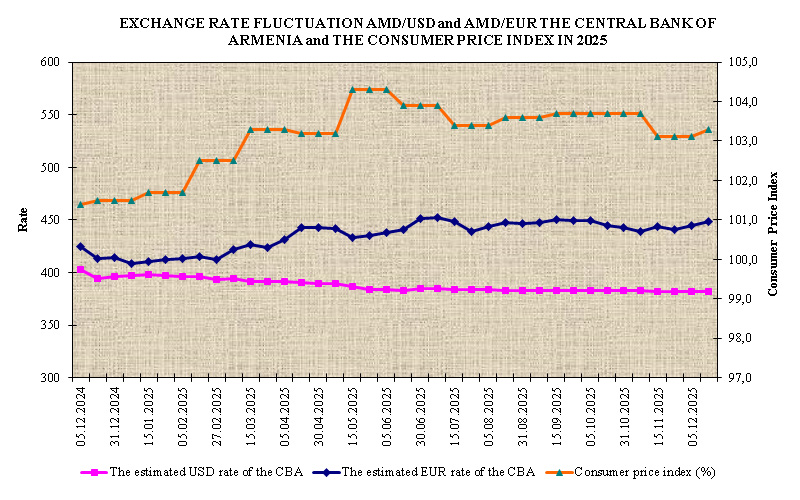
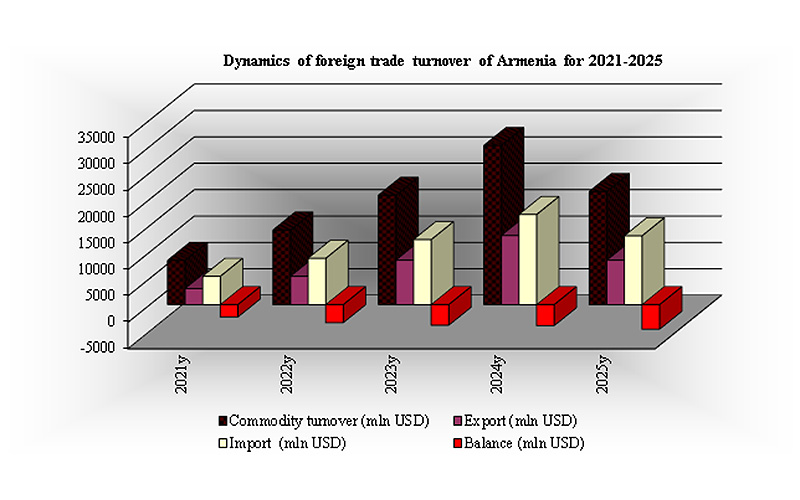
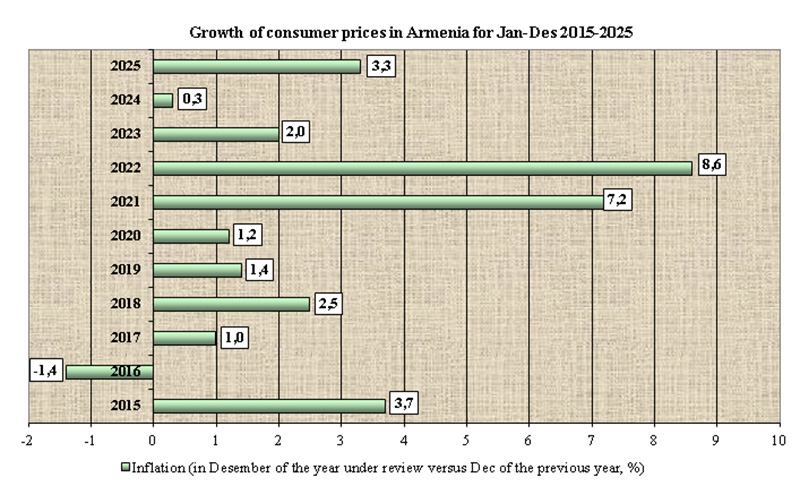
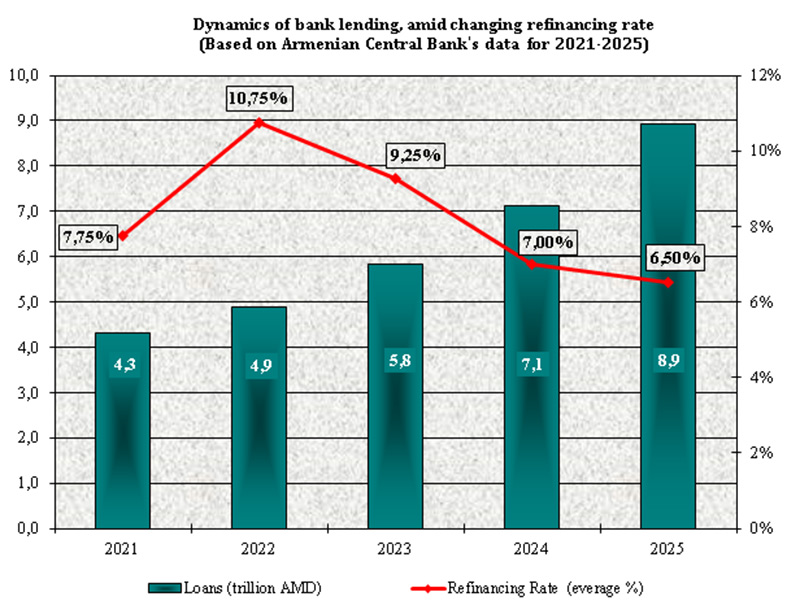
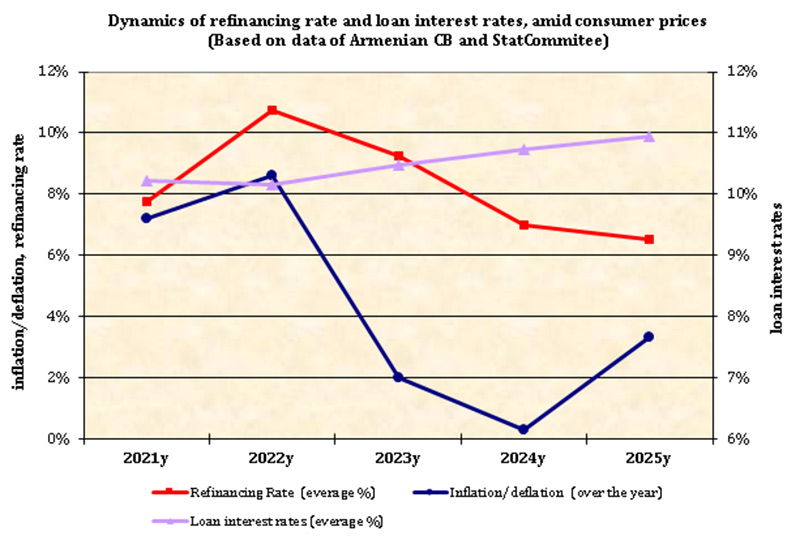
In 2021, the Central Bank revised the refinancing rate upward six times - from a total of 5.25% in January to 7.75% in December, which was aimed at anchoring inflationary expectations and ensuring price stability. Official y-o-y inflation (according to the Statistical Committee of the Republic of Armenia) in November 2021 reached 9.6% from 1.6% a year earlier, at the same time, core y-o-y inflation (according to the Central Bank of Armenia) also increased from 2% to 8.4%. Economic activity in Armenia, according to statistics, increased in January-November 2021 by 5.2% (against a 7.2% decline in the same period in 2020), while in the pre- COVID period it has7.5% growth (in the same period of 2019), while foreign trade showed a double-digit growth of 16.6% due to this trend in exports and imports, with an output of 19.4% and 15.1% growth, respectively. The Central Bank of the Republic of Armenia has moderated its GDP growth forecast for 2021 to 4.2% in mid-December (from 5.4% projected in September), at the same time, in terms of inflation, growth is expected to reach 8.4% by the end of the year, with a further approach to the target 4% threshold in 2022.
According to statistics, the decline in Armenia's GDP in 2020 amounted to 7.4% (against 7.6% growth in 2019), and the y-o-y inflation in December 2020 amounted to 3.7% (against the annual 0.7% inflation in 2019. ). Foreign trade turnover, according to statistics, in January-December 2020 decreased by 13.2% per annum due to a decline in imports by 17.7% with a decline in exports by 3.9%, while in the pre-COVID comparable period (January-December 2019) these indicators showed growth - respectively by 10.4%, 10.8% and 9.4%.