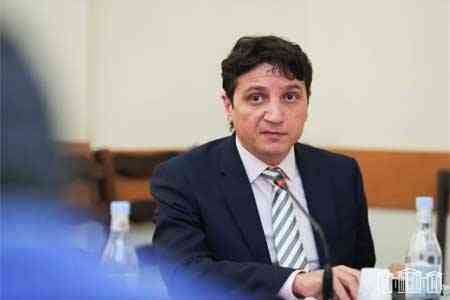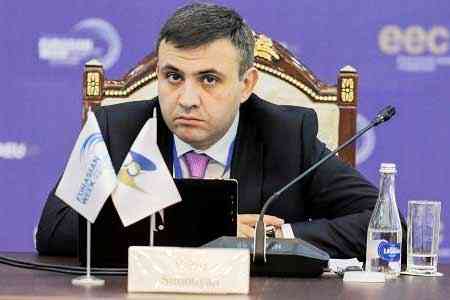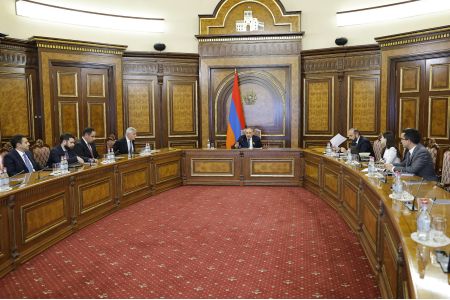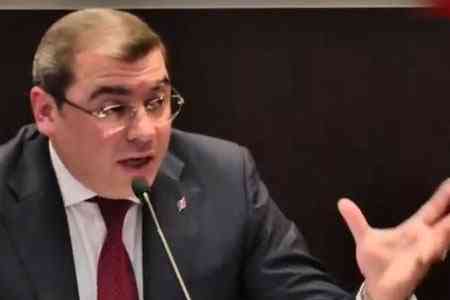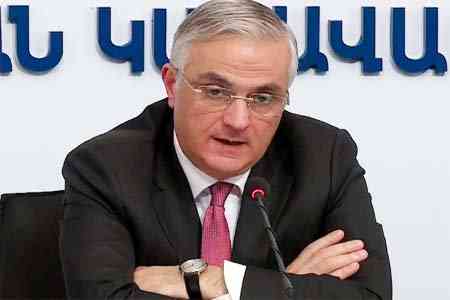


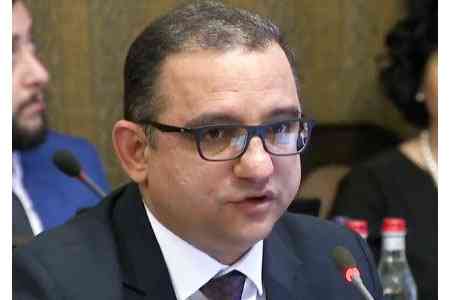
ArmInfo.Armenian Finance Minister Tigran Khachatryan assures that even if a number of risk factors and uncertainties continue in the global economy, the country's authorities will attract as much external borrowing as necessary to cover the costs fixed in the state budget for 2022. The head of the Ministry of Finance stated this on March 28 at a meeting of the NA Standing Committee on Financial-Credit and Budgetary Affairs, presenting a report on the results of the activities of the RA government for 2021.
" We will not cut costs, including current ones, due to a possible reduction in the share of tax revenues to the state treasury," the minister said. As Khachatryan explained, this approach is important from the point of view of ensuring the GDP growth planned by the state budget at the level of 7%. The implementation of the planned expenditures, as the head of the Ministry of Finance noted, will entail an increase in the size of the public debt, since the programs will be implemented mainly on credit resources. As the minister assured, borrowings will be attracted only as needed, and within the framework of the republic's ability to manage the public debt.
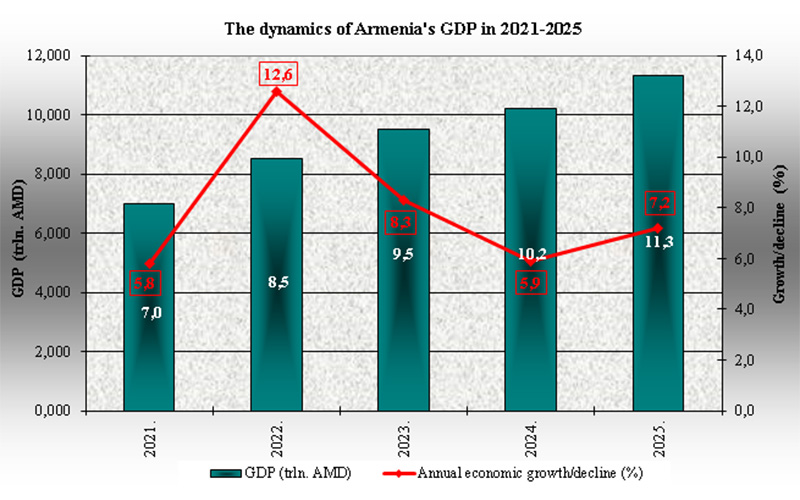
According to the state budget for the current year, budget revenues in 2022 will amount to 1 trillion 947.8 billion drams (24.7% of GDP) or 17.5% (289 billion drams) more than in 2021, expenditures - 2 trillion 184 billion drams or 27.7% of GDP (184 billion drams more than the adjusted figure for the current year and 334 billion drams more than the approved figure for 2021), while the state budget deficit decreased by 6 billion 736.3 million drams - up to 236.2 billion drams. Capital expenditures are fixed at 352 billion drams or 4.5% of GDP, about 60% more than in 2021 (for 217.8 billion drams last year, in 2020 the figure was 226.2 billion drams or 3.7 % of GDP).
The lion's share of the revenue item of the state budget - about 95% - will be provided by tax collections (tax revenues and state duty). As a result, tax revenues will amount to 1 trillion 844 billion, against the actual 1 trillion 586.9 billion drams or 22.7% of GDP in 2021 (0.3 percentage points higher than in 2020).
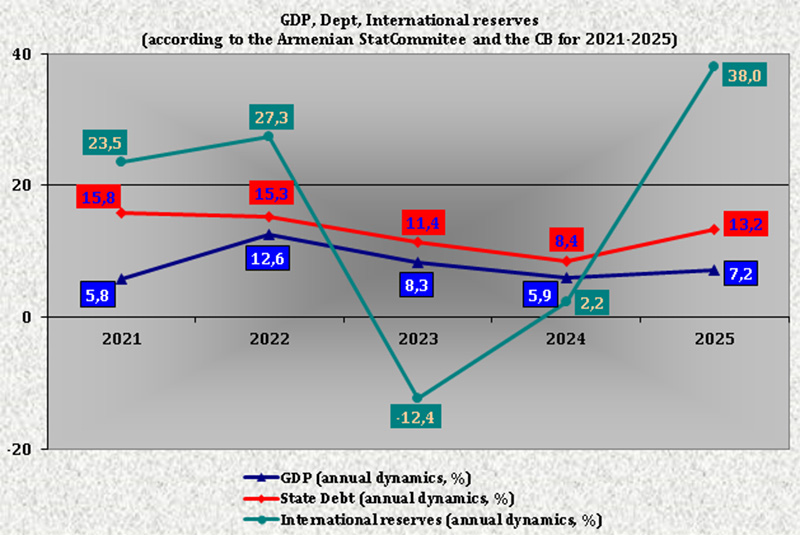
In 2021, the state debt of Armenia increased from $7 billion 968.5 million to $9 billion 225.6 million (4 trillion 429.6 billion drams) by $1,257.2 billion (the estimated exchange rate of the Armenian dram against the US dollar was 495.37 drams). Thus, in January-December 2021, the government debt increased from $7 billion 508.5 million (by the end of 2020) to $8 billion 767.9 million (4 trillion 209.8 billion drams or 60.3% of GDP) by about $1 billion 259 .4 million or by 16.8%. External debt (debt obligations of Armenia to international organizations and foreign states, funds received from the issue of Eurobonds) from $5 billion 599.5 million increased by 10.5% or $585.5 million - up to $6 billion 185 million (2 trillion 969.7 billion drams). In particular, on January 26 of this year, Armenia placed the 4th issue of 10-year debt securities in the amount of $750 million among international investors.
According to the state budget, net borrowed funds will amount to 356 billion drams in 2022, of which 250 billion will be attracted through treasury bonds, and 106 billion drams through budget assistance loans. When approving the state budget, the financial authorities once again assured that in 2022 there will be a return to the logic of the "golden rule" of public finances, established by fiscal rules, which will create a solid foundation for long-term high economic growth, ensure a stable reduction in the debt-to-GDP ratio and improve the spending structure. "Thanks to an increase in tax revenues, a return to spending management rules and a safe deficit level, which should not exceed 3.1% of GDP, significant fiscal consolidation will be carried out in 2022 and public debt management issues will be significantly improved," Tigran Khachatryan said.