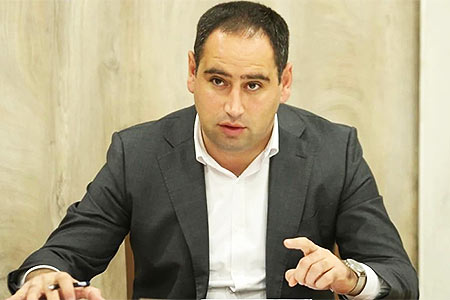
ArmInfo.Chairman of the Public Services Regulatory Commission (PSRC) of Armenia Garegin Baghramyan believes that the issue of the expediency of paying for Russian gas in rubles requires a detailed discussion with the involvement of all interested bodies. He stated this in a conversation with journalists on March 28, referring to the question whether he considers it expedient to pay for Russian gas in rubles.
" As the chairman of the commission, within the framework of my powers, I would prefer that we buy gas in a more stable currency," Baghramyan said. As the head of the Regulator explained, the more stable the exchange rate in which gas supplies are paid for, the less money will be compensated by the parties during the next revision of the tariff.
On March 23, Russian President Vladimir Putin instructed the Central Bank of Russia and the government to determine the procedure for making payments in rubles for gas supplies to Europe within a week. He noted that the decision to sell gas in the national currency refers to unfriendly countries, while Russia can conduct economic relations with other countries according to the previous rules.
Earlier, Deputy Prime Minister of Armenia Mher Grigoryan stated that the issue of payment for Russian gas in rubles is being discussed in Armenia. On March 24, Armenian Minister of Economy Vahan Kerobyan stated that fixing gas prices in rubles would be a great success, including in the context of solving the problems of exporters. According to him, at present, Armenian exporters do not have confidence in the stability of the ruble. In this regard, they avoid specifying the price of the exported goods in rubles. "If we have a fixed price for gas in rubles, then this will make it possible to provide our exporters with a fixed ruble exchange rate through reverse deals," he explained. For example, as the head of the Ministry of Economy pointed out, in cases where the goods are exported, and payment for it must be received after two months, the exporter's bank will be able to recalculate in drams at a predetermined rate. "This will give confidence to domestic exporters in the future," he said, adding that they suffered considerable losses due to receivables.