ArmInfo. The Central Bank of Armenia (CBA) has revised its GDP forecast for 2022 from 5.3% down to 1.6% (against the actually recorded 5.7% GDP growth last year), with the exports and imports expected to decline by 1.8% and 0.1% respectively, and inflation to reach 6.6%.
According to the CBA monetary policy programme for the 1st quarter of 2022, the construction sector is expected to ensure a 7% growth, agricultural sector, 3.8% growth, services sector, 3% growth, with a 4.7% decline expected in the industrial sector.
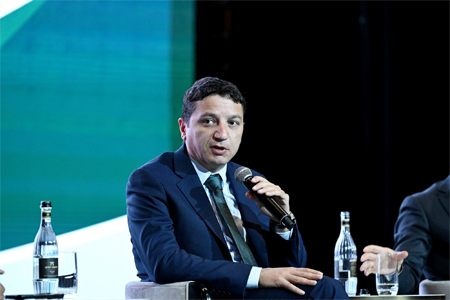
At his recent meeting with reporters, CBA Chairman Martyn Galstyan stated that the downward revision results from higher geopolitical risks and complete uncertainty in the context of the Russian-Ukrainian war and the unprecedented sanctions the West has imposed on Russia.
According to the CBA forecast, "the Russian-Ukrainian politico-military conflict and the unprecedented sanctions against Russia will have additional negative impact on the economic growth prospects in the partner-nations, as well as on the international primary goods markets and supply chains, causing serious inflationary trends. The developments have led to greater uncertainty, with the financial markets being highly volatile. The economic growth forecasts in the partner-nations have been revised down. Slower economic growth is expected in the USA and Europe this year, with a considerable economic decline expected in Russia. As regards Armenia's economy, the external demand is expected to considerably decline, with medium-term inflationary effects expected as well. On the other hand, the developments are causing more serious supply chain failures, as well as price and inflationary expectations and risks involving individual types of raw materials and food products, with the raw materials and food prices as well as inflation, in the partner-nations rising, reaching much higher levels than previously forecast. Therefore, the inflationary pressure on Armenia's economy is mainly external."
The expected economic decline in Russia will result in a considerable decrease in money transfers to Armenia, which, in turn, will curb the aggregate demand both in short- and in medium term. The last factor will curb inflation and partially set off the effect of the growing external inflationary pressure. Amid the considerable external inflationary pressure and the aforementioned demand behavior, the public is having higher short-term inflationary expectations. The higher geopolitical risks in the region and greater uncertainty caused Armenia's financial markets to become increasingly volatile and raised the sovereign risk premiums. On the other hand, the negative impact on the economic activity will be reduced due to a much larger number of Russian tourists in Armenia.
The CBA forecasts a 4.4% current account deficit/GDP ratio and a 20% decline in the net inflow of money in USD terms (down to 6.6% of the GDP). It also forecasts 3.1% budget deficit/GDP ratio, which will be down by 1.2 percentage points as compared with 2021.
The expected economic development scenario will affect Armenia's labor market as well, mainly in terms of pay restraint in the private sector due to a reduced aggregate demand and lower economic activity. Along with the slower economic growth, the unfavorable economic situation in Russia will reduce seasonal labor migration from Armenia. As a result, some of the guest workers will join Armenia's economically active population, which, in turn, will cause a pay restraint. The CBA forecasts a 6.7% wage rise in Armenia's private sector. Lower economic activity and reduced seasonal labor migration will increase unemployment by 16.7%, with the medium-term unemployment to range between 16.4%-16.9%.
The CBA chairman announced the revised forecast on March 15, the day the CBA raised the refinancing rate by 1.25 percentage points, up to 9.25%. On March 17, the IMF released its revised forecast similar to that of the CBA, with the GDP growth in Armenia revised down to 1.5% in 2022. On March 19, the Fitch agency released its revised forecast, with the GDP growth in Armenia revised down to 1.3% in 2022. The World Bank has not yet revised its forecast, but this January it forecast 4.8% GDP growth in Armenia for 2022. -