

ArmInfo.The international Standard&Poors rating agency has maintained Armenia's sovereign rating at "B+" and "B" for issuing long-term and short-term liabilities in foreign and national currencies, but worsened its outlook from "Positive" to "Stable". This is stated in the message on the website of the agency.
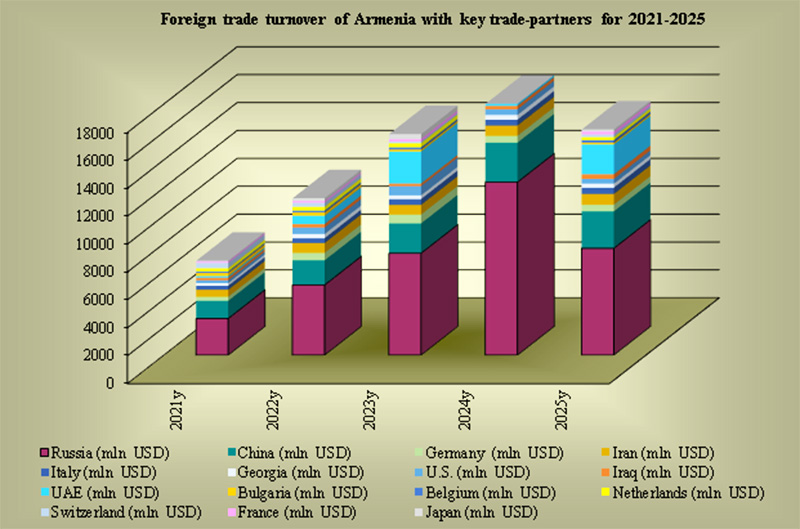
The same message provides an updated Standard & Poors forecast for Armenia's GDP growth for 2022 - worsened to 1.3% from the previous 4.7%, taking into account the situation in Ukraine and the expected 8.5% economic downturn in Russia due to sanctions following the results of the year. "Russia is the main investor and trading partner of Armenia, which accounts for 28% of exports and 37% of imports. There are also risks to Armenia's external security," the report says.
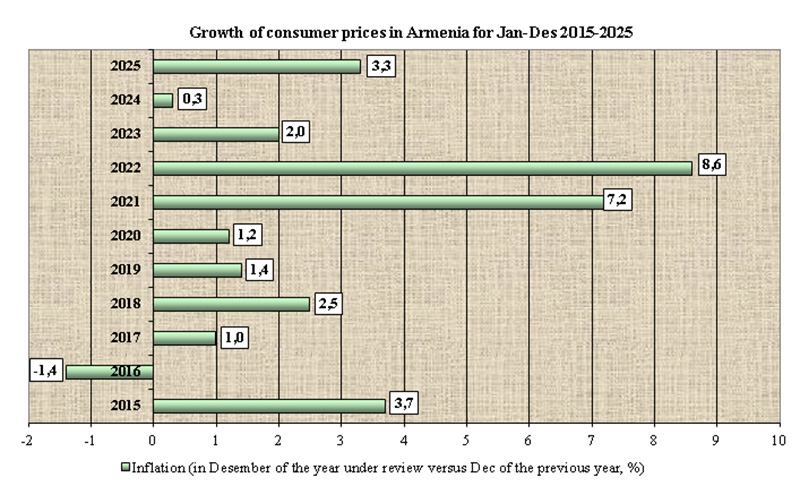
Analysts at S&P believe that due to rising inflation, the Central Bank may have to further tighten monetary conditions. "The growth in food prices will worsen the deficit of Armenia's external account, and the growth in world prices for metals that Armenia exports will not be able to fully cover this deficit. And it must be taken into account that gas from Russia is imported, firstly, under long-term fixed contracts, and in secondly, at below market prices," S&P analysts say.
The agency's analysts attribute this update to the uncertainty in Ukraine, the risk of expanding sanctions against Russia, and the overall implications for international trade supply chains. "For targeted support of enterprises and households, the government needs to use a reserve fund of about 67 billion drams (about $140 million) or slightly less than 1% of GDP. Support from the IMF may also be needed, since the stand-by loan of $430 million ends in this year, but given the difficult economic situation in the region and the reliability of Armenia as an IMF partner, the fund may issue an additional loan," the report says.
These are forecasts concerning short-term risks. And for 2023-2025, S&P forecasts an average of 4.3% y-o-y GDP growth in Armenia, due to the growth of domestic demand for goods and services, the development of the IT sector, as well as the expansion of state investment in infrastructure.
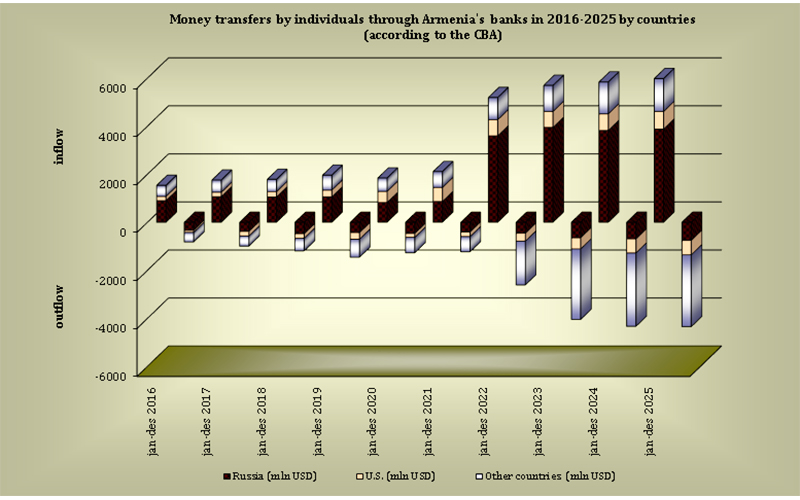
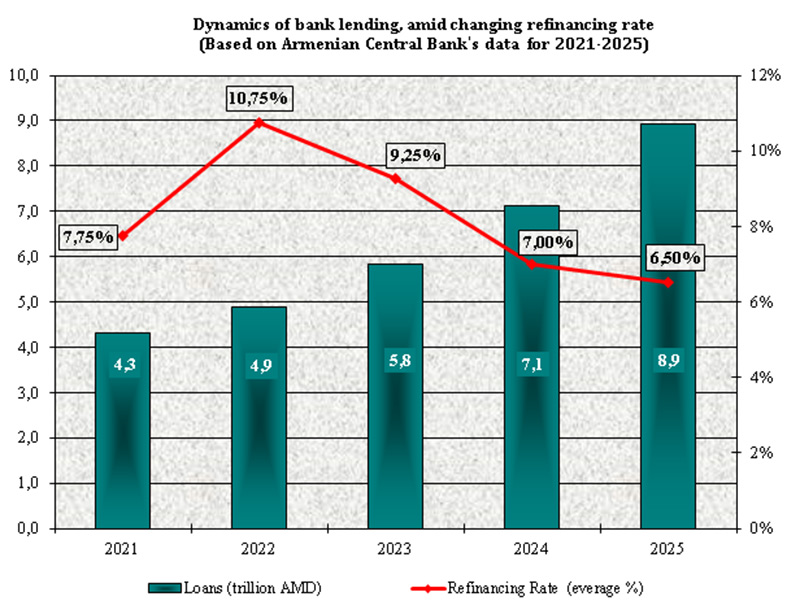
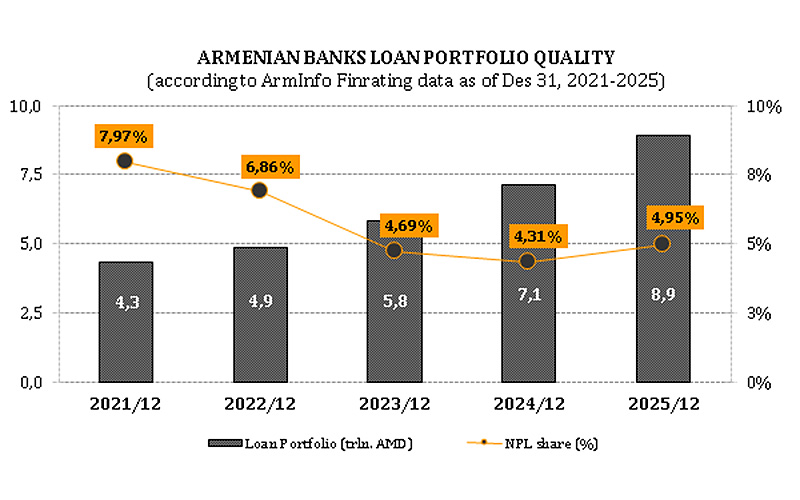
According to S&P, the ratio of public debt to GDP in 2022 will be 62%, but by 2025 it will decrease to 53%. S&P expects that in 2023-2025 world food prices will stabilize, as well as the inflow of transfers from the Russian Federation will recover. In the banking sector, S&P expects credit growth from 2023, but there is a risk that NPLs will grow again.
It should be noted that for the first time the Standard & Poors rating agency assigned Armenia a sovereign rating on October 12, 2021 - "B +" for the issuance of long-term obligations in foreign and national currencies with a "Positive" outlook. In addition to this rating, Standard & Poor's also assigned a 'B' rating to short-term foreign and local currency bond issues and rated the country at 'BB-' in terms of transfers and convertibility. The latter exceeds the country's sovereign rating by one level, thanks to which private sector companies and financial institutions of Armenia, when rated by Standard & Poor's, can receive a rating one level higher than the country's sovereign rating.
To recall, on March 19, 2022, Fitch Ratings affirmed Armenia's long-term issuer default rating (IDR) in foreign currency at 'B+' with a 'Stable' outlook. At the same time, the agency revised its GDP growth forecast for Armenia for 2022 from the previous 5.3% to an updated 1.3%, expecting a return to 4.2% in 2023.