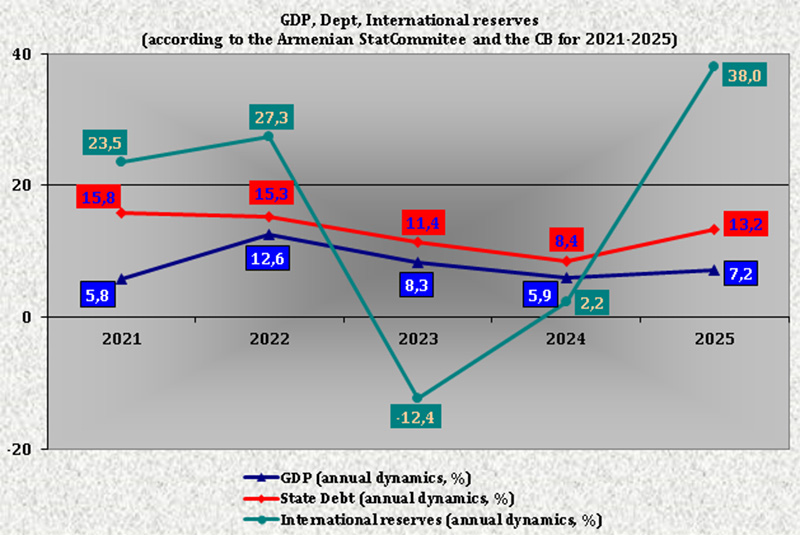



ArmInfo.The Armenian economy in 2022 may record regression, despite the indicator set in the y-o-y budget at the level of 7%. This is stated in the report of the analytical group of the Luys Foundation entitled "On the verge of a new crisis. Possible impact of sanctions against Russia on the economy of Armenia."
Analysts of the Luys Foundation analyzed in detail the economic ties between Russia and Armenia in the document, the ways of transmitting shocks, assessed the possible consequences for the Republic of Armenia of the economic sanctions imposed by Western countries against the Russian Federation in connection with the Ukrainian events in 2014, as well as new sanctions in 2022. As noted by coordinator of the group, a member of the Foundation's Board of Trustees, an international consultant on public finance, former Minister of Finance of Armenia Vardan Aramyan, the estimates obtained are comparable to those obtained by the Central Bank of the Republic of Armenia (with a 5% decline in the Russian economy, the growth of the Armenian economy will be 1.6%), as well as the IMF and WB. Three scenarios for the development of the Russian economy were considered: optimistic -7%, basic -11% and pessimistic -15% (there are negative dynamics in all cases). In this case, the possibility of a recession in the Armenian economy is estimated at 1.3% growth and 3% decline. And in the medium term, as a result of the shock of the Russian economy, the Armenian economy will lose the pre-crisis potential of real GDP. At the same time, one of the main factors determining the slowdown in Armenia's economic growth - exports, remittances from Russia - foreign direct investment will suffer significant losses.
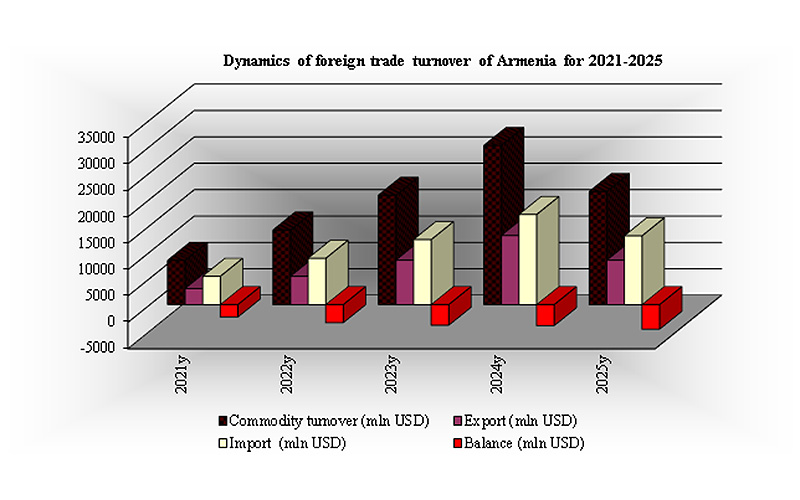
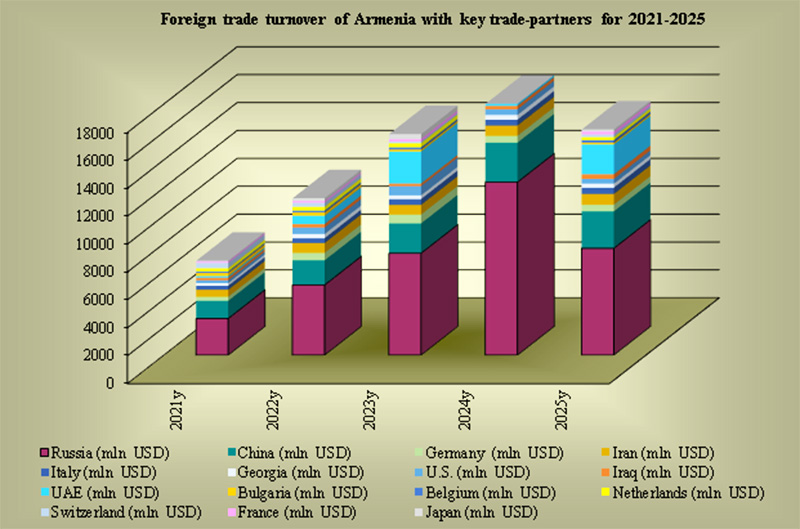
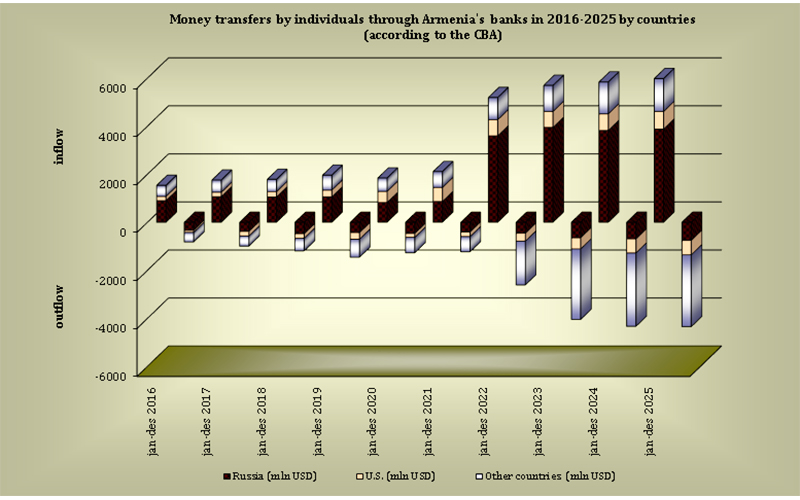
As stated in the analysis, economic ties with Russia have always played a significant role in the economic development of the Republic of Armenia, being reflected in such areas of the economic life of the RA, as foreign trade, remittances, foreign investment and tourism. Russia is Armenia's largest trading partner. As of 2021, exports to Russia accounted for 28% of total exports, while imports from Russia accounted for 33% of total imports. In the net inflow of remittances from individuals, transfers from Russia account for about half, due to the large influx of seasonal workers to Russia and the presence of a large Armenian community in Russia. About 40% of foreign investments in Armenia are from Russia. In addition, Armenia receives a large number of Russian tourists, as a result of which 40% of tourism revenues in 2021 came from services provided to Russian tourists.
Nevertheless, as the Foundation's experts noted, the overall economic dependence on Russia has weakened over the years. Having considered such indicators as exports to the Russian Federation, net inflow of remittances from Russia, net inflow of foreign investments from Russia, as well as funds generated by the tourism sector, it was revealed that in 2014-2021 (and especially during the years of upheaval), dependence on Russia showed a downward trend, and if in 2014 Armenia received about $1.9 billion from Russia through these channels, then in 2021 this figure decreased by about $200 million - to 1.7 billion dollars. Moreover, if earlier the lion's share of these funds was remittances, now dependence on Russia has diversified, exports have begun to play an especially large role. In particular, the share of the above- mentioned complex indicator (exports + remittances + foreign investment + tourism) in GDP 2021 decreased from 17% in 2014 to 12%.
At the same time, in 2014-2021, Armenia has become more dependent on the import of some strategically important products (wheat, barley, corn, imported mainly from Russia, poultry, imported mainly from Ukraine). In these conditions, with the worst-case scenario, the Armenian economy will be able to withstand those shocks only during this year. At the same time, compared to 2014, in 2021 self-sufficiency in wheat, barley and corn decreased significantly from 48.7% to 24.4%, from 95.1% to 74.4% and from 27.9% to 8%, respectively.
"According to the three scenarios considered, the deterioration of macroeconomic indicators leads to a significant loss of tax revenues to the state budget. In 2022, the loss of tax revenues in the case of the main (baseline) scenario will be about 93 billion drams, in the case of an optimistic scenario - about 72 billion drams, and in the case of the pessimistic scenario - about 127 billion drams. And in the medium term, the loss of state treasury tax revenues will gradually increase. Three scenarios show a significant deterioration in the fiscal situation: a significant increase in the debt burden of the Government of the Republic of Armenia and an increase in instability risks, since the debt/GDP ratio may remain higher 60% of the threshold set by the fiscal rules of the Republic of Armenia and even exceed the accepted 70% risk threshold for debt stability. As a result, the Armenian government faces a serious limitation of "fiscal space," the report says.
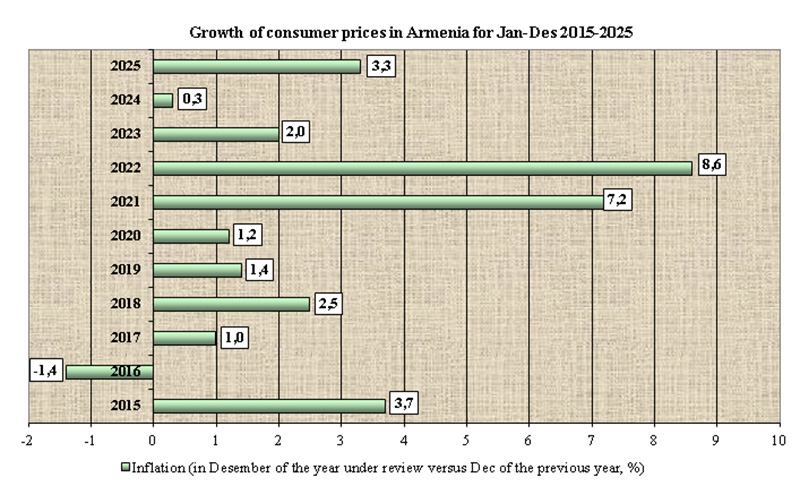
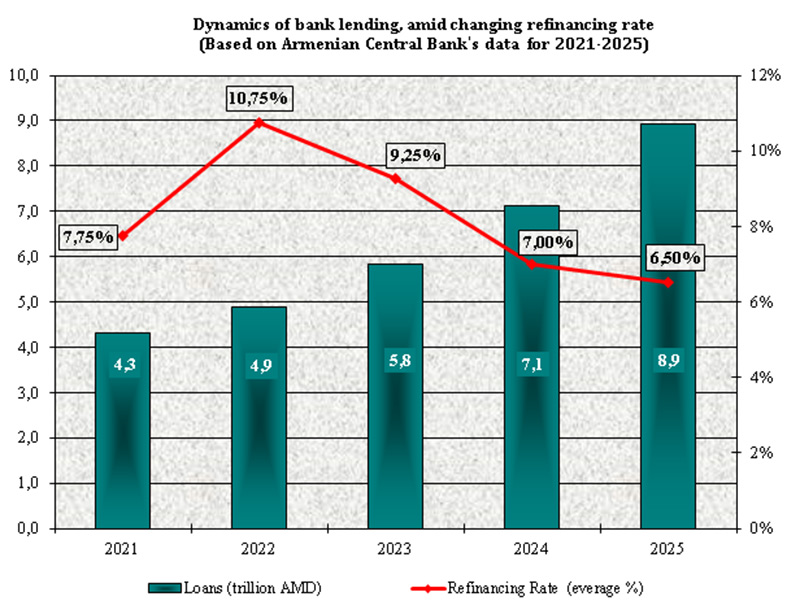
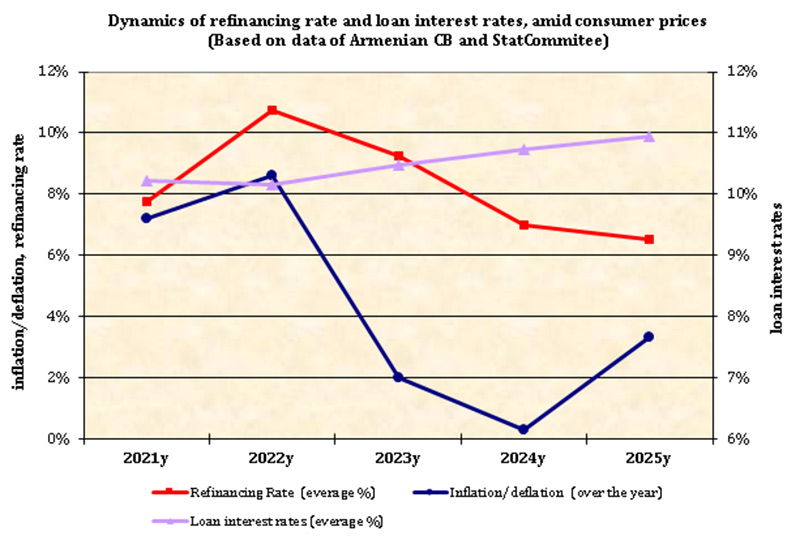
The Foundation's analysts identified the following key areas of economic policy. Thus, taking into account the nature of the shock, the fiscal policy (as the main shock absorber) should play a key role in counteracting this shock, the prompt and targeted reaction of which will be necessary to mitigate the negative economic impacts from the outside on the activity of the RA economy. At the same time, they urge to take into account that, unlike the period of the epidemic shock, this time Armenia is significantly limited by the already high debt burden of the RA government, as well as the fact that we will have additional pressure on supply inflation, as a result of which the Central Bank, seeking anchor future inflationary expectations, raise interest rates. However, on the other hand, high interest rates constrain lending to the economy, which leads to a slowdown in economic growth in the medium term.
Therefore, in this situation, there is a risk of stagflation (high inflation + economic recession), in order to neutralize it, the need for coordination of monetary and fiscal policy increases significantly, and the government must be more aggressive, excluding price abuses in certain areas in consumer markets, thereby will help the Central Bank to effectively deal with growing inflationary expectations. Otherwise, the Central Bank will be forced to raise interest rates (or maintain the current level longer), which will also hit economic activity.
In the short term, the Government of the Republic of Armenia should focus on preserving the economic potential and easing social tensions. In particular, targeted instruments should be used primarily to support exporters (especially those with a relatively large role in exports to Russia), seasonal workers and socially vulnerable groups. Moreover, given the limited fiscal capacity, it is necessary to reconsider the spending priorities of the 2022 budget very quickly, the authors of the report noted.
In the medium term, after overcoming the shock, it will be possible to focus on strengthening fiscal stability, the Foundation's experts noted. In particular, it will be necessary to carry out fiscal consolidation at a faster pace than planned, as well as to discuss the issue of revising the goals of the RA Government program, focusing mainly on measures to strengthen the potential of the economy. At the same time, special attention should be paid to measures to increase the stability of the economy, which will allow (new export markets conquered, increasing the role of high value-added industries, growing the tourism sector, geographical diversification, diversification of FDI), reducing dependence on energy carriers in all directions, increasing self-sufficiency strategic commodities, increasing the share of AMD debt, etc., in order to accumulate sufficient resources to better deal with future shocks.
It should be noted that the government of Armenia, represented by Finance Minister Tigran Khachatryan, has repeatedly stated that even in the face of a reduction in tax revenues, the state treasuries do not plan to reduce state budget expenditures and they will be fully implemented by attracting new loans.