


ArmInfo.The increase in tax collection becomes a burden on the economy, slowing down its development. The experts of the Luys Foundation stated. Earlier, the State Revenue Committee reported that the actual revenues from tax revenues and state fees of the state budget for Q1 2022 amounted to 400.6 billion drams, that is, by 5.2 billion drams or 1.3% more than the program target of 395.4 billion drams.
For the same period in 2021, the indicator amounted to 332.9 billion drams, in 2020 - 349.0 billion drams, in 2019 - 299.7 billion drams. Thus, compared to the same period last year, tax revenues increased by 67.7 billion drams, or 20.3%, compared to January-March 2020, by 51.5 billion drams, or 14.8%, and compared to January-March 2019 by 100.9 billion drams or 33.7%.
Meanwhile, experts of the Luys Foundation, after analyzing the report on the implementation of the state budget for Q1 2022, said that the deviation from the program indicator was approximately 95.5 billion drams. "The implementation of the state budget of the Republic of Armenia for the reporting period did not correspond to the previously planned level. More revenues were collected than planned, but the planned expenses were not met in full. As a result, a surplus of 28.7 billion drams formed instead of the planned deficit of 66.8 billion drams, with a deviation of about 95.5 billion drams. It turns out that the state collects taxes from the economy, but does not spend, thereby reducing economic activity", the Foundation's experts noted.
In particular, in the first quarter the programs envisaged by the RA state budget were not fully implemented, out of 718 planned activities, only 586 or 81.6% were fully or partially implemented. Programs such as improvement of the irrigation system, improvement of the road network (including under the "North-South" program), social investments and local development programs, etc. were not fully implemented. The latter are aimed at increasing the potential of the Armenian economy, and their non- fulfillment threatens not only the current but also the future economic growth and economic. The total deviation in the fulfillment of expenses amounted to 89.6 billion drams.
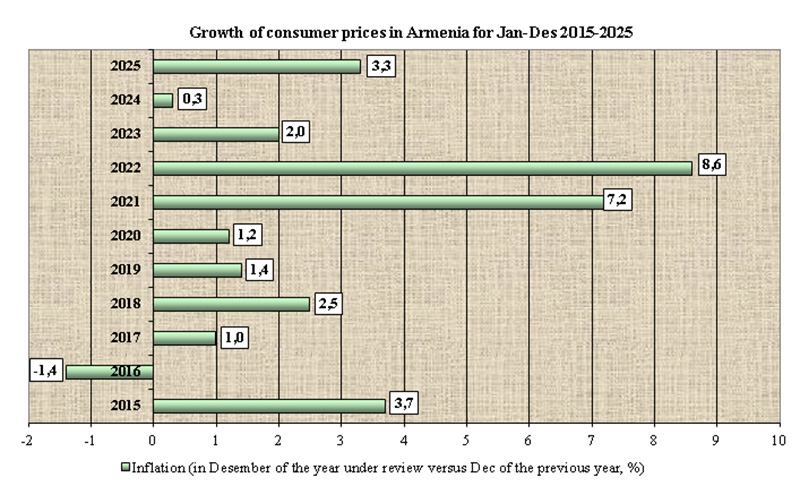
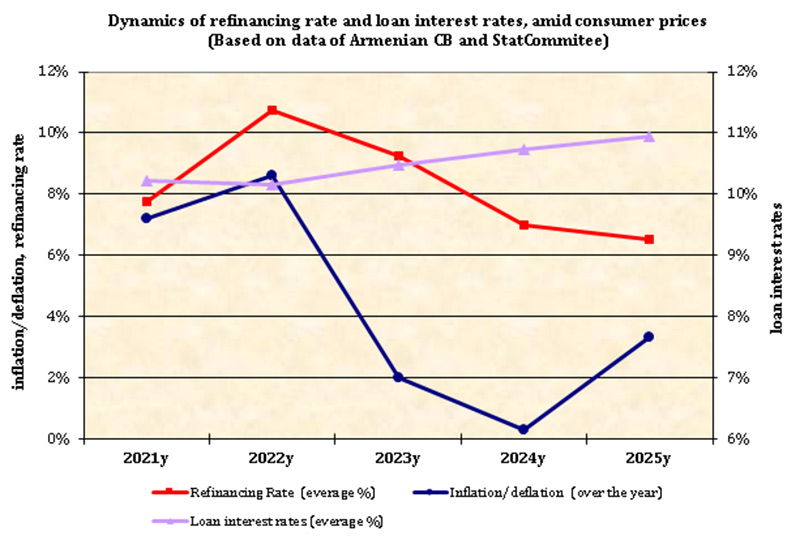
In January 2022, economic activity was strong, in February it began to slow down, and as a result of the Russian-Ukrainian conflict, growth slowed down even more. "The situation is aggravated by the constant growth of inflation rates, in response to which the Central Bank regularly raises the refinancing rate with quite big steps. Under these conditions, in Q1 2022, fiscal and monetary policy had a restraining effect on the economy. However, if tightening monetary policy is to some extent justified in order to curb inflation, then the underlying goals of fiscal policy are not clear>, the analysis says. The authors of the document note that no program is being implemented to mitigate the negative consequences of the Russian-Ukrainian conflict (which has already affected industry and exports), no changes have been made to the budget plan. "It turns out that the government is going to wait for the full transfer of negative consequences to the Armenian economy, after which it will present a certain situational action plan. However, it will definitely be too late, it will not be possible to neutralize the deteriorating economic situation", the Foundation's experts sum up.