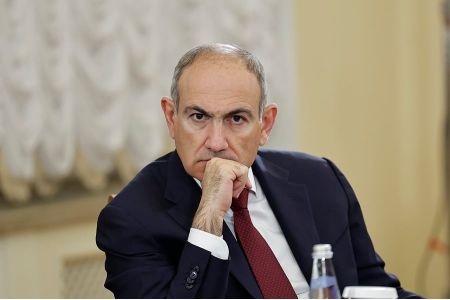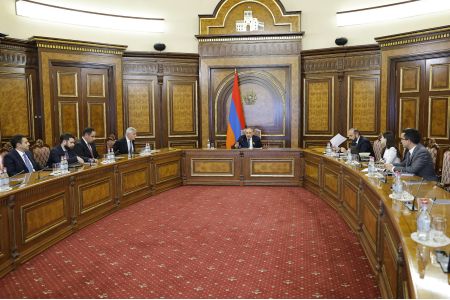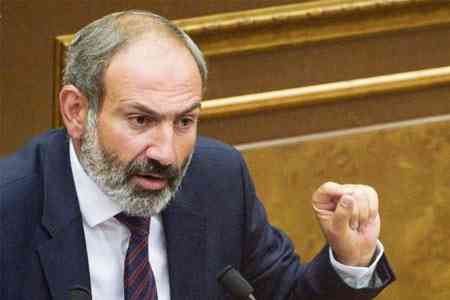
ArmInfo. Despite all the problems, Armenia's government managed to overfull the budgeted revenues by 14.5%, Premier Nikol Pashinyan stated at a Tuesday discussion of the 2021 budget report.
Armenia recorded 5.7% GDP growth last year despite the budgeted 3.2%. Tax revenues (taxes and state duties) exceeded the budgeted level by AMD 147bln - 14.5% as much as the 2020 revenues and 1% as much as the revised target. As a result, the tax revenues/GDP ratio reached a historical maximum of 22.7%. Specifically, as of December 31, 2021, the budget revenues totaled AMD 1,586.9bln against the budgeted AMD 1,440,136,839,500 and revised up to AMD 1,581bln.
Of the AMD 147bln, the share of duties on copper and molybdenum exports was AMD 24bln despite the pessimism about the 23% flat tax from January 1, 2020, with planned flat tax rate reduction down to 20% until 2023. Last year, income tax revenues totaled AMD 459bln against AMD 343.7bln in 2017.
The premier stated that taxes were reimbursed as actively as they were collected. Lat year, income tax reimbursement totaled AMD 31bln, with mortgagors and working students being beneficiaries. Moreover, AMD 146bln VAT were reimbursed to businesses against only AMD 60bln in 2017 (a 147% growth in 2021 as compared with 2017). All the applications for AMD reimbursement were granted, the premier said. Also, VAT is reimbursed once a month now as compared with quarterly reimbursements in 2018 and annual reimbursements earlier.
Last year, budget revenues totaled AMD 1,683,831,463,200, on-budget expenditures AMD 2,004,300 990,400 and budget deficit AMD 320 469 527,200. Last January-December, 7.7% inflation was recorded against 3.3% in 2020. Last year, the budgeted revenues were AMD 1,569bln, budgeted expenditures, AMD 2,000bln, budgeted deficit, AMD 341bln.
Last fiscal year, the government debt/GDP ratio was reduced by around 3.2 percentage points, down to 60.3%. Specifically, Armenia's national debt increased by $1,257.2mln last year, with the AMD/USD exchange rate being AMD 495.37/$1, - from $7,968.5mln up to $9,225.6mln. Specifically, last year the government debt increased from $7,508.5mln by the end of 2020 up to $8,767.9mln (or 60.3% of the GDP) - an increase of about $1,259.4mln or 16.8%.
Armenia's foreign debt (Armenia's debts to international organizations, foreign states and Eurobond issues) increased from $5, 599.5 up to $6,185mln - a 10.5% or $585.5mln.
Specifically, on January 26, 2021, Armenia distributed the 4th tranche of 10-year debt instruments worth a total of $750mln. The annual yield was lower than that of the 3rd tranche - 3.875% against 4.625%.
During the period under review, Armenia's domestic debt increased from ? $1,909mln to $2,583bln - an increase of $673.9mln or 35.3%. The Central Bank's debt increased by $2.2mln or 10.5%, reaching $457.7mln against $459.9 at the end of 2020. As of December 31, 2021, loans issued against government security totaled $101.4mln against $120.7mln. As of the end of last year, the share of domestic debt is the government debt increased from 25.4% in 2020 up to 29.5%, with the AMD share increasing from 24.2% to 28.28%.
Last year, Armenia's capital expenditure budget reached 217.8bln, with the highest performance over the last few years - 92.3% of the adjusted plan and 100% of the initially budgeted 216.3bln. Last year, capital expenditures exceeded the corresponding figures in 2018 and in 2019 by about AMD 24.7bln and AMD 65.8bln, with the highest performance over the last four years - 92.3% under the 2021 adjusted plan.
Specifically, in 2020 this figure was 84.9%, 73.5%, in 2019, and 74.0% in 2018. This year, the government has planned AMD 350bln capital investments, which is about 60% as much as last year. A total of AMD 54.6bln (about $114mln or 0.8% of the GDP) were allocated for COVID-19 control. A total of 132.9bln ($227mln or 1.9% of the GDP) were allocated for social support to the casualties in the Karabakh conflict and for the support to Artsakh budget.