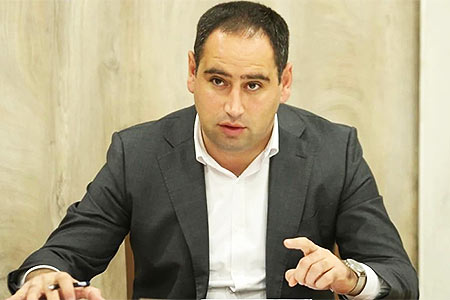
ArmInfo.The inflationary environment in Armenia will continue. On June 13, Chairman of the Central Bank of Armenia Martin Galstyan expressed a similar opinion during the meeting of the NA Standing Committee on Financial-Credit and Budgetary Affairs.
He noted that the Central Bank of Armenia was the first to raise the refinancing rate in December 2020, when its level in the country was 1.6% (below the target threshold). Galstyan explained that the policy of the Central Bank was proactive due to the expected high inflation rate in 2021. As the head of the Central Bank reminded, since November 2021, inflation has decreased from 9.6% to 6.5% in February 2022. However, the aggravation of the Russian-Ukrainian conflict at the end of February 2022 led to an increase in the price of essential commodities.
Referring to the FAO Index, Galstyan noted that there is no encouraging news, since the issue is more military-political than economic. In this context, the head of the Central Bank wondered whether Russia would allow Ukrainian grain to be supplied to international markets in order to avoid starvation in a number of countries or not, how would the problem with sunflower oil, corn oil, etc. be solved? "Such questions lead to t conclusion that the inflationary environment will continue," he said.
Predicting the future situation, the chairman of the Central Bank noted that according to the forecasts, the inflation rate of 9% in Armenia may show certain growth trends within several months. "If nothing extraordinary happens, then at the end of the year we will have inflation below the current level," Galstyan said.
At the same time, in response to calls for the need to artificially enter the market, devaluing the existing exchange rate by the Regulator, which may help a certain segment of the business - exporters - he drew attention to the fact that as a result, the general public will pay for such actions. "If we go against our mandate, artificially devalue the dram, then we will face a new wave of inflation which will affect everyone," the head of the Central Bank said.
In the current conditions, he noted the importance of the state's sectoral policy, on the basis of which the most affected sectors that have lost their competitiveness will receive assistance from the state in the form of additional subsidies, tax cuts, etc. A few days earlier, Armenian entrepreneurs issued a statement in which they indicated that the exporters of agricultural products, beverages, as well as the tourism sector, the IT sector and developers, suffered the most from the strengthening of the national currency.
In particular, it was noted that the financial authorities of the country benefited from this situation. <They are afraid of incurring reputational damage due to inflation, because in order to stop the revaluation of the dram, it will be necessary to buy the currency, which in turn will spur inflation. In short, to create the impression of short-term gain, officials are sacrificing long-term development and growth>, the statement said.
Minister of Economy of Armenia Vahan Kerobyan, commenting on the situation with the revaluation of the dram, stressed that monetary policy should contribute to the economic growth of the country, helping exporters of the manufacturing industry and the IT sector that supplies services. In this regard, he stressed that exporters and the IT sector are concerned about the revaluation of the dram (on average by 18% per annum by June 9 this year - ed. mote) and in these conditions the Central Bank should start using new tools. "We understand their concerns about inflation, but we think that now everything needs to be done in such a way that important branches of the economy are not affected," Kerobyan noted, stressing that the Regulator has the tools to ensure a more balanced exchange rate.