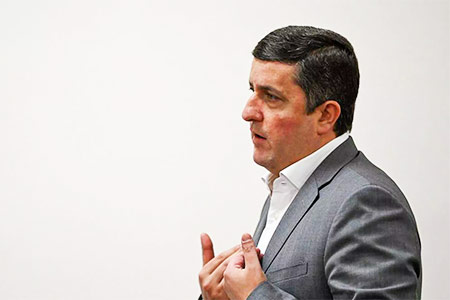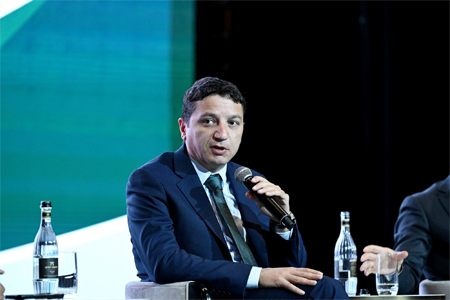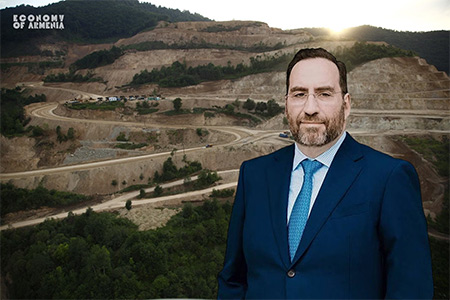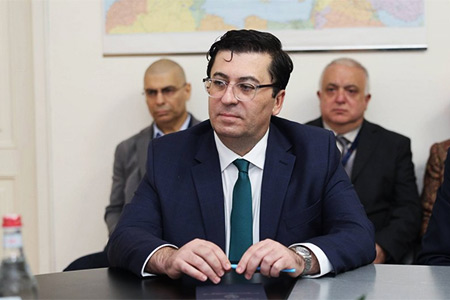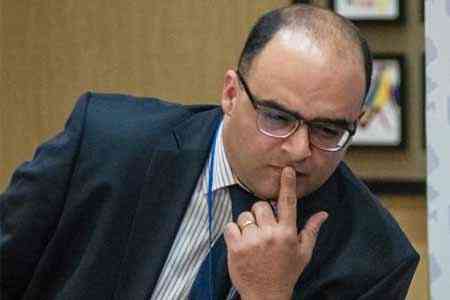


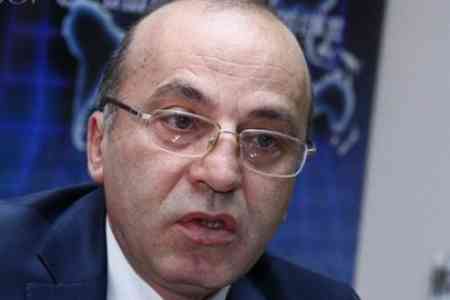
ArmInfo.Since the end of February, about 140 thousand citizens of Russia, Ukraine and other countries, both individuals and legal entities, have moved to Armenia, but their impact on the country's economy may be short-term in the absence of a clear strategy for the development of the national economy. Tatul Manaseryan, expert, doctor of economic sciences, professor, head of the "Alternative" research center, stated this at a press conference.
According to him, this is a serious dynamic for the small consumer market of Armenia. However, with the departure of the latter from the country, as the expert noted, the economy may receive a serious blow if the state does not have a clear strategy the development of the national economyand predictable developments. "Episodic effects in the economy today may be positive, but tomorrow we will be left with our problems with nothing," he said.
The expert believes that, first of all, it is the increase in the number of consumers that conditions the recorded indicators of economic growth (10.2% for January-May - ed. note). In addition, he pointed to the revival of tourism, which is mainly due to the arrival of many thousands of representatives of the Diaspora in Armenia, which Manaseryan called a fairly common phenomenon. Turning to the industrial sector,, the expert noted that, of course, it has provided a certain revitalization but he noted that this is not a sector in which we should be proud of our successes, , - said the economist. According to him, only importers are in a profitable position in Armenia today, who receive excess profits due to the revaluation of the dram, which is accompanied by an increase in prices in the domestic market.
"I would very much like to hear an explanation from the government about what was their contribution to the recorded economic growth, which turned out to be the result of the policies they led," he said.
In this context, Manaseryan stressed that it is not worth referring only to the international market in the issue of price increase and talking about import inflation.
At the same time, the economist positively assessed the role of the Central Bank in terms of conducting monetary policy. Tools for price stabilization are used, but according to Manaseryan, there are no steps against the general trend. In this sense, he pointed out the need for a coordinated policy and common approaches of the Ministry of Economy, the Ministry of Finance, the State Revenue Committee, the Committee for the Protection of Competition, etc.
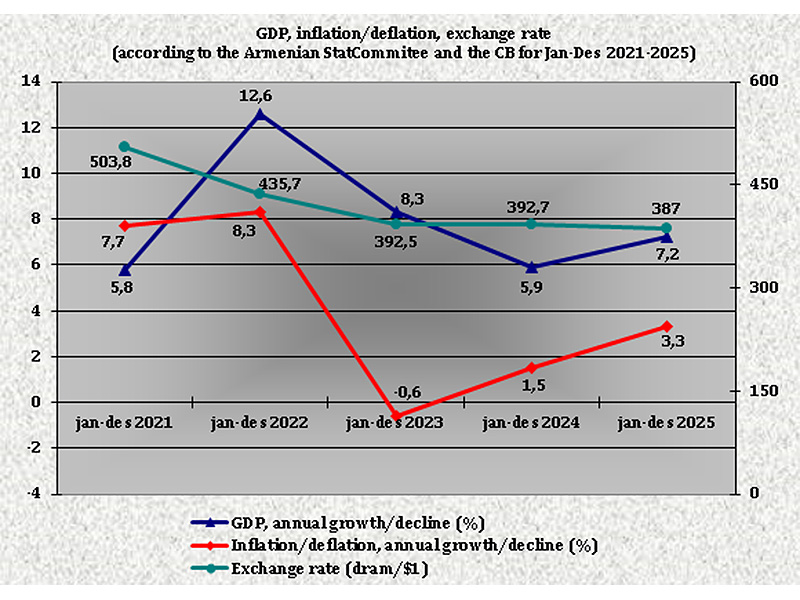
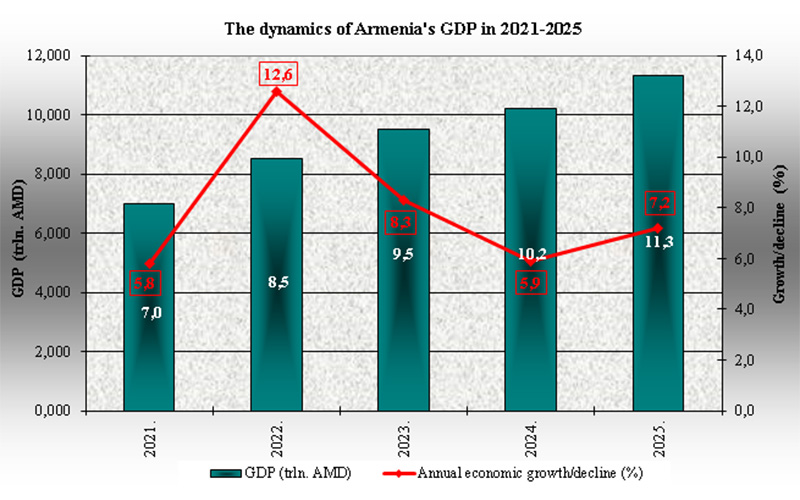
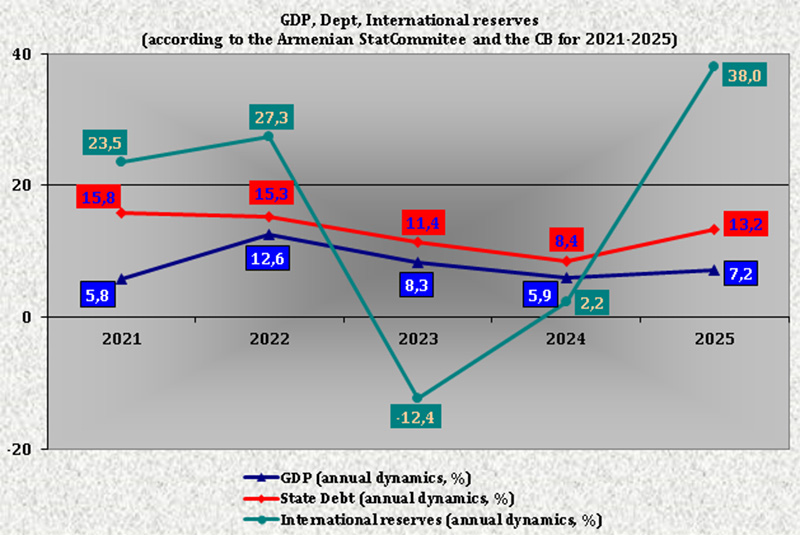
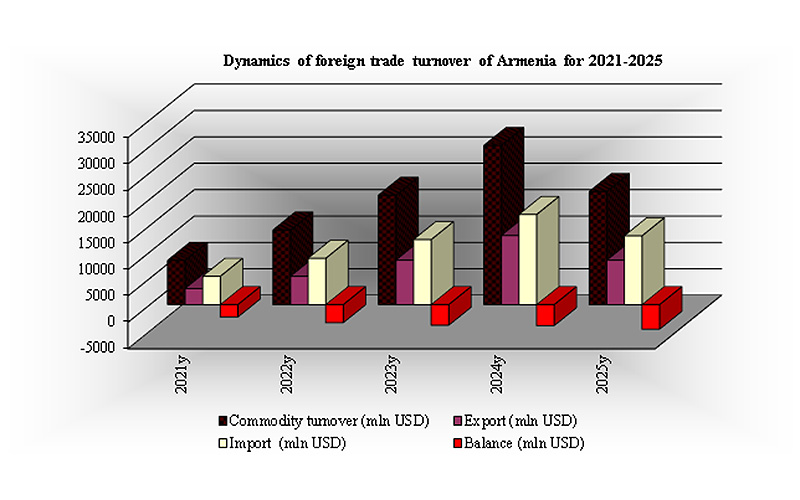
According to the Statistical Committee the growth of economic activity in Armenia, accelerated in January-May 2022 to 10.2% per annum (from 4.3% a year earlier), which is accompanied by high growth rates of exports and imports. In May of this year, by May 2021, economic activity accelerated growth to 13% (from 10.9% a year earlier), while increasing by 6.1% in May 2022 (against 2% growth in May 2021 and 5.3% growth in April 2022). According to the preliminary data of the RA Statistical Committee, the growth of economic activity in January-May 2022 was largely conditioned by: the service sector - by 24.9%, the energy complex - by 13.1% and the construction sector - by 11.4%, and to a lesser extent the trade (8.9%) and the industrial sectors (2.7%).
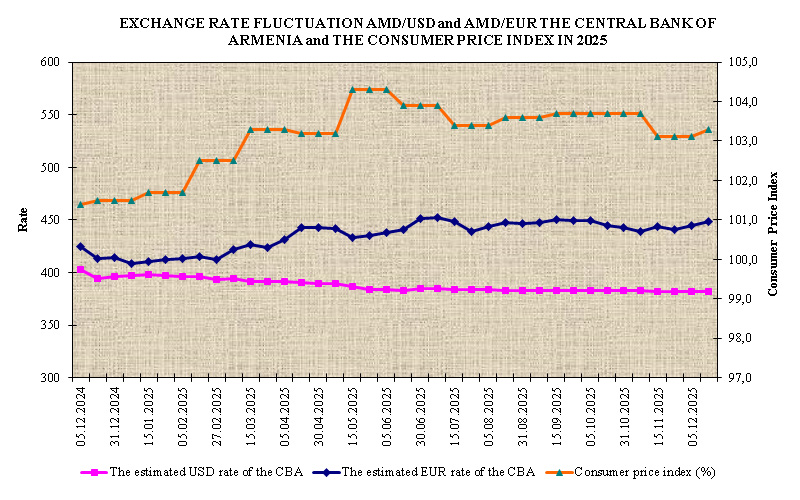
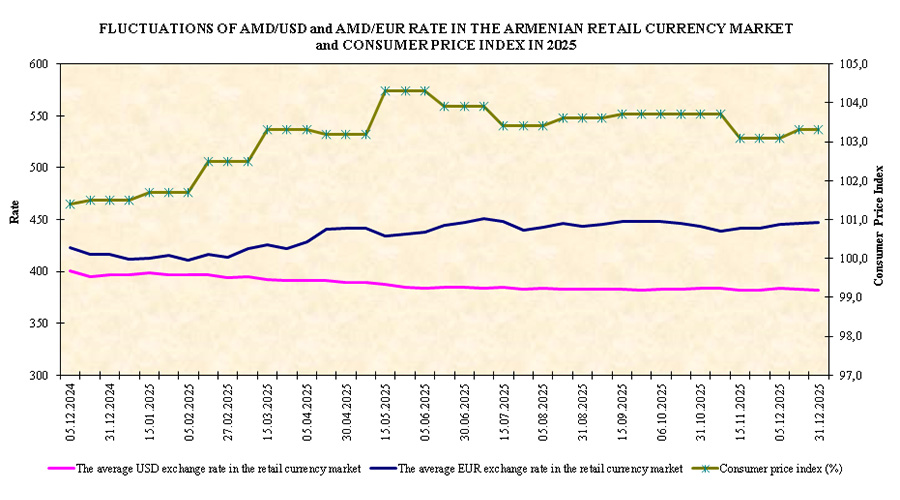
In the foreign exchange retail market of Armenia from October 2021 to June 22, 2022, the dram revalued against the dollar by 14% (from 485 AMD/$1 on average), against the euro - by 22% (from 563 AMD/1EUR on average), while devaluing against the ruble by 6% (from 6.7 AMD/1RUB on average). It is appropriate to note that the unprecedented western sanctions imposed on Russia account for the highly volatile market since this March. In particular, this year, from February 24 to June 22, in the retail currency market of Armenia, the dram devalued against the Russian ruble by 19% - to 7.1 AMD/1RUB on average. At the same time, during this period, the dram revalued both against the US dollar - by 13% to 417 AMDs / $ 1, and against the euro - by 19% to 439.5 AMD / 1 EUR.
Head of the Central Bank of Armenia Martin Galstyan, in response to calls for the need to artificially enter the market, devaluing the existing exchange rate by the Regulator, which may help a certain segment of the business - exporters - he drew attention to the fact that as a result, the general public will pay for such actions. "If we go against our mandate, artificially devalue the dram, then we will face a new wave of inflation which will affect everyone," the head of the Central Bank said. In the current conditions, he noted the importance of the state's sectoral policy, on the basis of which the most affected sectors that have lost their competitiveness will receive assistance from the state in the form of additional subsidies, tax cuts, etc. Earlier, Armenian entrepreneurs issued a statement in which they indicated that the exporters of agricultural products, beverages, as well as the tourism sector, the IT sector and developers, suffered the most from the strengthening of the national currency.
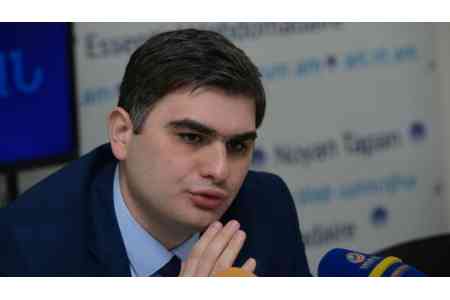
Giving an assessment of the policy of the Central Bank in the current realities, the official noted: "We live in a non-trivial time, and as of today it is necessary to use all the tools so that the economy reaches high growth rates." At the same time, he pointed to the large amount of work that the Ministry of Economy is doing to share control over inflation with the Central Bank, in particular, through subsidizing the import of various goods and activities. In this regard, he recalled his experience as the head of a supermarket chain in the early 2000s, when a sharp revaluation of the dram was registered on the market. "I witnessed how our producers and exporters suffered during this period, how locally produced products on store shelves were replaced by goods from Russia, Ukraine, Turkey, etc.," he said. Consequently, Kerobyan stated that as long as he holds the post of Minister of Economy, he cannot allow the repetition of past scenarios, referring in this context to the industrial development policy adopted by the government.