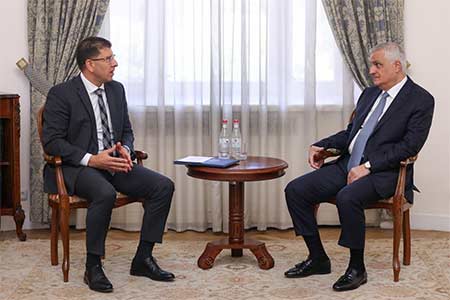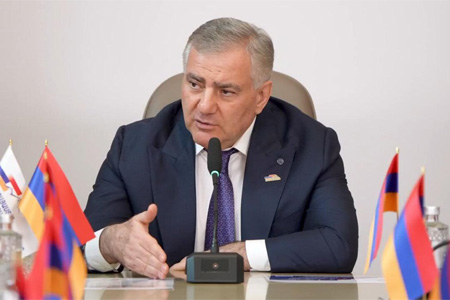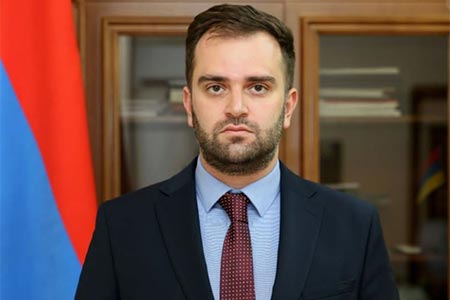


ArmInfo.Armenia's economic growth depends on demand, is a fact, and it is dangerous. This opinion was expressed by former Minister of Finance of Armenia, international consultant on public finance Vardan Aramyan, on his Facebook page, commenting on the July report of the International Monetary Fund (IMF) on the prospects for the development of the world economy.
<Yesterday, the International Monetary Fund published the July forecasts of the Global Economic Outlook and called the new economic situation " Gloomy and More Uncertain", worsening its economic forecasts compared to April.
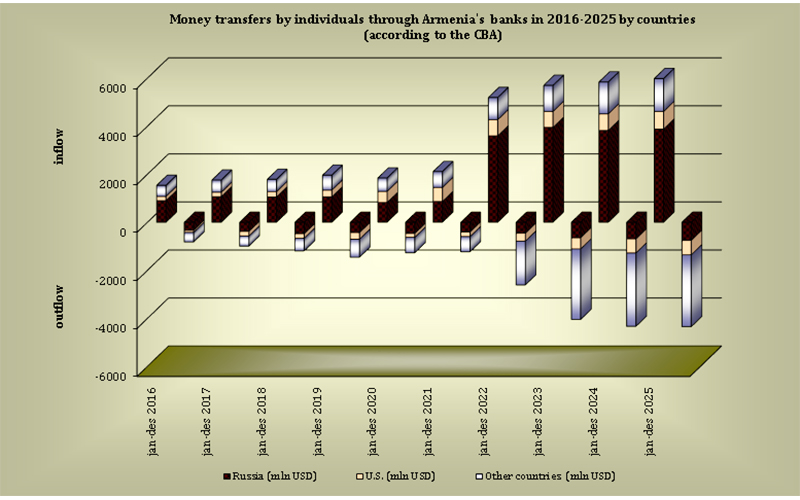
At the same time, the IMF believes that 2023 will be a weaker year, which is mainly due to the lagging effect of current factors (the Covid pandemic in China, real estate market problems and economic weaknesses, transport problems, energy shortages and rising prices, high inflation and other factors) and, especially, because of the aggressive growth of rates of the central banks of the world>, Aramyan wrote. Thus, according to the IMF's forecast, the world economic growth in 2022 and 2023 worsened by -0.4 and -0.7 percentage points (p.p.), setting it at 3.2% and 2.9%. The forecast for US GDP growth in 2022 has been significantly reduced - by 1.4 p.p. to 2.3%, in 2023 - by 1.3 p.p. up to 1%. The economies of the Eurozone countries this year, according to the IMF, will grow by 2.6%, which is 0.2 p.p. less than the previous forecast. For 2023, the forecast deteriorated more significantly - an increase of 1.2% compared to the previously expected 2.3%. The forecast for the growth of the Chinese economy in 2022 was also reduced - to 3.3% from 4.4%, in 2023 - to 4.6% from 5.1%. "It is interesting that the forecasts for Russia's economic growth for 2022 have been improved, but worsened for 2023," the expert wrote. Thus, in 2022, the IMF expects the Russian economy to fall by 6%, and not by 8.5%, as forecasted in April. In 2023, the decrease in the RF GDP, according to the Fund, will be 3.5% instead of the previously forecasted 2.3%. <In fact, the growth of the Russian economy has improved over the past two years, and this will become another argument for opponents of supporters of the sanctions applied by the Euro-Atlantic bloc that the sanctions do not give the desired result: in fact, they cause more harm to the economies of the Euro- Atlantic bloc than the Russian Federation>, notes an international consultant on public finance. In his opinion, this can still be argued in the short term (although the IMF forecasts a recession in the Russia anyway), but in the long term, the Russian economy will have a serious technological regression and lose its economic potential. As for Armenia, according to the former Minister of Finance of the Republic of Armenia, global developments and these forecasts strengthen his arguments that the current growth in economic activity of 11.8% carries significant risks. "They are mainly the result of external factors - the growth of visitors and financial inflows, and when they weaken or stop, our economy will face significant difficulties. However, it is difficult to say when this will happen - (after 6 months, 1 or 1.5 years) - because it is directly related to geopolitical developments. But the fact that we have demand-driven economic growth is a fact, and it is dangerous>, he summed up.
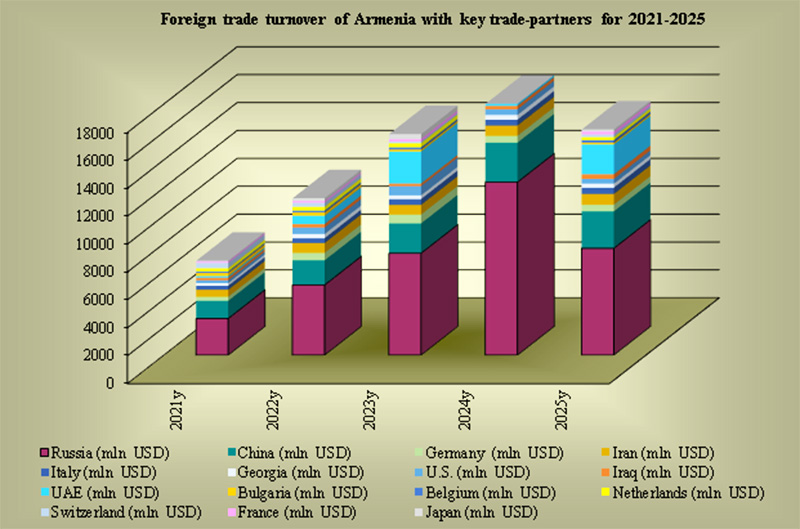
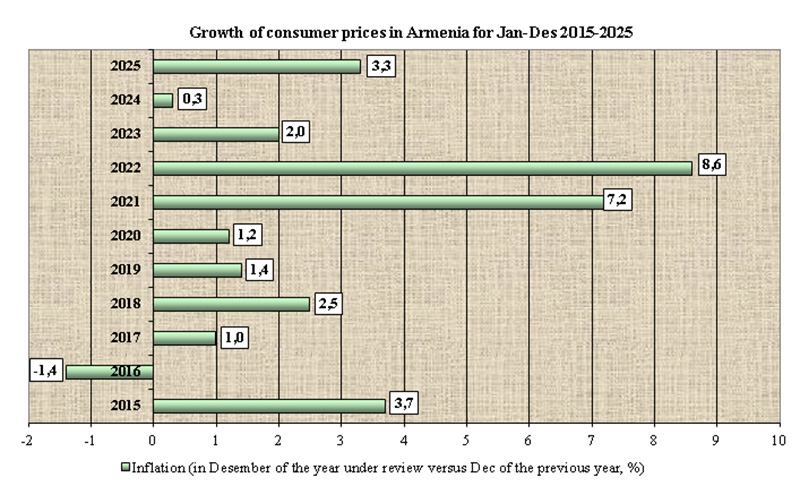
According to the RA Statistical Data, economic activity in Armenia in H1 2022 increased by 11.8% per annum. Growth was largely determined by the service sector - by 26.9%, to a slightly lesser extent by the energy complex - by 14.8%, the construction sector - by 12.7% and the trade sector - by 10.7%, in parallel with this, an acceleration of growth was observed industrial sector to 5.8%, and the subsidence of the agricultural sector by 5.5%. The price index of industrial products increased over the reporting period compared to the same period in 2021 by 7.8%.