


ArmInfo.As of July 1, 2022, the per capita debt reached $3,400 against $3,000 last year, with per capita foreign debt being $2,200 against $2,300, and per capita internal debt $1,200 against $740. Armenia's population was 2.962mln (2,700 fewer that last year).
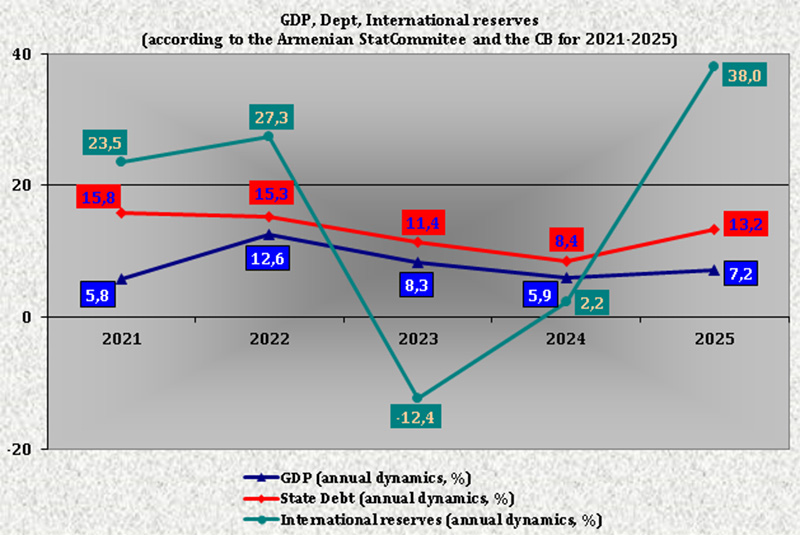
As of July 1, 2022, 53.1% Armenia's foreign debt was covered with gold and foreign currency reserves against 46.6% amid a 2.7% decrease in the foreign debt and a 10.8% increase in reserves. As of July 1, 2021, the foreign debt showed an 11.6% increase, with a 17.6% increase in reserves.
As of July 1, 2022, Armenia's national debt reached $9, 932mln (AMD 4,100bln), a 12% increase against an 11.4% increase last year. The cause is an accelerated increase in the country's internal, with an expected decrease in the internal debt. Armenia's foreign debt showed a 2.7% decrease against an 11.6% increase, totaling $6.496bln (AMD 2,700bln), with an accelerating increase in the internal debt - 56.8% against 26.1% - up to $3.436bln (AMD 1,400bln).
In the first half of 2022, Armenia's national debt showed a 7.7% increase due to a 33.3% increase in the country's internal debt, with a 2.3% decrease in the foreign debt. In the corresponding period last year, all the three figures showed an increase 11.3%, 10.2% and 14.8% respectively.
In the second quarter of 2022, the national debt showed a 6.1% increase against 1.4% due to a 26.7% increase in the internal debt against 5.2%, with a 2.2% decrease in the foreign debt against 0.1%. In the 2nd quarter of last year, a 2.5% increase in the national debt was recorded against 8.6%, with a 0.6% decrease in the foreign debt against a 10.9% increase. Thee internal debt showed a 13.1% increase against a 1.1% increase.
As of the end of the first half of 2022, the government's share in thee foreign debt structure was 91.7% against 93%. The Central Bank's share was 8.3% against 7% last year - $5.954bln and $541.9mln respectively. Specifically, the government's foreign debt showed a 4.1% decrease against a 12.7% increase, and that of the Central Bank, a 15.8% increase against a 1.5% decrease.
As of the end of the first half of 2022, the share of government bonds in the internal debt was 92% against 95.3% last year (AMD 3,100bln or $3.2bln), with the share of their absolute value being a 51.4% against 30.8%. The share of Armenian Eurobonds in thee internal debt was 7.7% against 4.7% - $263.96mln or AMD 107.8bln, with a 2.5-fold increase in their absolute value (against a 26.2% decrease last year).
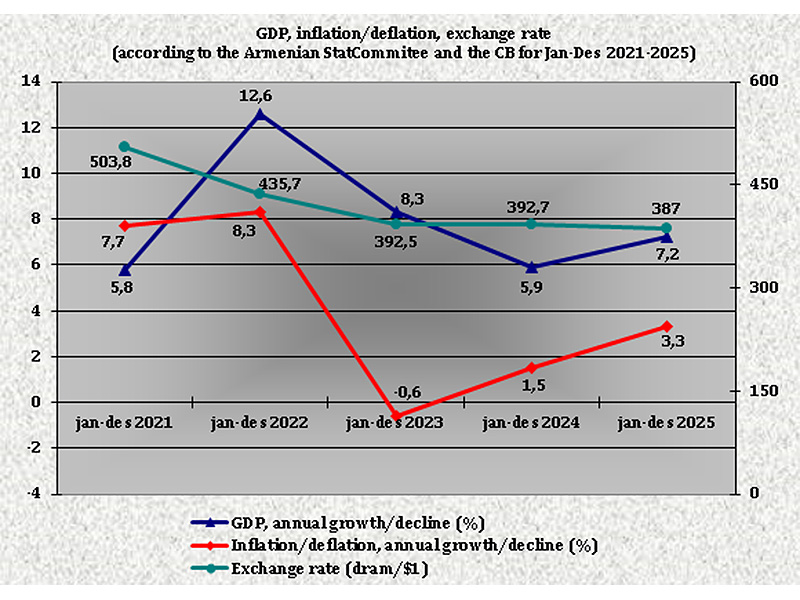
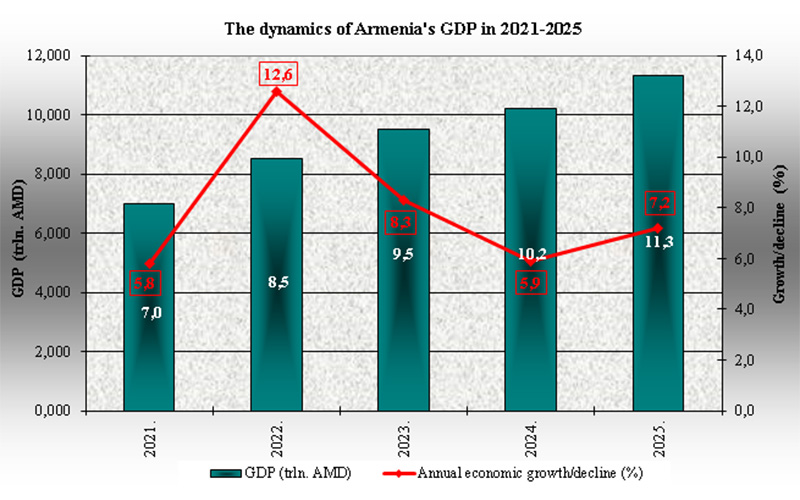
The GDP/national debt ratio was 63.4% against 67.4% in 2020, with a 15.8% increase in the national debt and a 5.7% increase in the GDP. In 2021, the national debt ratio/GDP ratio was 45.7% against 51.2% in 2020, with a 9.8% increase in the foreign debt. This May, the IMF forecast a 67.7% ratio of Armenia's national debt to the GDP for 2022, and according to the WB's April forecast it will be 66.9% and will reach 67.6% in 2023 and decrease to 66.6% in 2024. In their later forecasts, this June, both the IMF and the WB improved their expectations - 5% and 3.5% respectively against the previous 1.5% and 1.2%. Armenia's Central Bank improved its forecast for 2022 - 4.9% GDP growth against 1.6% - after 5.7% economic growth in 2021 against a 7.2% decline in 2020.