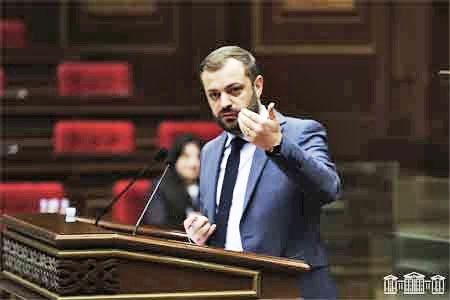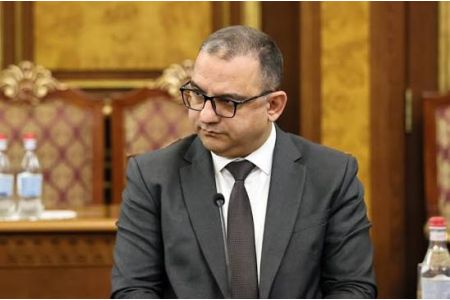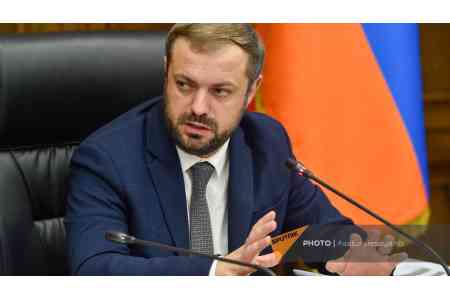



ArmInfo. 90% of the profit in the banking system of Armenia is formed from income from related services, 90% of consumers of which are non-residents, rather than from the difference in expenses on loans and deposits. This was stated by Chairman of the Central Bank of the Republic of Armenia Martin Galstyan at parliamentary hearings during the presentation of the draft state budget of Armenia for 2023.
He emphasized that against the background of restrictions in some countries, in the context of completely free and open capital transactions by Armenian banks, there is a possibility that the banking system of Armenia will either serve the economies of these countries, or become their appendage , which is highly undesirable.
The Chairman of the Central Bank emphasized that in view of the problems related to the access to foreign currency, there are commission fees during the latter's cashing the in Armenian banks. He explained that at the moment the US authorities are pursuing a policy that, in fact, limits the cash circulation of their currency in the world, including in Armenia. Galstyan noted that these services are gradually becoming more expensive. If earlier Armenian banks could receive foreign currency in cash from international partners at a rate of 0.1-0.2%, now, as a result of restrictions, the commission has been increased and the terms of provision have become tougher. In this regard, he stressed: "Therefore, the course taken for non- cash transactions is very correct, and we must adhere to it."
In order to stabilize the financial market and prevent the massive outflow of currency from the republic, the Central Bank of Armenia has set a 3 percent commission for cashing dollars in Armenian banks in the summer of 2022.
In addition, from July 1, 2022, amendments and additions to the laws of the Republic of Armenia "On non- cash payments" and related laws developed by the Central Bank came into force, according to which, from that moment, the restriction on the maximum amount of payments in cash began to operate in the republic - all transactions, exceeding 300 thousand drams will have to be made exclusively in a non-cash way. In particular, the law came into force in Yerevan on July 1, 2022, in the regional centers it will come into force a year later, and the regulations will be fully extended throughout the republic in 2 years. Stimulation of non-cash payments is an important component of the state policy for the digitalization of the economy and management system.